There's a moment, usually around the third bad evening in a row, when your cart fills up. A heated belt. A spiky massage ball. One of those hanging contraptions. A posture brace that promises to pull your shoulders back for you. You're not gullible — you're just tired, and forty dollars feels like a small price for a night's relief. The trouble is that the back-pain aisle is built for exactly that moment, and a lot of what's in it is selling the feeling of doing something more than the result.
So here's an honest pass through the common back pain relief products: what each actually does, which ones earn their place, and which are a slow way to spend money. The rule underneath all of it is simple. A gadget that helps you move better or eases a flare is worth having. A gadget that does the work *for* you, so your own muscles don't have to, usually isn't.
The genuinely useful, low-cost stuff
Start here, because the best-value items are also the cheapest and least exciting.
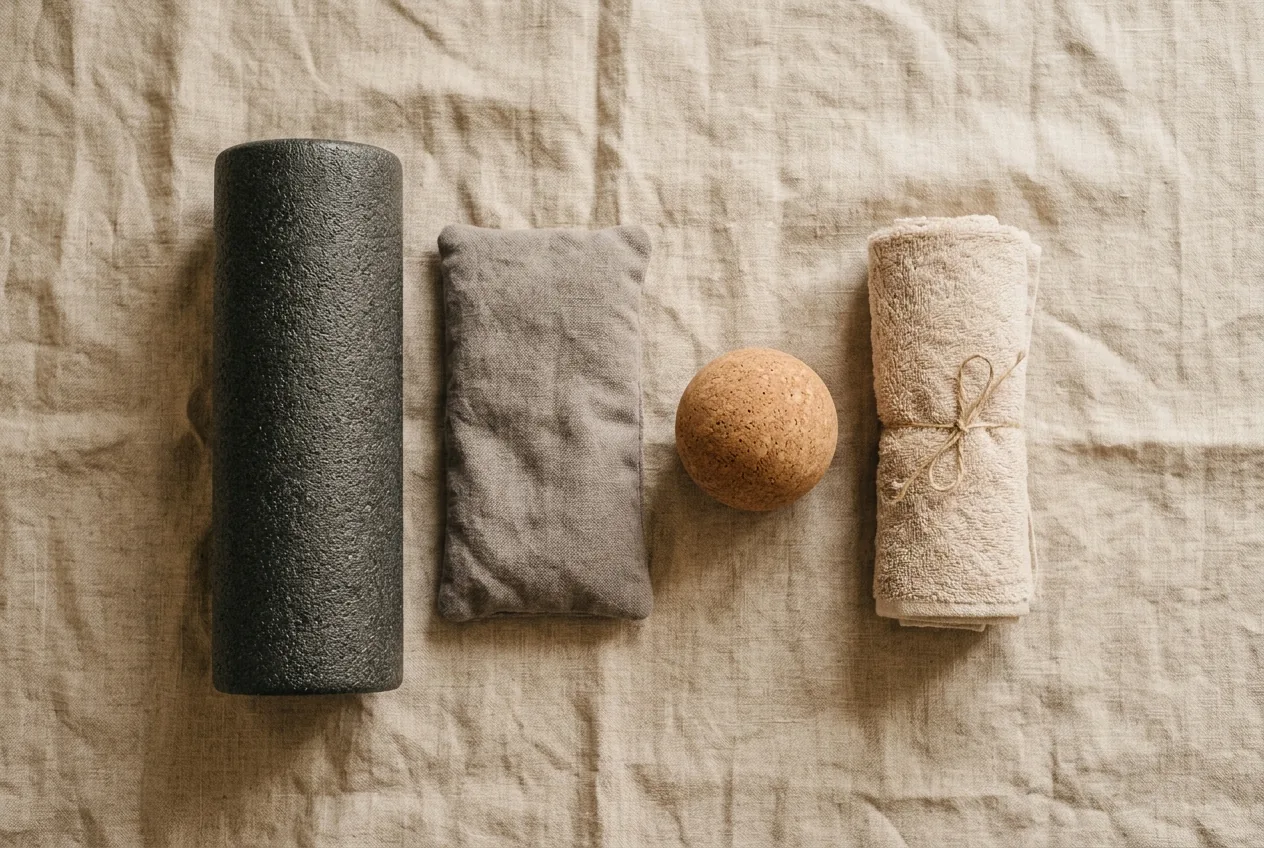
- Heat and a basic heat pack. Cheap, reliable, and genuinely helpful for muscular tightness and stiffness. A microwavable pack or an electric pad loosens tense muscles and eases a flare. The simple guidance on when to reach for warmth versus cold is in heat or ice for back pain.
- A massage ball or foam roller. A few dollars, and a good way to work into tight muscles in your back, glutes, and hips yourself. It won't fix the cause, but for self-administered relief between flares it punches well above its price.
- A lumbar support cushion. For long stints in a car or a bad office chair, a small roll or cushion in the curve of your lower back can genuinely reduce the slump that aggravates a sore back. Cheap, and it earns its keep if you sit a lot.
- A supportive pillow setup for sleep. Not a gadget exactly, but the right pillow under or between your knees does more for night pain than most powered devices. Money better spent here than on a vibrating gizmo.
The "it depends" category
These can help the right person and disappoint the wrong one.
- TENS units. A small device that sends mild electrical pulses through pads on your skin. Some people get real, if temporary, pain relief from one; others feel nothing useful. They're affordable enough to try, but it's symptom relief, not repair.
- Massage guns. Satisfying and genuinely good for loosening tight muscles. They're a powered massage ball, essentially — useful for relief, useless for cause. Worth it if you'll actually use it; otherwise a five-dollar ball does most of the job.
- Inversion tables and home decompression devices. These promise to stretch the spine and relieve pressure. Some people find the traction soothing during a flare; the effect tends to be short-lived, and they're a big spend for a temporary feeling. The wider question of whether stretching the spine helps is covered in spinal decompression.
The stuff that mostly doesn't earn it
This is where the marketing gets loudest and the value gets thinnest.
- Posture corrector braces. The pitch is that strapping your shoulders back trains good posture. The problem is that it does the holding *for* you, so the muscles that should do that job stay switched off — and your posture often slumps right back the moment it comes off. There's a full breakdown in do posture correctors work. Useful at most as a brief reminder, not a fix.
- "Acupressure" mats. The bed of spikes feels intense and can be relaxing in a placebo-pleasant way. It's not doing anything structural.
- Magnetic and "ionized" wearables. No credible mechanism behind the back-pain claims. Save the money.
A good product makes movement easier or eases a flare. A bad one does the work your own muscles should be doing.
How to spend wisely
A few questions cut through the marketing every time.
- Does it help me move, or move for me? The first kind earns its place. The second tends to create dependence.
- Is it relief or repair? Most gadgets are relief — fine, as long as you know it's temporary and priced accordingly.
- Could a five-dollar version do it? A ball, a heat pack, and a cushion cover most of what the expensive devices do.
- Am I buying it instead of changing the cause? The honest one. If the gadget is a way to avoid addressing why your back hurts, no amount of devices will settle it.
When to see a doctor instead of shopping
Skip the gadget and see a clinician if your back pain came on after a fall or injury, if there's numbness, tingling, or weakness spreading into a leg or arm, if you have fever, unexplained weight loss, or pain that's severe or steadily worsening, or if pain reliably wakes you at night. Numbness in the saddle area or loss of bladder or bowel control is an emergency. Those signs need a proper assessment, not a heated belt.
Why no product fixes the cause
Here's the pattern worth seeing clearly. Every relief product on the list — heat, massage, TENS, traction — calms a symptom. None of them changes why the symptom keeps showing up. For most chronic, non-traumatic back pain, that "why" is a posture imbalance: muscles that switched off and others overworking to compensate, pulling your spine out of line day after day. The gadgets soothe the overworked muscles; they don't put the load back where it belongs.
That's why the cart keeps refilling. Knowing your specific pattern — which muscles have gone quiet and which are straining to cover — is what lets you address the cause instead of renting relief. A posture-based approach to chronic back pain measures those deviations and builds a daily routine around them, which is the one "product" that targets the source rather than the symptom.
Buy the heat pack and the massage ball. Try the TENS unit if you're curious. Skip the brace and the magnet bracelet. And put the money you saved toward fixing why your back keeps sending you to the aisle in the first place.
Common questions
Do back pain relief products actually work?
Some do, for relief — heat packs, massage balls, lumbar cushions, and sometimes TENS units genuinely ease muscular tightness and flares. None of them fix the underlying cause, so the relief is temporary. The best buys are usually the cheapest ones, while the heavily marketed braces and wearables tend to offer the least real value.
Are posture corrector braces worth buying?
Mostly not as a fix. A brace holds your shoulders back for you, which means the muscles that should do that job stay switched off, and posture often slumps right back once it's removed. At best it's a brief reminder. Strengthening the muscles that hold good posture works far better than outsourcing the job to a strap.
What's the cheapest thing that actually helps back pain?
A basic heat pack and a massage ball or foam roller cover most of what expensive devices do, for a few dollars. A small lumbar cushion for sitting and the right pillow setup for sleep are close behind. These low-cost items punch well above their price compared with powered gadgets.
Is a TENS unit or massage gun better for back pain?
They do different jobs. A TENS unit sends mild electrical pulses to dampen pain signals and helps some people more than others. A massage gun loosens tight muscles, like a powered massage ball. Both offer temporary relief rather than repair — try the one that matches your problem, and don't expect either to address the cause.