
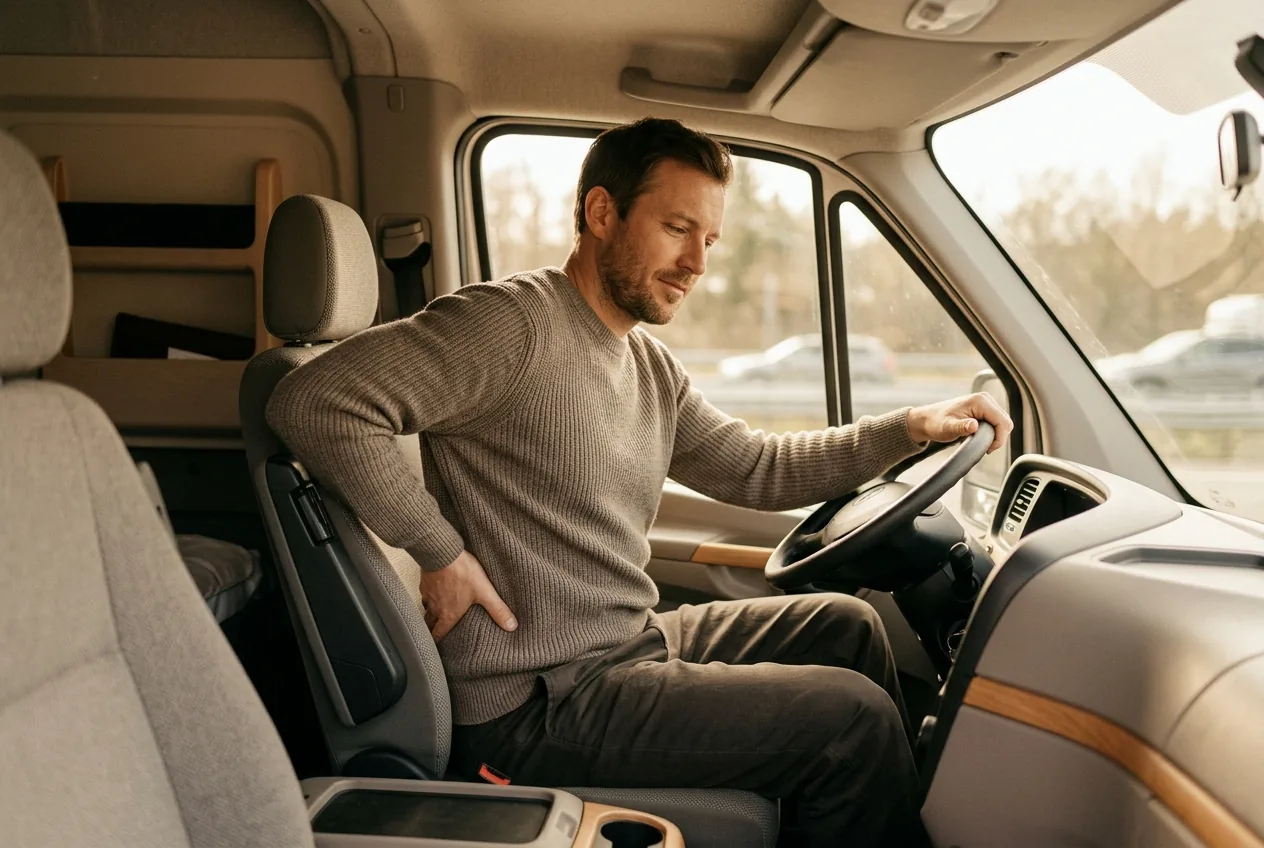
You climb down from the cab after a long stretch and your lower back has seized into one shape, the shape of the seat. For anyone who drives for a living, back pain from driving long hours isn't an occasional thing, it's the job. The seat, the hours, and the vibration all gang up on the same part of your spine.
Truckers, delivery drivers, rideshare drivers, anyone behind the wheel for hours has the same fight. The fixes are practical, and most of them are about the cab setup and breaking up the hours.
Why driving is so hard on the back
Driving combines several of the worst things you can do to a lower back, and then holds them for hours.
You're sitting, which already loads the spine. When you sit, the pelvis tends to roll backward, the natural lower-back curve flattens, and the load shifts onto the discs instead of being shared by the muscles. A worn, sagging seat with no lumbar support makes it worse, the same trap behind ordinary lower back pain when driving, just for far longer.
Then there's vibration. A vehicle transmits constant low-frequency vibration through the seat into your spine, hour after hour. That steady jostling fatigues the supporting tissues in a way ordinary sitting doesn't, which is part of why driving wears on the back more than sitting at a desk for the same time.
And you can't move. You're pinned in one position, right foot working the pedals, often twisted slightly toward the door or reaching for controls. Hours of that shortens the hip flexors, quiets the glutes, and leaves the lower back doing a job two other muscle groups have clocked off from.
So long-haul back pain is a flattened curve, constant vibration, and frozen muscles, all stacked into a single shift.
Set up the cab
Getting the seat and position right is the highest-value change you can make, because you live in it.
- Support the lumbar curve. If the seat leaves a hollow at your lower back, fill it with the seat's lumbar adjustment or a firm rolled towel or cushion. This keeps the natural inward curve instead of letting it collapse, the single biggest fix.
- Set the recline modest. A slight recline, around 100 to 110 degrees, takes load off the lower back without making you crane forward to see.
- Bring the seat close. Close enough that your knees stay slightly bent and you reach the pedals without stretching your leg straight. Reaching with a straight leg drags the pelvis and flattens the curve.
- Get the height right. Hips at about knee height or a touch higher, with a clear view over the wheel so you're not hunching to see the road.
- Use the lumbar and armrests. Armrests at a height that lets the shoulders relax keep you from hunching over the wheel and feeding forward head posture and neck tension.
A rolled towel in the right spot does more for a long-haul back than almost anything you can buy.
Break up the hours and undo the damage
The seat setup helps, but the real enemy is time in one position. Use every legal stop.
Get out and move at every break. When you stop for fuel, food, or a mandated break, don't just stretch your legs to the diner. Stand tall, do a gentle backward bend to reverse the all-day slump, and a few cat-cow movements against the truck. Two minutes resets the spine.
Loosen the hips. Hours of sitting lock the hip flexors. A hip flexor stretch at a stop counters the constant shortening, and walking briskly for a few minutes pumps blood back through fatigued muscles.
Wake the glutes. Driving lets the glutes go silent, so the lower back carries everything. A set of glute squeezes at a stop, and a glute bridge when you're home, rebuilds the support. As weak glutes and back pain covers, this is a bigger factor than most drivers realize.
Mind how you climb down. Getting out of a high cab after hours of stiffness is a classic way to wrench a back. Turn your whole body, use the grab handles, and step down deliberately rather than twisting and dropping.
What to stop doing
- Don't drive slumped with no lumbar support. The flattened curve is the core problem.
- Don't sit on a wallet or anything that tilts your pelvis to one side for the whole shift.
- Don't power through breaks to make time. The movement is what saves your back.
- Don't twist to grab something behind you while strapped in; turn at a stop instead.
When to see a doctor
Driving-related back pain is usually mechanical and eases when you support the curve and break up the hours. Some signs need a professional. See a clinician promptly if you have numbness, tingling, or weakness spreading down a leg, any loss of bladder or bowel control, back pain after an accident or a hard jolt, fever with back pain, unexplained weight loss, or pain that's severe or steadily worsening. Sciatica that travels down the leg from sitting is common in drivers and worth getting checked if it persists, as sciatica when sitting explains.
Why the right setup is specific to you
The reason a seat position that suits one driver bothers another is that they're sitting on top of different imbalances. A forward-tipped pelvis needs a different lumbar setup from a flattened lower back. A general rule gets you close; your own pattern gets you the rest of the way.
That's the case for measuring instead of guessing. A short posture assessment that reads your actual alignment shows which way your pelvis and spine sit, then builds a short daily routine to wake up the muscles that should be supporting you behind the wheel. Once they're doing their job, the long haul stops landing entirely on your lower back.
Start with a rolled towel behind your lumbar curve today, and treat every legal stop as a two-minute reset. Climbing down at the end of a run should stop feeling like unfolding a deck chair.
Common questions
Why does driving long hours cause back pain?
Sitting flattens the lower-back curve and loads the discs, constant vehicle vibration fatigues the supporting tissues, and being pinned in one position shortens the hips and quiets the glutes so the back carries everything.
How should a truck driver set up the seat to avoid back pain?
Support the lumbar curve with the seat's adjustment or a rolled towel, set a slight recline, bring the seat close so your knees stay bent, and get the height right so you see the road without hunching.
What stretches help drivers with back pain?
At stops, try a gentle backward bend, a few cat-cow movements, and a hip flexor stretch to counter the all-day shortening. A brisk walk pumps blood back through fatigued muscles, and glute work rebuilds support.
When should a driver worry about back pain?
See a clinician promptly for numbness or weakness spreading down a leg, loss of bladder or bowel control, pain after an accident or hard jolt, fever, unexplained weight loss, or pain that's severe or steadily worsening.