
You got the scan, someone said "slipped disc," and now you're lying awake wondering whether this is permanent — whether you're looking at surgery, or a life of being careful forever. The question underneath all of it is the simple one: can a slipped disc heal on its own? For most people, the honest answer is yes, it can, and usually does, without surgery. That's not wishful thinking. It's how the body tends to handle these.
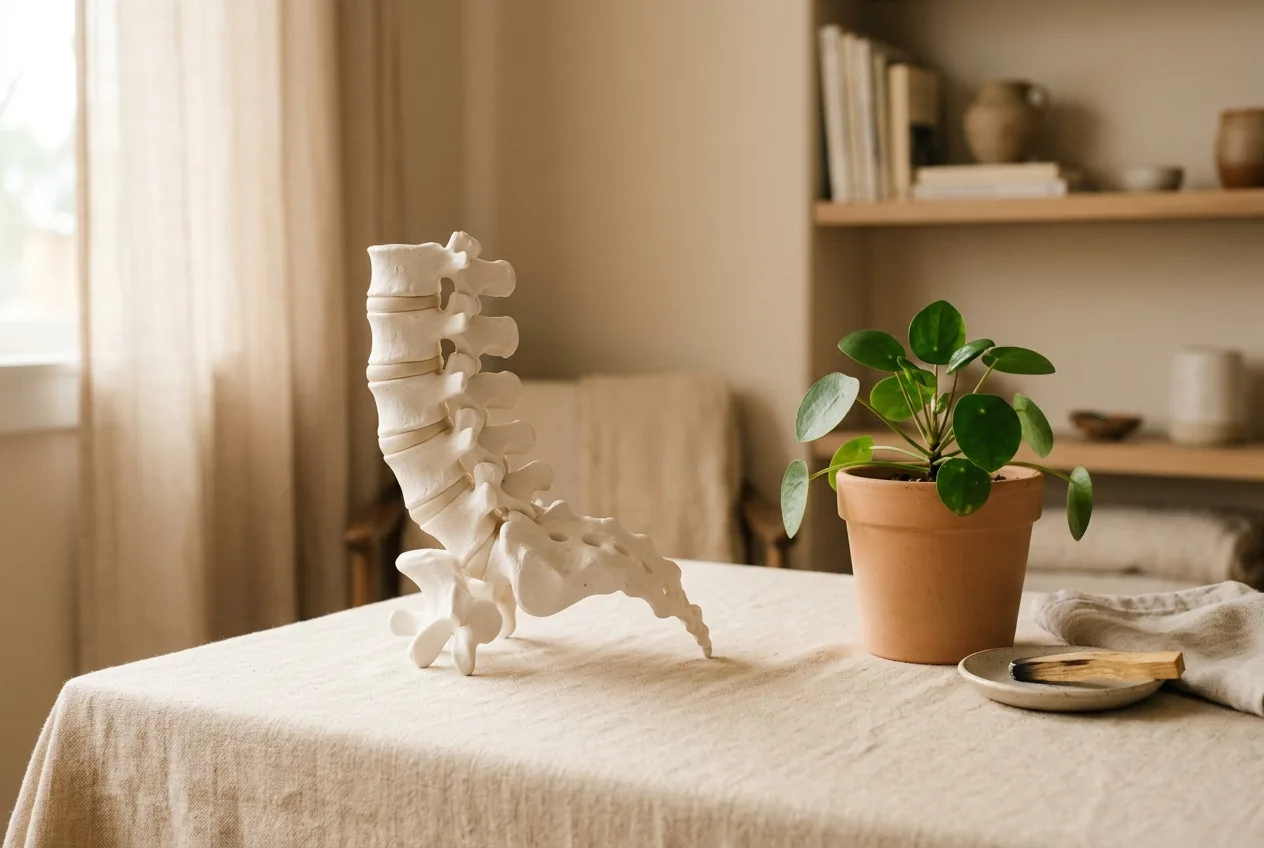
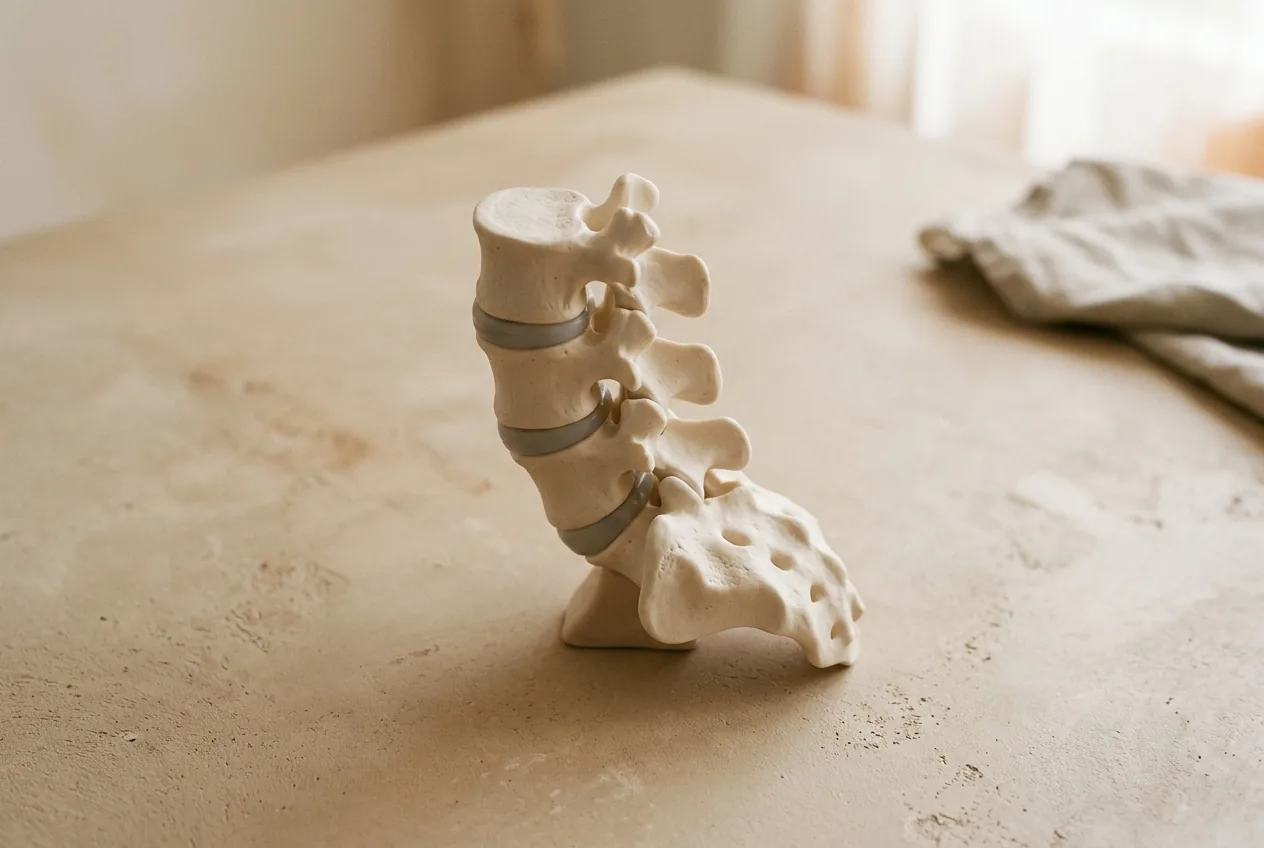
First, a wording note that takes some pressure off. "Slipped disc" is a loose term — discs don't actually slip out of place. What people usually mean is a bulging or herniated disc, where the disc has spread past its normal edge or its soft centre has pushed through a tear in the outer ring. The difference matters, and the difference between a herniated and a bulging disc is worth knowing.
What "healing" actually means here
This is the part that surprises people. A herniated disc often shrinks over time on its own. The body treats the displaced material as something to clean up: cells move in, break it down, and the bulge recedes. Many people whose pain has fully settled would still show a disc abnormality on a repeat scan — and many people with no pain at all have disc bulges they'll never know about.
So "healing" doesn't mean the scan returns to factory condition. It means two things happen. The disc material that was pressing on a nerve or irritating the area gets reabsorbed and calms down, and the inflammation around it settles. Both tend to happen with time. Your job is mostly to not get in the way, and to give your back the kind of movement that helps rather than the kind that aggravates.
A disc bulge is slow-healing tissue, not a broken bone. The body is built to settle it — your job is to stop feeding it.
How long does it take?
People want a number, and the honest version has a range. The sharp, can't-get-comfortable phase of a flared disc often eases within the first few weeks if you stop aggravating it. Many disc-related flare-ups settle substantially within six to twelve weeks. The lingering stiffness, the occasional twinge on a bad day, can hang around a while longer as the tissue finishes calming and your back relearns to move without guarding.
It rarely heals in a straight line. You'll have a stretch of feeling almost normal, then bend the wrong way reaching into the car and feel a flash of the old pain. That's a flare, not a relapse. A single awkward movement doesn't undo weeks of progress. Note what set it off, ease back for a day, and carry on. The trend over weeks matters far more than any single morning.
What helps it heal
The aim early on is to take pressure off the irritated segment, keep moving gently, and avoid the positions that flare it.
- Frequent short walks. Walking loads the spine in a friendly, rhythmic way that helps the disc exchange fluid and keeps you from stiffening up. Several short walks beat one long march.
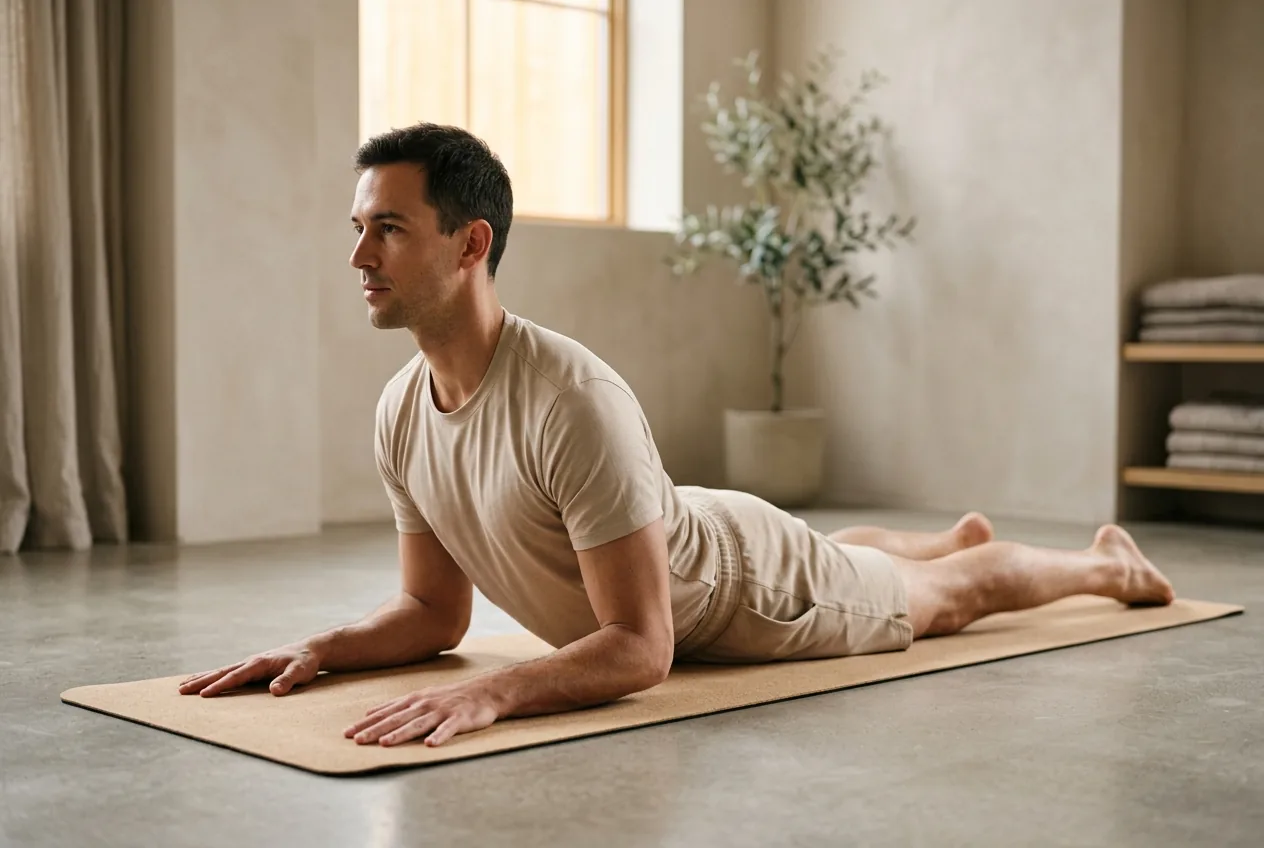
- Gentle back extension. Lying face down and propping on your forearms, letting the lower back ease into a mild arch, helps many discs that have bulged backward. If it increases leg symptoms, leave it out. The graded routine in herniated disc exercises goes through this safely.
- Movement over rest. Prolonged bed rest stiffens the area and weakens the muscles that support it. A day of taking it easy is fine; a week flat on your back tends to slow healing.
- Hip and glute work, once the sharp phase settles. Rebuilding the support around the spine takes load off the disc going forward. The same approach helps a bulging disc in the lower back.
What slows it down
- Repeated deep forward bending — toe-touches, slumped folding — loads the front of the disc and pushes the centre backward, the wrong direction for most bulges.
- Long stretches of slumped sitting, which raise disc pressure more than almost any other everyday position. Stand up every twenty to thirty minutes.
- Heavy lifting and loaded twisting too soon. Give the tissue a few weeks of calm before testing it under real load.
- Fear-driven stillness. Moving like the floor might give way keeps the muscles braced and the area irritated. Gentle, confident movement is part of healing.
When to see a doctor
Most slipped discs settle on their own, but a few signs need prompt attention. Check in with a clinician if you have numbness or weakness spreading down a leg, a foot that catches or drags when you walk, or back pain after a fall or accident. Seek urgent care for any loss of bladder or bowel control, or numbness in the saddle area between the legs — uncommon, but treated as an emergency. Also get assessed for pain that's severe, steadily worsening, or paired with fever or unexplained weight loss. This is a short safety list, not a reason to panic. A clinician confirms the diagnosis and rules out the rare cases that need more than time.
The part that decides whether it stays healed
Here's what the "will it heal" question often misses. A disc rarely bulges at a random spot. It shows up where load has been concentrated for years — and load concentrates when posture is off. A common pattern: tight hip flexors tilt the pelvis forward, the lower back over-arches to compensate, and one segment absorbs what several should share. The disc spreads under that repeated pressure.
So the disc may well heal on its own. Whether it stays calm depends on whether that loading pattern changes. Treat only the disc and ignore how your body has been distributing weight, and the relief tends not to hold — the same segment gets overloaded again. Knowing your own pattern, which muscles switched off and which are overworking, is what lets you shift the load for good. That's the thinking behind a posture-based approach to chronic back pain, which measures how your body is actually positioned and builds a daily routine around it.
A slipped disc can heal on its own, and for most people it does. Nothing here cures it or replaces your doctor's guidance. But moving in the directions your back tolerates, easing off the ones it doesn't, and changing the load that caused it is usually enough to get ordinary life back.
Common questions
Can a slipped disc heal without surgery?
For most people, yes. A herniated disc often shrinks over time as the body reabsorbs the displaced material and the inflammation settles, no surgery required. Surgery is reserved for the minority with severe or progressing nerve symptoms. Gentle movement, short walks, and avoiding aggravating positions help the natural process along.
How long does a slipped disc take to heal on its own?
The sharp phase often eases within the first few weeks if you stop aggravating it, and many flare-ups settle substantially within six to twelve weeks. Lingering stiffness can last longer. Healing rarely runs in a straight line — a flare in the middle of getting better is normal and not a relapse.
Will a bulging disc heal naturally too?
Often, yes. A bulging disc is generally the milder, earlier picture than a full herniation, and it tends to calm with time and sensible movement. As with a herniation, what helps it stay calm is changing the loading pattern — usually a posture issue — that concentrated pressure on that segment.
What's the fastest way to help a slipped disc heal?
There's no shortcut, but you can avoid slowing it down: keep moving with frequent short walks, skip prolonged bed rest, avoid repeated deep forward bending and slumped sitting, and hold off heavy lifting for a few weeks. Gentle back extension helps many cases, as long as it doesn't increase leg symptoms.