
You finish lunch at your desk, stay hunched over the keyboard, and twenty minutes later you're bloated, a bit reflux-y, and uncomfortably full in a way that doesn't quite match what you ate. You'd never have connected it to how you were sitting. But the question — can posture affect digestion — has a more straightforward answer than most people expect: yes, and the mechanism is simple physical space.
This isn't a fringe wellness claim. Your digestive organs sit in your abdomen, and how you hold your trunk changes how much room they have and how freely things move through them. Slouching and digestion are linked for the same reason a kinked hose doesn't flow well. Here's what's actually happening, and how to give your gut more room.
The space mechanism
When you slump forward, your ribcage drops toward your pelvis and your abdomen compresses. The stomach and intestines, which need a bit of room to do their work, get squeezed. Picture folding a garden hose — the contents don't move through as easily. Food and gas sit longer, which is exactly what feeds that heavy, bloated feeling after a meal.
There's a second piece, higher up. A slumped posture puts pressure on the stomach and can make it easier for acid to push back up toward the esophagus, which is why a hunched-after-eating habit can stir reflux for some people. Sit tall and you take that pressure off.
Slouching doesn't just look tired. It physically compresses the organs that have to move your meal along.
Posture and digestion: breathing matters too
Here's the part people miss. Your diaphragm — the big breathing muscle under your lungs — also acts like a gentle pump on your digestive organs. Every full breath, it moves down and massages the gut below it, helping things along.
When you slump, your ribcage collapses and you can't breathe fully into your belly. The breath goes shallow and high into the chest, and the diaphragm stops doing its quiet pumping job. So a hunched posture squeezes the organs and switches off one of the things that keeps them moving. The connection between breathing and posture runs straight through digestion. Sit or stand tall and your diaphragm can move through its full range again.
Posture and bloating: the daily picture
Put the pieces together and the after-meal slump is close to a worst case. You've just added a meal's worth of volume to your abdomen, and then you fold over a desk or sink into the couch, compressing it and shutting down the diaphragm pump right when your gut needs the room. Gas and food sit, pressure builds, and you feel it.
The fix is mostly about not collapsing, especially after eating:
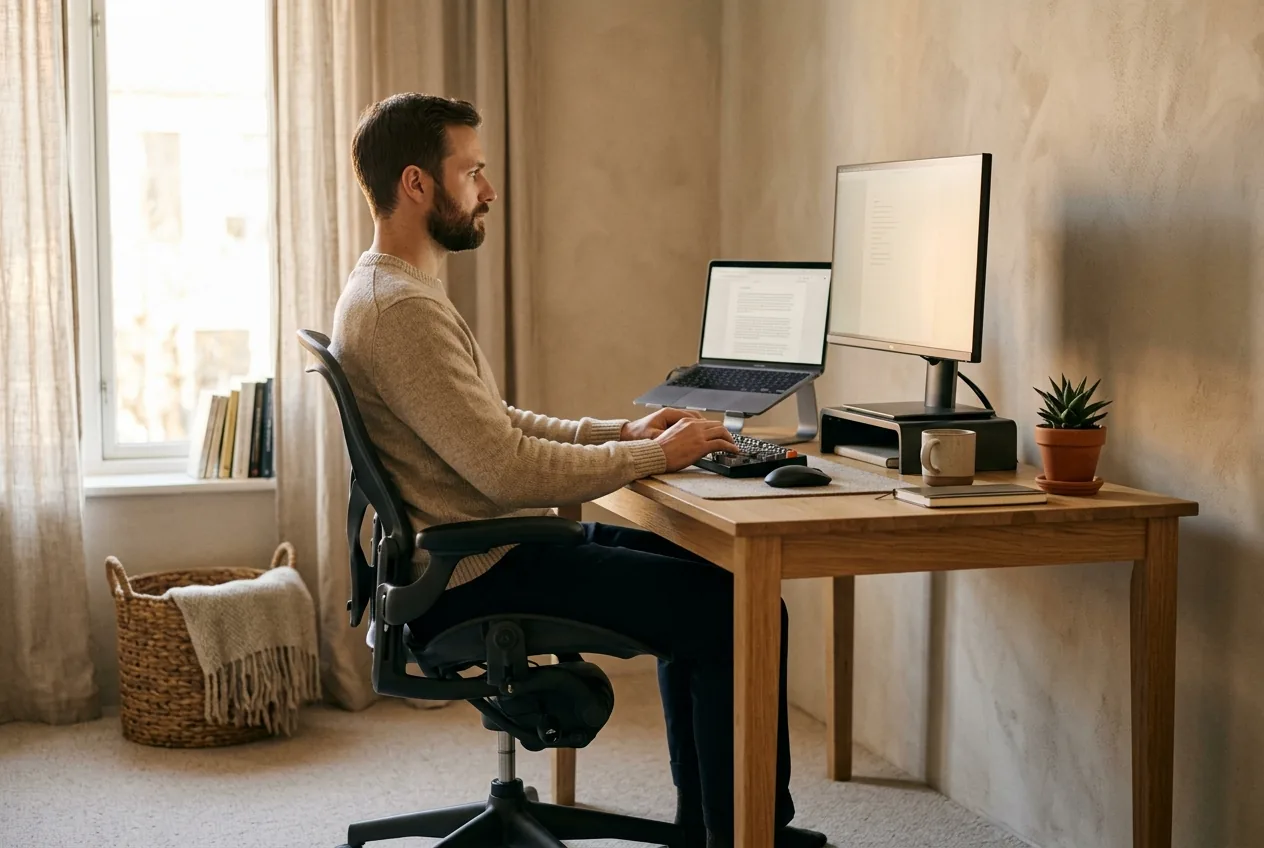
- Sit tall through and after meals. Stack your ribcage over your pelvis so your abdomen has room. The basics are in proper sitting posture. The half hour after a meal is when it matters most.
- Don't slump straight onto the couch after dinner. If you're going to sit, sit supported and upright-ish rather than folded.
- Take a short, easy walk after a meal. Gentle movement and an upright trunk help things move through. Even five or ten minutes around the block does more than you'd think.
- Breathe into your belly. A few slow breaths that expand your abdomen, not just your chest, get the diaphragm pumping. Easiest to do when you're already sitting tall.
The chronic-slump angle
A single hunched lunch is one thing. The bigger issue is a posture that's slumped all day, every day — the rounded, collapsed pattern many desk workers live in. If your default is a dropped ribcage and a forward fold, your abdomen is compressed and your breathing is shallow for hours on end, not just after meals. That's the setup behind a low-grade, persistent bloated and sluggish feeling that no amount of diet tweaking fully explains.
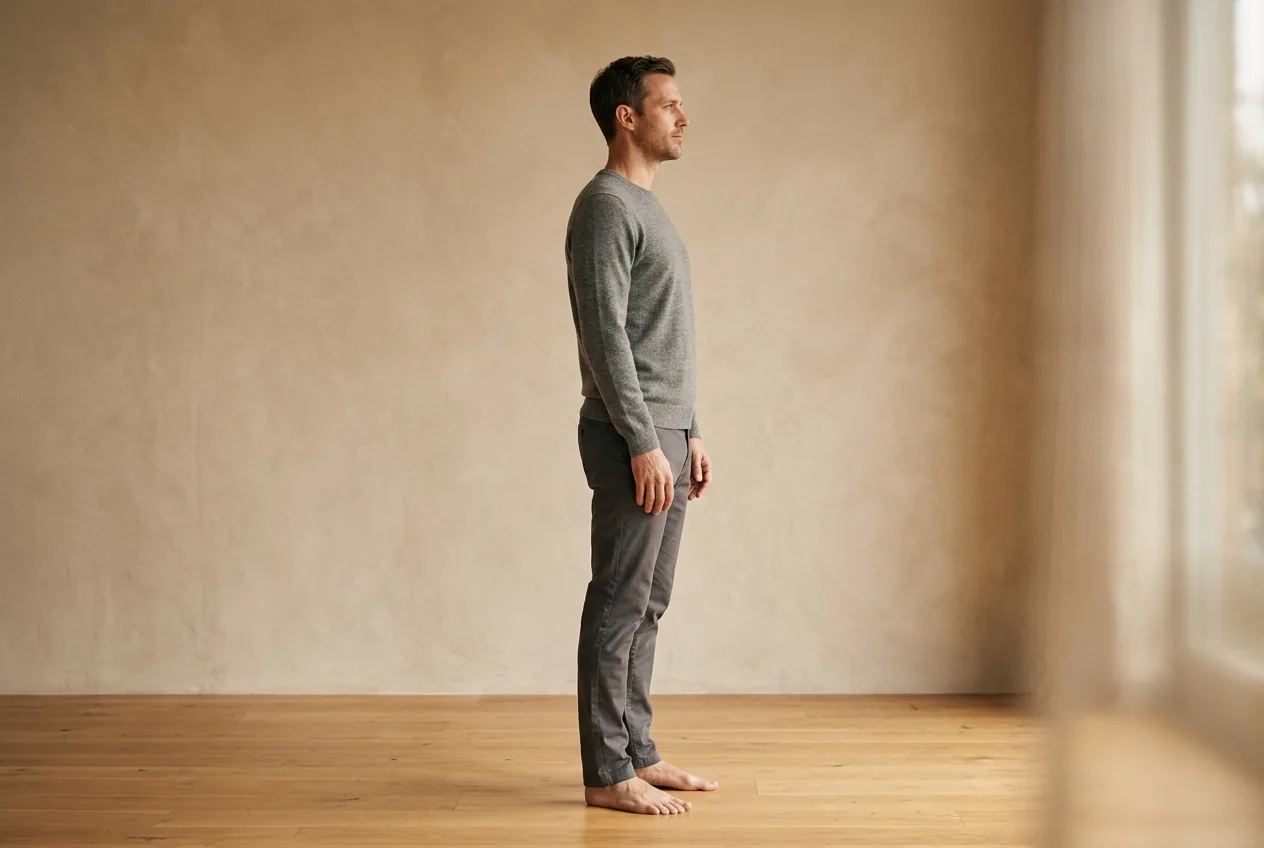
This is where slouching and digestion meet a deeper posture problem. A chronically rounded upper back and a collapsed midsection — the kind that comes with rounded shoulders and an over-tucked or over-arched pelvis — keeps the squeeze on permanently. Standing and sitting tall isn't just about looking better; for some people it's the difference in how their gut feels all afternoon.
When to see a doctor
This is posture education, not medical advice, and posture is only one small piece of digestion. See a clinician promptly if you have persistent or severe abdominal pain, ongoing bloating that doesn't settle, unexplained weight loss, blood in your stool, difficulty swallowing, frequent or worsening reflux, vomiting, or any change in bowel habits that lasts. Digestive symptoms have many causes well beyond posture, and the ones above need a proper look — don't write them off as "just slouching."
Why your default posture is the real lever
Sitting tall after a meal helps right away. But if you slump the moment you stop thinking about it, that's your default, and defaults are set by muscle balance — the muscles that hold your ribcage stacked over your pelvis have gone quiet, so collapsing forward is the path of least resistance. You can't think your way out of it meal by meal.
That's the case for knowing your own pattern. A short posture assessment measures where you actually deviate and builds a daily routine to wake up the muscles that hold you tall, so an open, uncompressed trunk becomes your resting state rather than something you have to remember at the lunch table.
Give your gut room. Sit tall, breathe into your belly, and don't fold over right after you eat.
Common questions
Can bad posture really cause bloating?
It can contribute. Slouching compresses your abdomen and squeezes the stomach and intestines, slowing how food and gas move through, which feeds a bloated, heavy feeling. A slumped posture also limits the diaphragm's gentle pumping action on the gut. Sitting and standing tall gives those organs more room to work.
Does sitting up straight help digestion?
Yes, in two ways. An upright trunk keeps your abdomen open so the stomach and intestines aren't compressed, and it lets your diaphragm move through its full range, which gently massages the gut as you breathe. Sitting tall through and after meals is the simplest posture change for digestion.
Why do I feel bloated after eating at my desk?
Eating then staying hunched over the keyboard is close to a worst case. You've added a meal's volume to your abdomen and then folded over it, compressing the organs and shutting down the diaphragm's pumping action right when your gut needs room. Sitting tall or taking a short walk after eating usually helps.
Can slouching cause acid reflux?
For some people, yes. A slumped posture puts pressure on the stomach and can make it easier for acid to push up toward the esophagus, especially right after a meal. Sitting upright takes that pressure off. Reflux that's frequent or worsening should be checked by a clinician, since posture is only one factor.