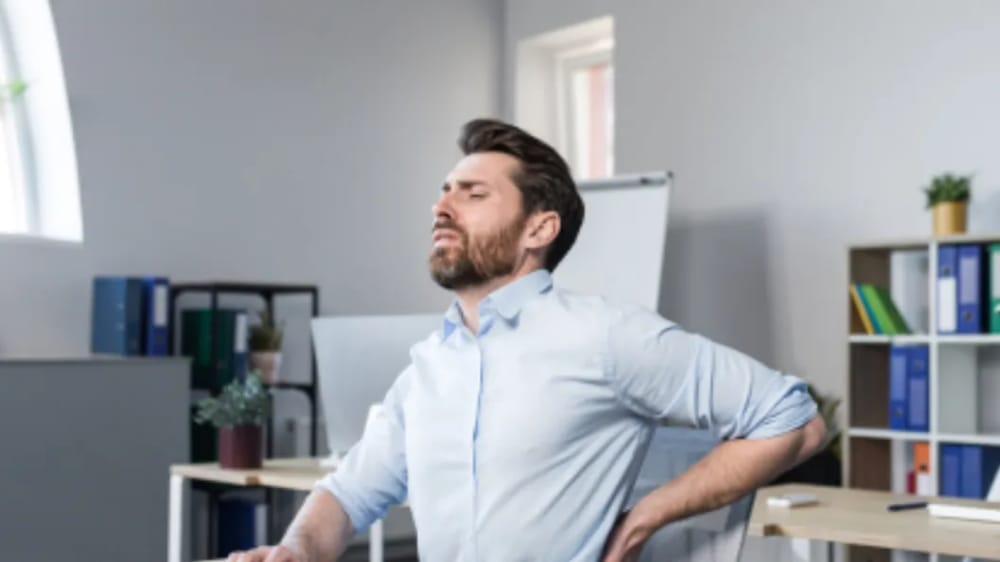
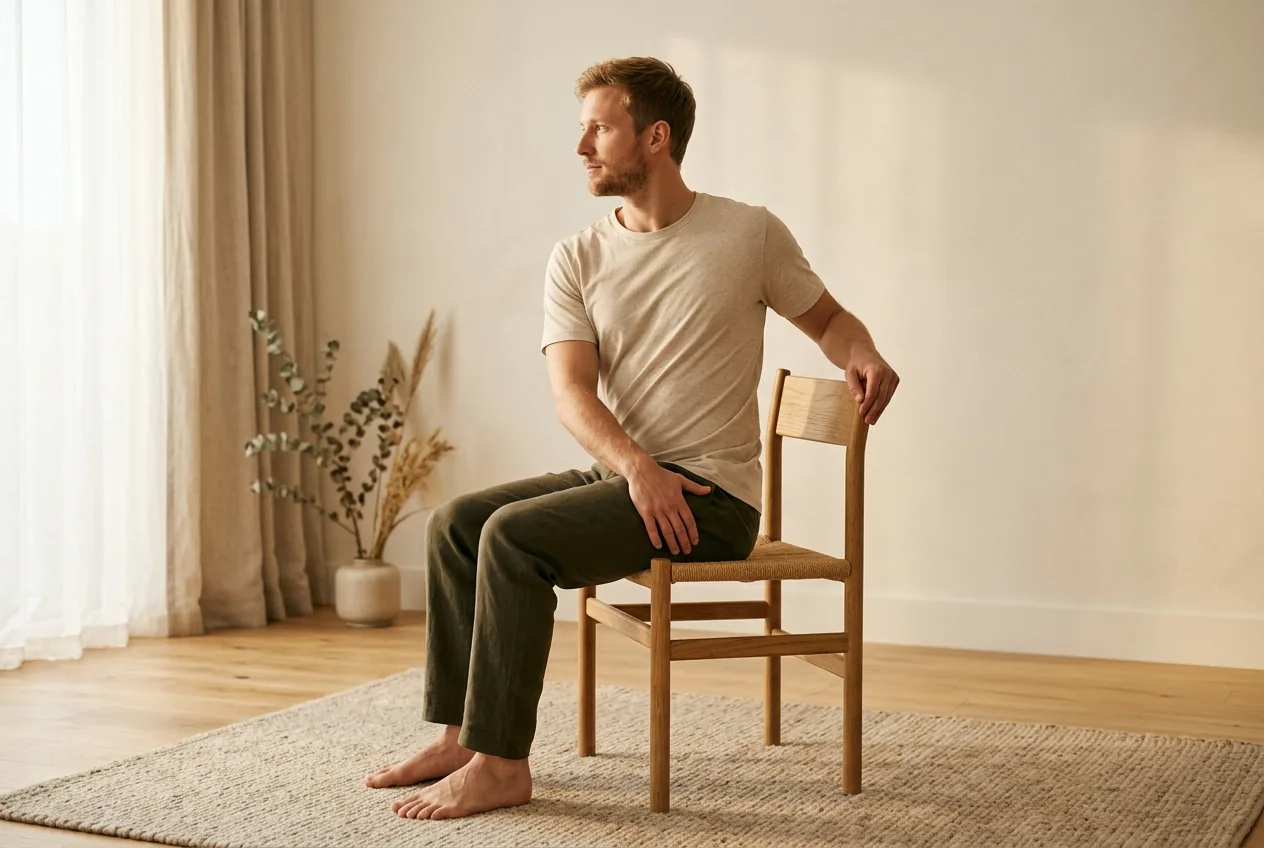
You twist in your chair until your spine fires off a satisfying string of pops, and for a moment your back feels lighter, looser, freed. Twenty minutes later the tightness has crept back, and you're twisting again. If your day is punctuated by the need to crack your back just to feel normal, the obvious question is whether it's actually doing anything — does cracking your back help, or is it just a habit dressed up as a fix?
The relief is real, but it's not what you think it is. And the loop you're stuck in is the tell that the pop isn't solving the problem.
What's actually happening when you crack your back
When you crack your back, the sound is gas releasing inside the small joints of the spine. Each joint sits in a fluid-filled capsule, and when you stretch it quickly, the pressure drops and a tiny bubble forms and bursts. That's the pop. It's the same harmless mechanism as cracking your knuckles. It doesn't move bones back into place, and despite the dramatic feeling, it isn't realigning anything.
So why the relief? Stretching the joint stimulates the nerves around it and triggers a brief wave of muscle relaxation, along with a small release of feel-good chemistry. For a few minutes the tightness eases and the area feels mobile. It's a genuine sensation. It's just temporary, and it's not connected to fixing whatever made your back tight.
The pop is gas in a joint and a quick nerve reset. It isn't putting anything back in place.
Why the relief never lasts
This is the part that explains the loop. The tightness you keep cracking away is usually a symptom, not the disease. Most chronic, non-traumatic back tightness comes from the body compensating around a postural imbalance — some muscles switched off, others overworking to cover, joints stiffening in the positions you hold all day.
Cracking briefly interrupts the tension signal. But the imbalance is still there the moment you stop. The overworked muscles go back to overworking, the stiff segments stay stiff, and within twenty minutes the pressure rebuilds and you reach to crack again. You're not failing to crack hard enough. You're treating a symptom on a loop while the cause sits untouched.
Heavy back-crackers often notice the relief getting shorter over time, which makes them crack more often. That escalating need is the clearest sign the pop isn't the answer.
Is cracking your own back dangerous?
For most people, the occasional self-crack from a gentle twist or stretch is harmless. Spines make noise. The concerns come from how you do it:
- Forcing it hard and repeatedly. Wrenching the same spot over and over can irritate the muscles and overstretch the joint, which ironically leaves things feeling tighter and primes the next urge.
- Cracking to chase real pain. If you're cracking because your back genuinely hurts, the pop is masking a problem rather than treating it, and persistent pain deserves a proper look.
- Aggressive twisting of an irritated back. If your back is in spasm or recently strained, forcing a crack can feed the guarding. Gentle movement helps more, as covered in lower back spasm relief.
Gentle is the rule. The hard, wrenching crack is the one worth dropping.
What to do instead
You don't have to quit, but you can give your back a more useful version of what it's looking for.
- Cat-cow. On all fours, gently round and arch your spine through a comfortable range. You get real, controlled spinal movement without the force. The cat-cow stretch guide shows the rhythm.
- Knee-to-chest and gentle rotations. Lying down, draw a knee toward your chest, or let your knees fall gently side to side. These mobilize the lower back safely. See the knee-to-chest stretch.
- Move and change position often. Much of the urge to crack comes from sitting still too long. Standing, walking, and resetting your posture every half hour keeps the stiffness from building.
- Strengthen what's switched off. The lasting fix is reactivating the muscles that aren't doing their job, so the others stop overloading. If you're deciding between hands-on options, chiropractor versus physical therapist is worth a read.
These give your back genuine movement and start to address why it tightens, instead of just resetting the alarm.
When to see a doctor
Posture work is education, not medical advice. Occasional painless cracking rarely needs a doctor. But see a clinician if you're cracking because of pain that's persistent or worsening, if you have numbness, tingling, or weakness spreading into a leg or arm, any loss of bladder or bowel control, pain after a fall or accident, a fever with back pain, or unexplained weight loss. Don't force aggressive back manipulation if any of those are present.
The fix the pop never delivers
Cracking your back buys a few minutes and sends you straight back to the tightness, because it never touches why the tightness is there. That reason is a postural pattern specific to you — which muscles switched off, which are overworking, where your spine is stuck.
A proper posture assessment measures your actual deviations and builds a daily routine that reactivates the quiet muscles and restores real movement. Address the pattern, and the constant urge to crack tends to fade on its own.
Common questions
Does cracking your back actually help back pain?
It gives brief relief by triggering a short wave of muscle relaxation, but it doesn't fix the cause. The tightness comes back because the postural imbalance making your back tight is still there. For lasting relief, gentle movement and strengthening the underworking muscles matter more than the pop.
Is it bad to crack your own back?
The occasional gentle self-crack is usually harmless. The concerns are forcing it hard and repeatedly, which can irritate the muscles and joints, and cracking to mask real pain rather than addressing it. If your back hurts enough that you need to crack it constantly, that's worth looking into.
Why do I always need to crack my back?
Because the pop only resets the tension for a few minutes, while the underlying cause keeps rebuilding it. Usually some muscles have switched off and others are overworking to compensate, and that imbalance reloads the moment the pop wears off, so you reach to crack again.
What can I do instead of cracking my back?
Gentle mobility like cat-cow and knee-to-chest gives your spine real movement without force, moving and changing position often stops the stiffness building, and strengthening the muscles that have switched off addresses the cause. Together these reduce the urge to crack over time.