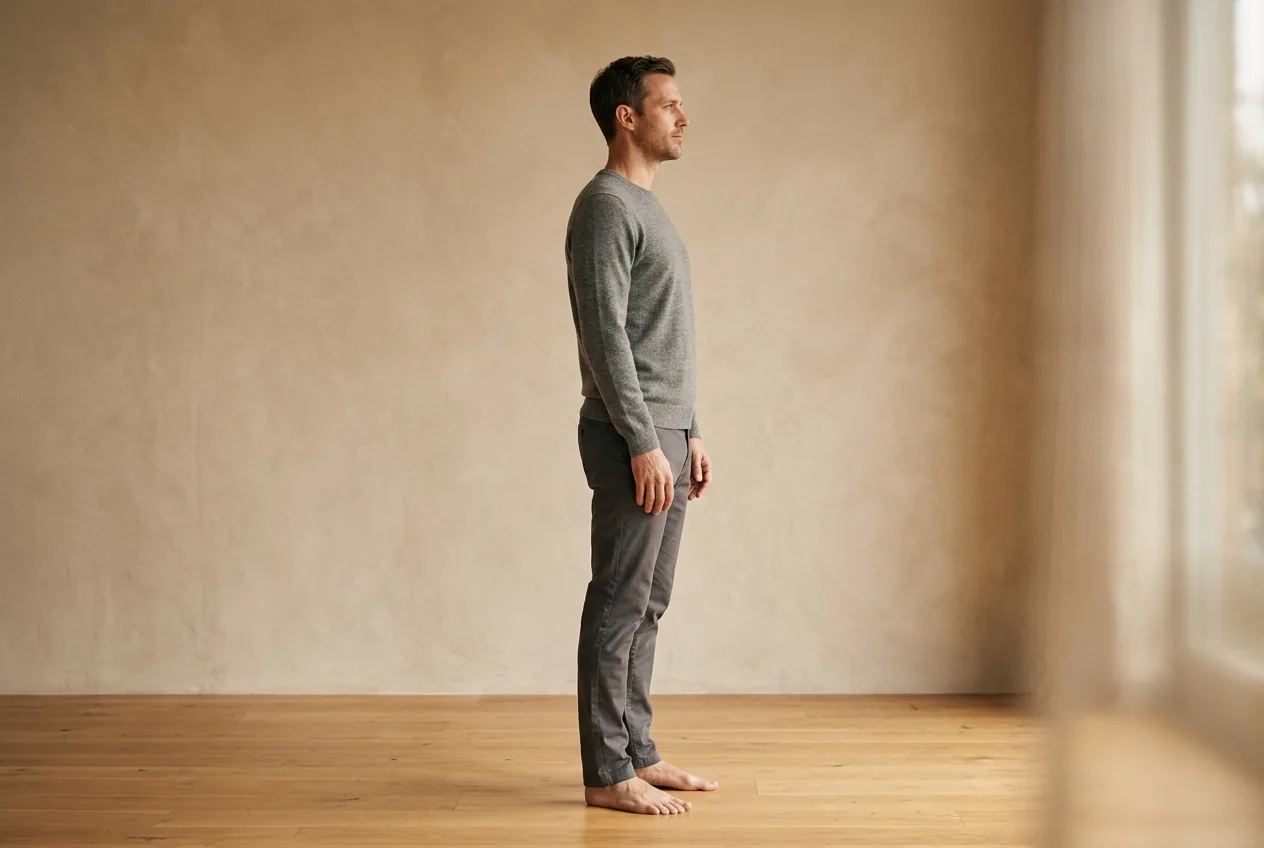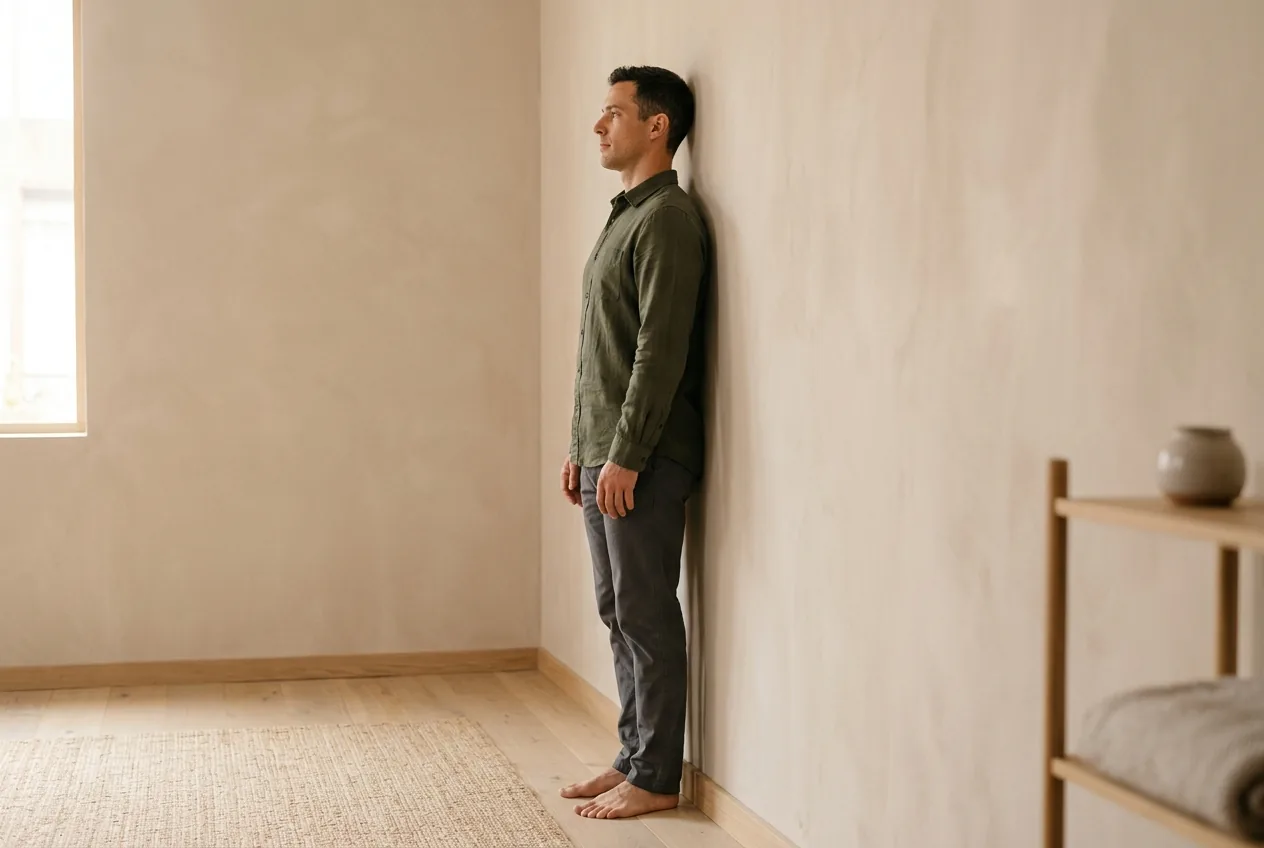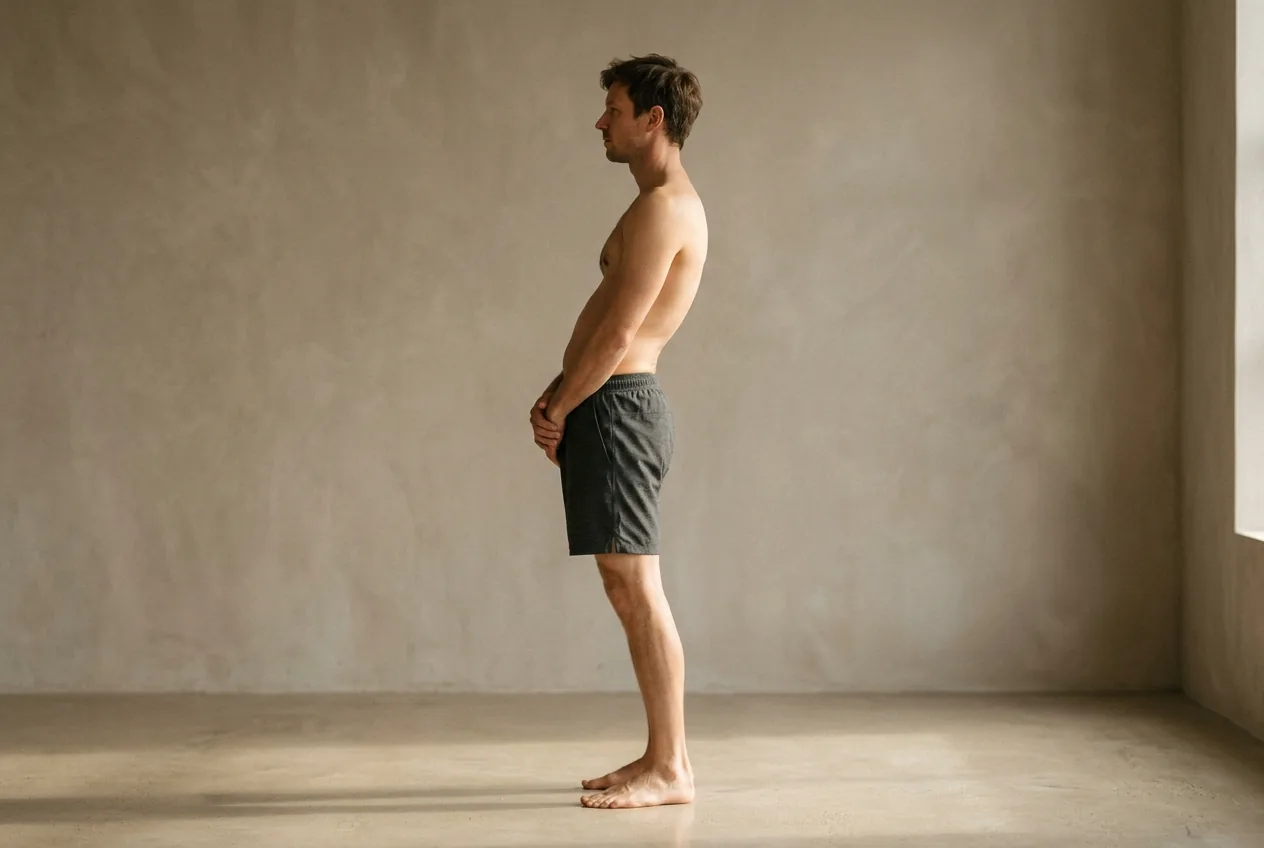
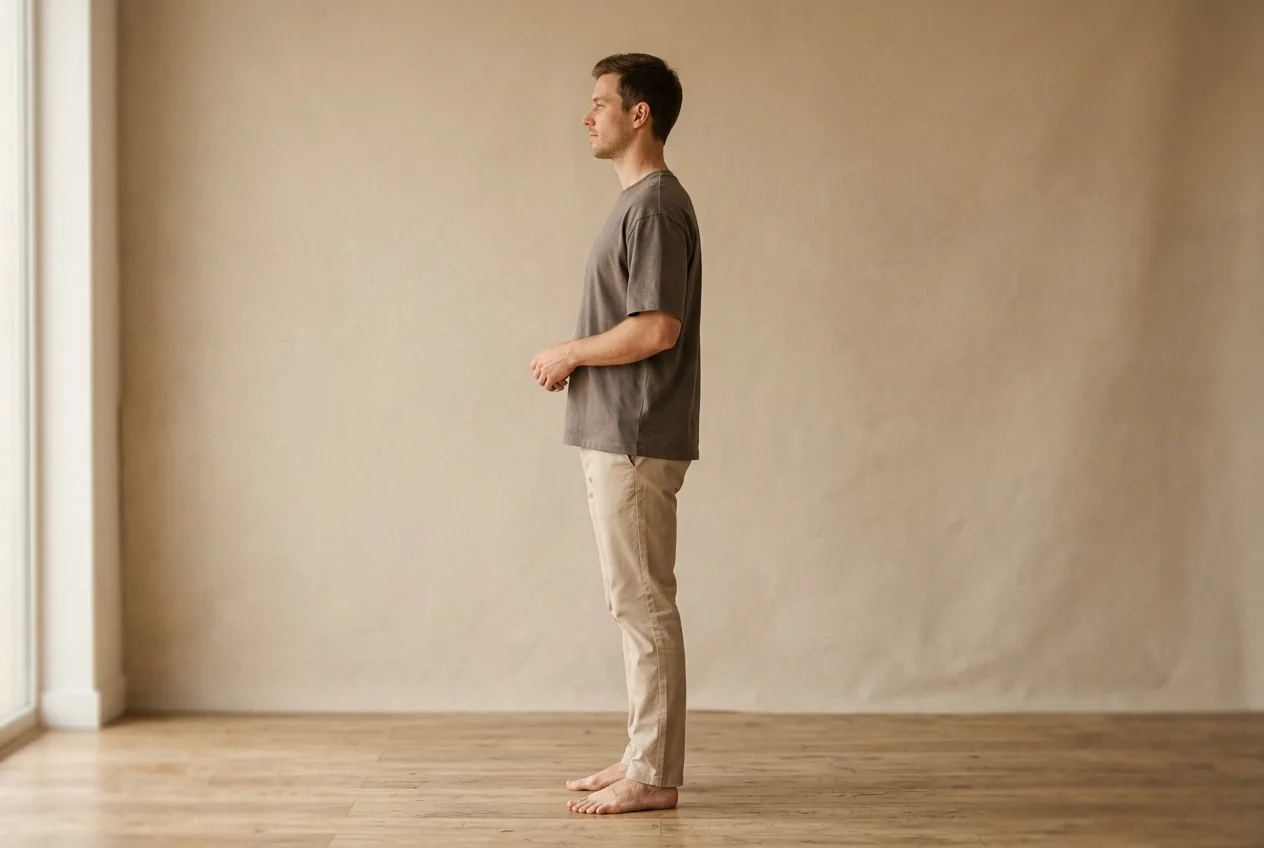
If you catch your reflection from the side and your back looks oddly straight — almost like a plank instead of an S — and standing for more than a few minutes makes you want to lean on something, you already know the feeling this article is about.
Most posture problems get blamed on too much curve: the rounded upper back, the swayed lower back. Flat back posture is the opposite problem. Here the lumbar spine has lost the gentle inward curve it's supposed to have, so the whole spine sits more vertical and rigid than it should. A flat back posture fix isn't about standing straighter. You're already too straight. It's about getting a healthy curve back.
What a flat back actually is
Your spine isn't meant to be a straight column. It has curves for a reason — they act like a spring, spreading load and absorbing the small shocks of walking, sitting, and standing. The lower back (the lumbar region) should curve slightly inward. That curve is called lordosis, and a normal amount of it is what lets you stand tall without effort.
In flat back posture, that inward curve flattens out. The pelvis tucks under, the tailbone drops, and the lower spine straightens. From the side, the line from your ribs to your hips looks flat rather than gently scooped. The body ends up tipped slightly forward, so you compensate by working to stay upright — which is why standing still becomes tiring fast.
This is the reverse of swayback or excessive lordosis, where the lower back curves too much. Same region, opposite deviation — and the corrective work is almost mirror-image. That's the whole reason generic posture advice misfires. The same move that helps a swayed back can make a flat back worse.
Why your spine lost its curve
A flat back is usually a learned pattern, built by what the muscles around the pelvis are doing all day.
The pelvis is the base your spine sits on. Tilt it one way and the lumbar curve deepens; tilt it the other and the curve flattens. In flat back posture, the pelvis is tucked under — what's often called a posterior pelvic tilt. The muscles that pull it into that tuck stay switched on and tight, while the ones that should restore the curve go quiet.
A few common drivers:
- Long hours slumped in a chair. When you sit and let your pelvis roll backward, your lower back rounds. Do that for years and the body treats the tucked position as home.
- Overtrained abs, underused back. Endless crunching without balancing back and hip work can pull the pelvis into a permanent tuck.
- Tight hamstrings and glutes. These muscles attach to the back of the pelvis. When they're tight, they drag the pelvis down and under, flattening the curve from below.
- Age-related changes. In some older adults, the spine gradually loses lumbar curve and pitches forward. That's a different, more structural situation worth raising with a clinician.
The pattern feeds itself. The flatter the spine, the harder the back muscles work to keep you vertical, and the more fatigued and stiff everything feels by evening.
What a flat back posture fix involves
You don't fix a flat back by yanking your shoulders back or jamming your chest out. That just adds strain higher up. The goal is to coax the lumbar curve back by changing what the pelvis does — releasing what's pulling it under and waking up what should be restoring the curve.
A sensible starting sequence:
- Loosen the hamstrings, gently. Tight hamstrings keep the pelvis tucked. A slow, supported hamstring stretch — lying on your back, one leg raised with a strap or towel behind the thigh, knee soft — gives the pelvis room to tilt forward again. Hold easy stretches, don't bounce.
- Wake up the hip flexors. The muscles at the front of the hip help create lumbar curve. A gentle kneeling lunge position, with the back knee down and a slight forward shift, lets the front of the trapped hip lengthen and the pelvis rotate toward neutral.
- Relearn the curve lying down. Lie on your back, knees bent, feet flat. Without forcing, allow a small natural gap to form under your lower back rather than pressing your spine into the floor. This rehearses the curve your body forgot.
- Strengthen the back of the body in balance. A controlled glute bridge — lifting the hips by squeezing the glutes, not by arching hard — rebuilds the pattern that supports a healthy curve from behind.
A flat back isn't corrected by standing straighter. It's corrected by giving the pelvis permission to tilt the way it forgot how to.
What to stop doing matters just as much. Ease off relentless crunches and ab work that reinforces the tuck. Stop pressing your lower back flat against the floor in every exercise — that's the opposite of what you need here. And break up long bouts of slumped sitting, since that's where the pattern gets rehearsed most.
When to see a doctor
Posture work is education, not medical care, and a flat back is usually a soft-tissue pattern rather than a disease. But see a clinician promptly if you notice numbness, tingling, or weakness spreading into your legs; any loss of bladder or bowel control; back pain that follows a fall or accident; fever alongside back pain; unexplained weight loss; or pain that's severe or steadily getting worse. In older adults, a spine that's progressively pitching forward and won't straighten deserves a medical evaluation rather than self-correction.
Knowing your own pattern
Here's the catch with a flat back. The corrective moves above are reasonable starting points, but they only help if a flat back is actually what you have — and if you're not also carrying a second deviation higher up that's pulling things out of line. A flat lower back paired with a forward head, for example, needs a different order of operations than a flat back on its own.
Generic advice can point you in a direction. Lasting relief comes from knowing your specific pattern — which curves are off, what's switched on, what's switched off, and what to address first. That's what a posture assessment is for: it measures your actual deviations from a few photos and builds the sequence around them, instead of leaving you to guess. If you'd rather start by eyeballing it yourself, the at-home wall test is a quick first look.
A flat back took years to build. It responds to the right correction repeated daily — not to standing up straighter and hoping it holds.
Common questions
What does flat back posture mean?
It means the lower spine has lost the gentle inward curve it's supposed to have, so the back looks straight rather than scooped from the side. The pelvis tucks under, the body tips slightly forward, and standing still gets tiring because you're working to stay upright.
Why does standing make my flat back feel tired?
With the lumbar curve flattened, the spine can't act like a spring to spread load, and the body tips slightly forward. So your back muscles work overtime to keep you vertical, and everything feels fatigued and stiff by evening.
Is flat back the opposite of swayback?
Yes. Swayback, or excess lordosis, is too much lower-back curve; flat back is too little. Same region, opposite deviation, and the corrective work is nearly mirror-image — which is why a routine for one can make the other worse.
Should I stop pressing my lower back into the floor during exercise?
For a flat back, usually yes. Pressing the spine flat reinforces the very flattening you're trying to undo. The aim is to let a small natural curve return, so allowing a gentle gap under the lower back rehearses the curve your body forgot.