If bending to load the dishwasher sends a hot line down one leg, and sitting for more than ten minutes makes you want to stand up and pace, you already know the kind of back this article is about. A disc has bulged or torn enough to press on or irritate a nearby nerve, and now even small movements feel like negotiations.
The good news is that most herniated discs settle over weeks to a few months, and movement is part of why. The catch: not all movement helps. The same exercise that relieves one person can light up another, depending on which way the disc material has shifted and which positions ease the pressure. That's why generic herniated disc exercises pulled off a video often disappoint — they're not matched to how your back actually responds.
What's actually happening in there
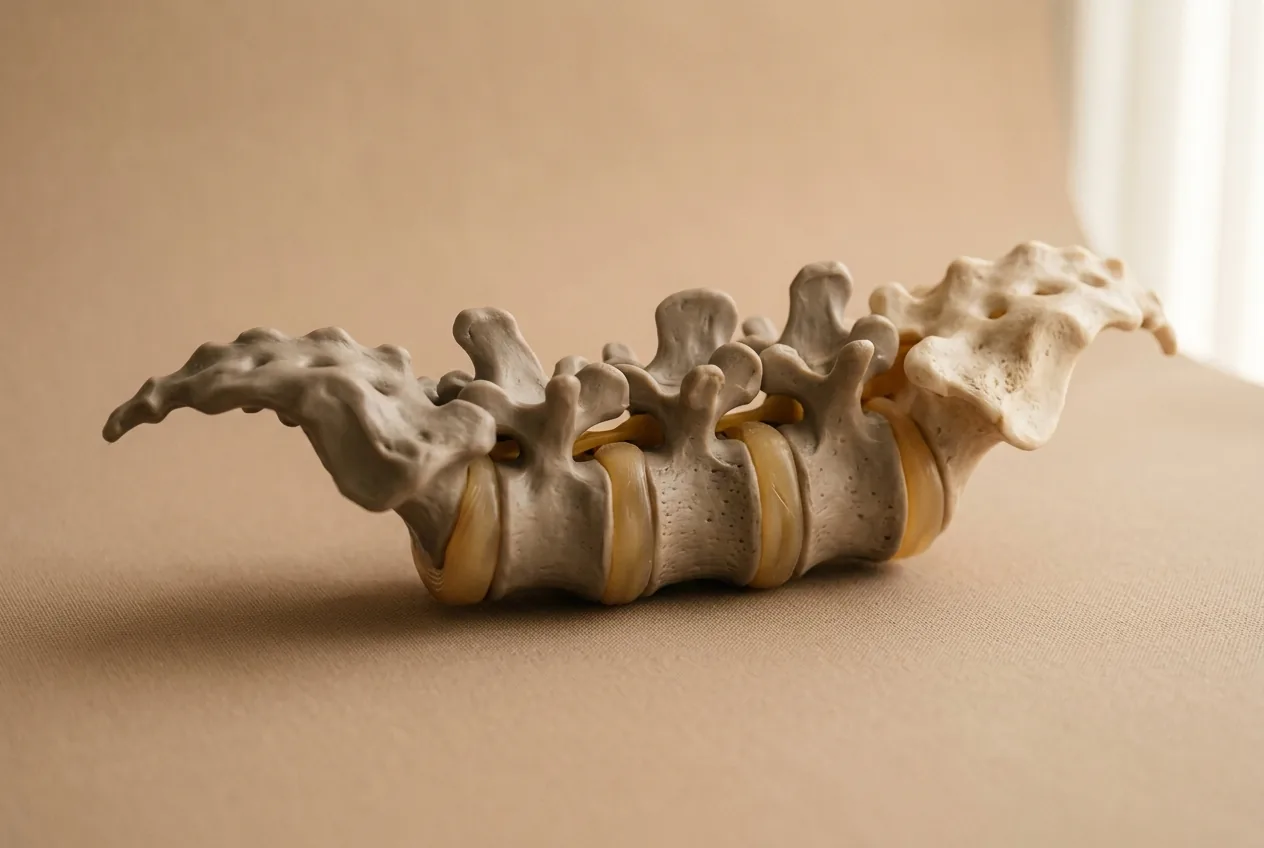
A spinal disc is a tough outer ring with a soft, gel-like centre. With age, repeated loading, and long hours folded forward at a desk, the outer ring can weaken. Under load — usually bending and lifting — the centre can push outward, sometimes far enough to contact a nerve root. That contact is what refers pain, numbness, or tingling into the buttock, thigh, or foot.
Here's the part people miss. The disc didn't fail at random. It often gives way at the segment that's been carrying the most uneven load for years, because the body has been compensating around a postural imbalance. Tight hip flexors tip the pelvis, the lower back over-arches or flattens to cope, and one or two segments end up doing the work several should share. The herniation is the visible event. The setup was quietly in place long before.
That matters for exercise selection. You can calm the nerve and still leave the loading pattern that caused it untouched — which is a big reason disc pain comes back.
Moves that usually help
Start gentle, stay below the line where leg symptoms increase, and stop any move that sends pain further down the leg. That last point is the rule that keeps you safe: pain spreading down the leg means back off; pain pulling back up toward the spine usually means you're moving the right way.
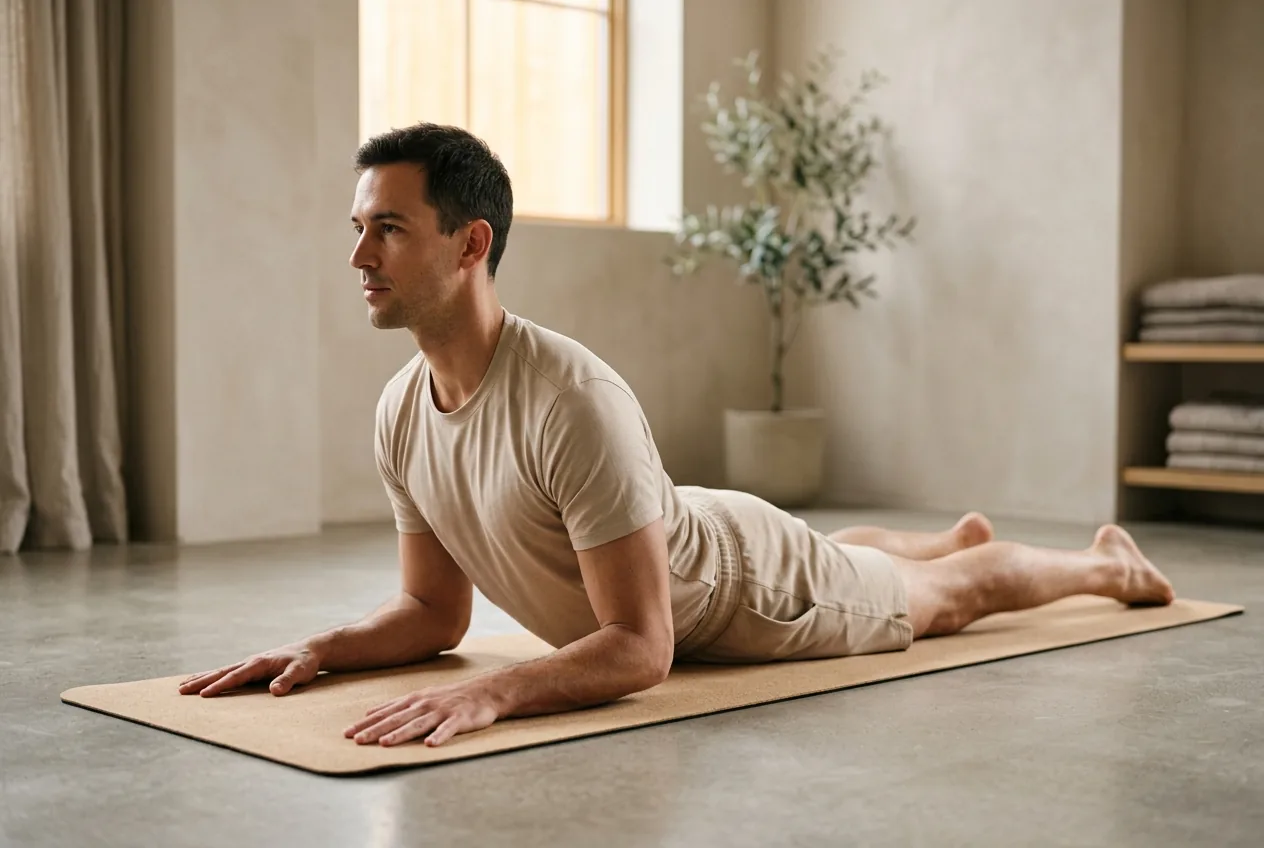
- Prone press-up (gentle extension). Lie face down, prop on your forearms, and let your lower back sag while your hips stay on the floor. Breathe. Many people with a disc that's shifted backward feel leg symptoms ease as they extend. Hold for a few seconds, repeat slowly. If it worsens leg pain, skip it.
- Walking. Short, frequent walks beat one long one. Gentle loading pumps fluid through the disc and keeps the nerve gliding instead of sticking. Five to ten minutes, several times a day, is plenty early on.
- Knee-to-chest, one leg at a time. On your back, draw one knee gently toward your chest to ease tension in the lower back and buttock. Keep it slow and pain-free.
- Diaphragmatic breathing with a gentle abdominal brace. Learning to lightly engage the deep core protects the segment when you move. This isn't a hard crunch — it's a quiet tightening, as if bracing for a light poke.
If leg symptoms are dominant, some of the same ideas in sciatica stretches you can do at home overlap here, since a herniated disc is a common driver of sciatica.
What to stop doing for now
A few common habits keep a disc irritated. Pausing them gives the tissue room to settle.
- Deep forward bends and toe-touches. Folding forward loads the front of the disc and pushes the centre back toward the nerve — exactly the wrong direction in the early stages.
- Sit-ups, crunches, and loaded twisting. Repeated flexion under load is the position most discs dislike. There's a wider list worth reviewing in exercises to avoid with lower back pain.
- Long stretches of sitting. Sitting raises disc pressure more than standing. Set a timer and get up every twenty to thirty minutes.
- Heavy lifting from a rounded back. If you must lift, hinge at the hips, keep the load close, and keep the spine long.
Early on, the goal isn't to strengthen hard — it's to stop feeding the irritation, then rebuild.
How to build back up
Once the sharp leg symptoms calm, the work shifts from settling the nerve to restoring support. Glute strength matters here, because weak glutes leave the lower back doing their job. Gentle bridging, side-lying hip work, and slow, controlled hip hinges rebuild the pattern that shares load properly. Progress by how your back responds over the next day, not by how a session feels in the moment. A move that feels fine but leaves you stiff and sore the next morning was too much.
It's worth knowing whether your pain is genuinely disc-related or coming from muscle and joint irritation, because the plans differ. If you're unsure, how to tell muscle pain from disc pain walks through the signs.
When to see a doctor
Most disc flare-ups improve with time and sensible movement, but some signs need prompt attention. See a clinician quickly if you notice numbness or weakness spreading down the leg, foot drop (catching your toe when you walk), or pain after a fall or accident. Get urgent care for any loss of bladder or bowel control or numbness around the saddle area between the legs — that combination is rare but treated as an emergency. Also check in if pain is severe, steadily worsening, or comes with fever or unexplained weight loss. None of this is meant to alarm you; it's the short list worth keeping in mind. Work with your clinician on diagnosis and on whether imaging or other care makes sense for you.
Why matching the plan to your body matters
Two people can have the same scan and need almost opposite routines. One does better extending, the other doesn't; one needs the hips opened up, the other needs the deep core switched on first. Generic herniated disc exercises ignore that, which is why they so often stall. Lasting relief tends to come from knowing your own pattern — which segments are overloaded, which muscles switched off — and training the specific correction daily. That's the idea behind the posture-based method for chronic back pain: a routine built around your actual deviations rather than a one-size guess.
No exercise plan cures a disc, and this article isn't medical advice. But moving in the directions your back tolerates, avoiding the ones it doesn't, and rebuilding the support it lost is how most people get their normal days back — picking up a toddler, sitting through a meeting, sleeping through the night without that line down the leg.
Common questions
How do I know if a herniated disc exercise is safe to do?
Watch which way your leg symptoms move. Pain spreading further down the leg means back off; pain pulling back up toward the spine usually means you're moving in a good direction. Stop any move that sends pain further down the leg.
Should I rest or keep moving with a herniated disc?
Gentle movement is part of how most discs settle. Short, frequent walks and pain-free range-of-motion work help more than bed rest, which tends to stiffen the back. Work with your clinician if you're unsure how much is right for you.
Why do generic herniated disc exercises sometimes make it worse?
The same exercise that relieves one person can flare another, depending on which way the disc material has shifted and which positions ease the pressure. A routine that isn't matched to how your back actually responds can move it in the wrong direction.
What symptoms mean I should see a doctor right away?
Get urgent care for any loss of bladder or bowel control or numbness around the saddle area between the legs. See a clinician quickly for numbness or weakness spreading down the leg, a foot that catches when you walk, pain after a fall, fever, or unexplained weight loss.