Stand up from a chair and notice what does the work. If it's your lower back and the fronts of your thighs straining while your backside stays quiet, you've found the pattern that quietly feeds a lot of stubborn back pain. Hip extension exercises are how you hand that job back to the muscles that are supposed to do it.
Hip extension is just the movement of driving your thigh backward, or driving your hips forward over a planted leg. It's what happens every time you stand, climb a stair, or push off to walk. The main engine for it is the glutes. When they fire on cue, your back gets a break. When they don't, something else covers, and that something is usually your lower spine.
What hip extension is and which muscles do it
Picture standing on one leg and pushing the other thigh straight back behind you. That's hip extension. The muscles that extend the hip are mostly the gluteus maximus, with the hamstrings assisting and the deeper glutes (medius and minimus) keeping the pelvis level. Together they make up the powerhouse on the back of your hips.
Here's the trouble. Sitting for hours leaves the glutes switched off and the hip flexors at the front shortened and tight. Day after day the body learns to skip the glutes. So when you finally need hip extension — standing up, climbing stairs, lifting your kid — the brain recruits the lower back and hamstrings to fake it instead. The glutes are present but asleep.
That swap is a slow problem. The lower back and hamstrings are doing a job they weren't built to do all day, so they fatigue and ache, while the glutes get weaker from disuse. This is the loop behind weak glutes and the back pain that follows. Reawakening hip extension breaks it.
When the glutes go quiet, the lower back doesn't get a rest — it gets a second job.
Glute activation first, then strength
You can't strengthen a muscle you can't feel. So the first step with most people isn't loading the glutes harder — it's getting them to fire at all. This is glute activation, and it takes a few minutes before the real work.
A simple way to check: lie on your back, knees bent, and squeeze your backside hard. Can you feel both cheeks clench evenly, or does one side lag and the hamstrings cramp instead? If the hamstrings take over, that's your sign the glutes need waking up before you add load.
Spend the first part of any session on small, deliberate moves where you actively feel the glute working. Once it's firing, the strength exercises below actually train the right muscle.
The hip extension exercises that matter
Move slowly and feel each rep in your glutes, not your lower back. If your back is doing the work, drop the range until the glute takes over.
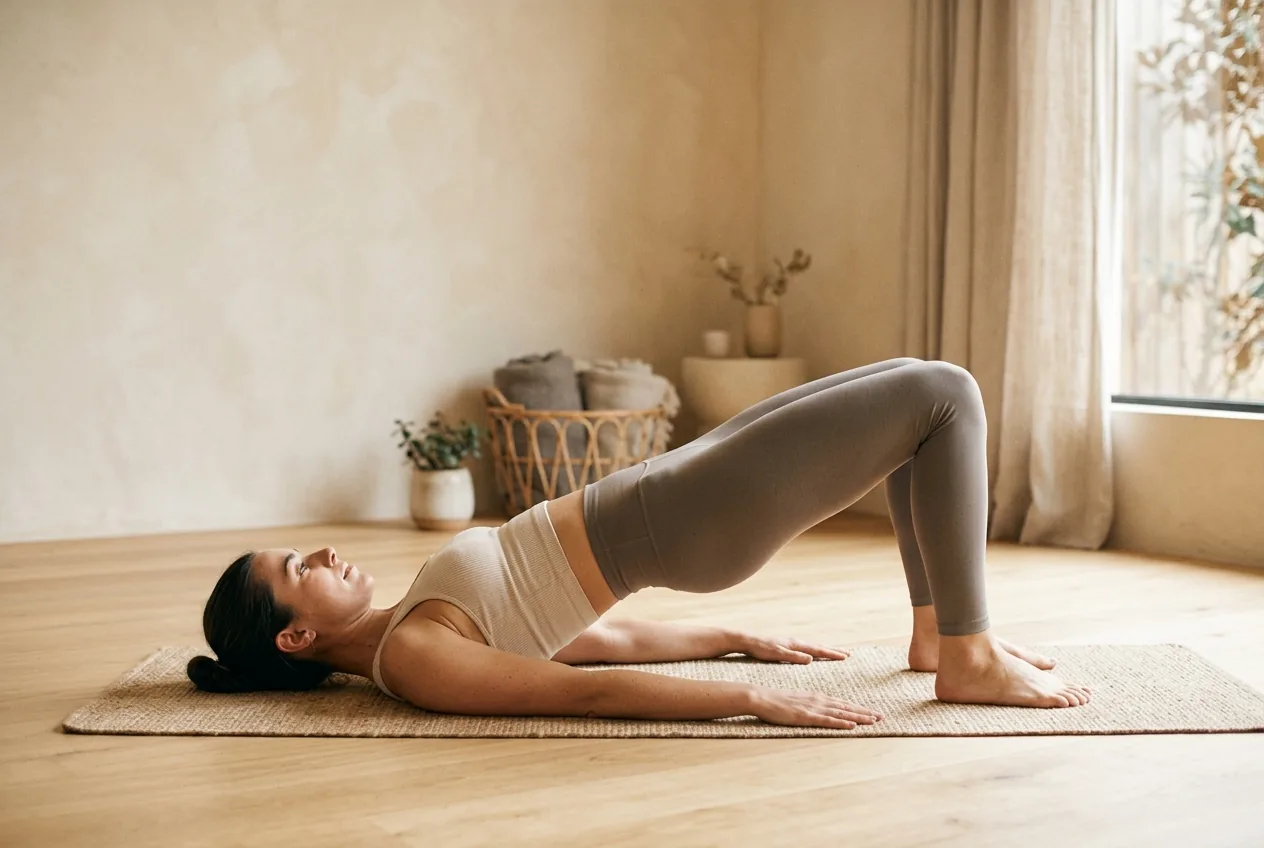
Glute bridge
Lie on your back, knees bent, feet flat and close to your backside. Press through your heels, squeeze your glutes, and lift your hips into a straight line from knees to shoulders. Pause at the top, then lower slowly. The whole point is to feel the glutes drive the lift, not arch the lower back. Two or three sets of ten to twelve. This is the foundational move, and the glute bridge for back pain walks through the finer points.
Standing hip extension
Stand tall, hold a counter for balance, and slowly press one straight leg back behind you a few inches, leading with the heel and squeezing the glute. Keep your torso upright — don't lean forward to get more range, because that just hands the move to your lower back. Slow and controlled, ten to twelve per side.
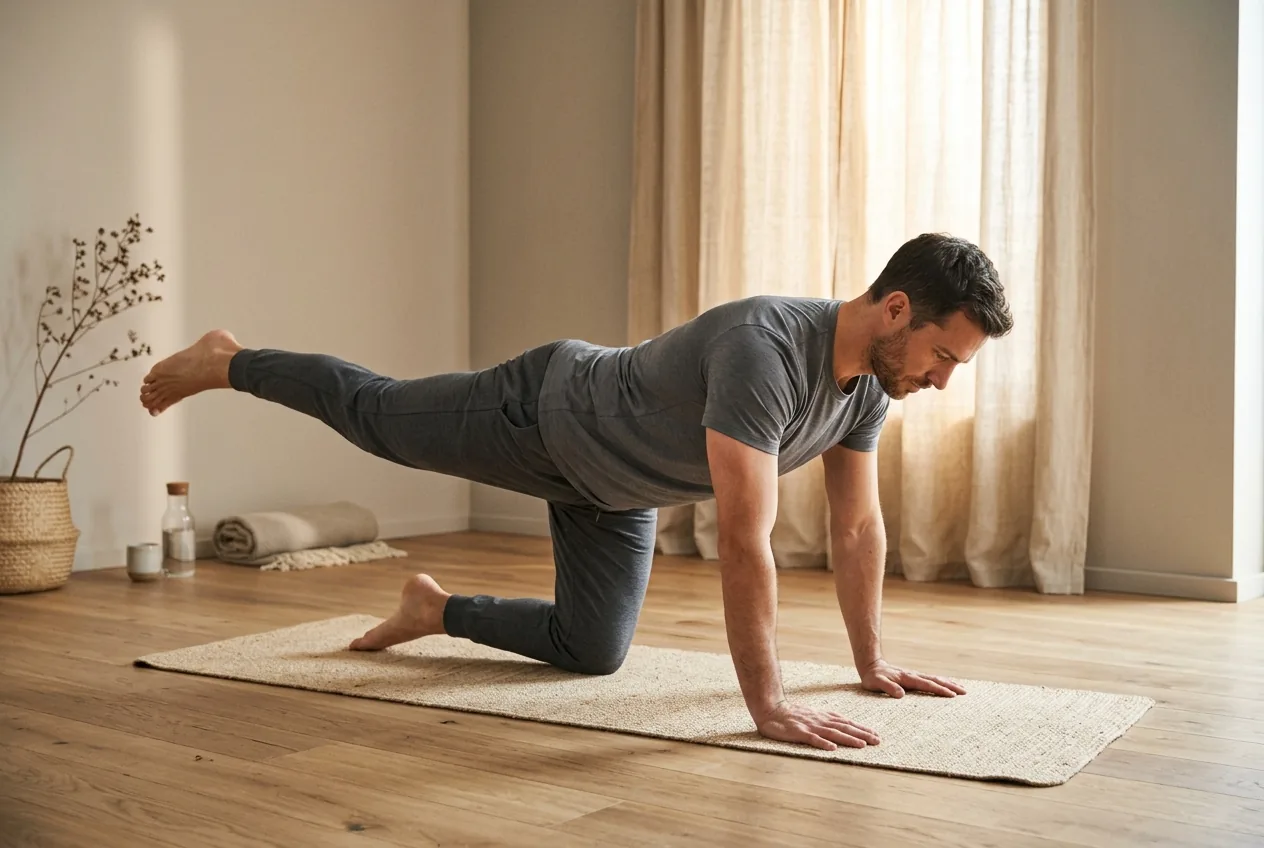
Bird dog
On hands and knees with a neutral spine, reach one arm forward and the opposite leg back until both are level with your back, driving the leg back through the glute. Hold a beat, keep your hips square, return, and switch. This trains hip extension while your trunk stays steady — exactly what happens when you walk. Two sets of eight to ten per side.
Quadruped hip extension (donkey kick)
On hands and knees, keep one knee bent at ninety degrees and press that foot toward the ceiling, driving the hip into extension with the glute. Keep the movement small and controlled; stop before your lower back starts to arch. Ten to fifteen per side.
Step-ups
Step onto a low box or sturdy step, driving up through the heel of the planted leg and standing tall at the top. The push-up comes from the glute extending the hip. Step down with control. Eight to ten per side once the floor moves feel easy.
Common mistakes that send the work back to your spine
- Arching the lower back to fake range. If your hips can't extend far, the back cheats by arching. Shorten the movement and keep your ribs down. Range from the glute beats fake range from the spine every time.
- Letting the hamstrings cramp. When the hamstrings do all the work and cramp on bridges, your glutes aren't firing. Pause, re-squeeze the glutes, and start the lift from there.
- Rushing. Hip extension work is about control and feeling the right muscle, not reps for speed. Slow down.
- Skipping activation. Going straight to heavy step-ups with sleepy glutes just trains the same old compensation. Wake the muscle first.
- Leaning the torso forward on standing moves. Stay upright. The second you tip forward, the lower back takes the load.
Start with two or three sessions a week. The glutes respond fast to consistent, deliberate work — many people feel them switch on properly within a couple of weeks.
When to see a doctor
Hip extension work is exercise and education, not medical treatment. Stop and see a clinician promptly if these moves bring on numbness, tingling, or weakness down a leg, any loss of bladder or bowel control, or if you have back or hip pain after a fall, fever with back pain, unexplained weight loss, or pain that's severe or steadily getting worse.
Why generic glute work doesn't always land
Waking the glutes helps most people whose backs are tired from compensating. But the catch is that a glute exercise that helps one posture can do little for another, because the reason your glutes switched off depends on how your pelvis sits. A pelvis tipped one way loads the glutes differently than one tipped the other, so the same bridge lands differently on two people. General activation is a fair starting point. The version that sticks is the one matched to how your hips and pelvis are actually positioned, which is what a posture assessment built around your own pattern is for, rather than guessing from how a move feels on day one.
Common questions
Which muscles extend the hip?
The gluteus maximus is the main hip extensor, with the hamstrings assisting and the deeper glute muscles keeping your pelvis level. Together they drive your hip backward and push your body forward when you walk, stand, or climb stairs. When they're weak or switched off, the lower back tends to take over.
How do hip extension exercises help back pain?
When your glutes do their job, your lower back stops covering for them. A lot of everyday back ache comes from the spine compensating for sleepy glutes during standing, walking, and standing up. Strengthening hip extension hands that work back to the right muscles and takes load off the spine.
How do I know if I'm using my glutes or my lower back?
You should feel the squeeze in your backside, not a pinch or arch in your lower back. On a glute bridge, the lift should come from the glutes with the hamstrings only assisting. If your lower back arches or your hamstrings cramp, shorten the range and re-set so the glute starts the move.
How often should I do hip extension exercises?
Two or three sessions a week is a sensible target. Start with activation and bodyweight bridges, then add standing extension, bird dog, and step-ups as the glutes wake up. Consistency matters more than intensity — short, frequent sessions beat occasional hard ones.