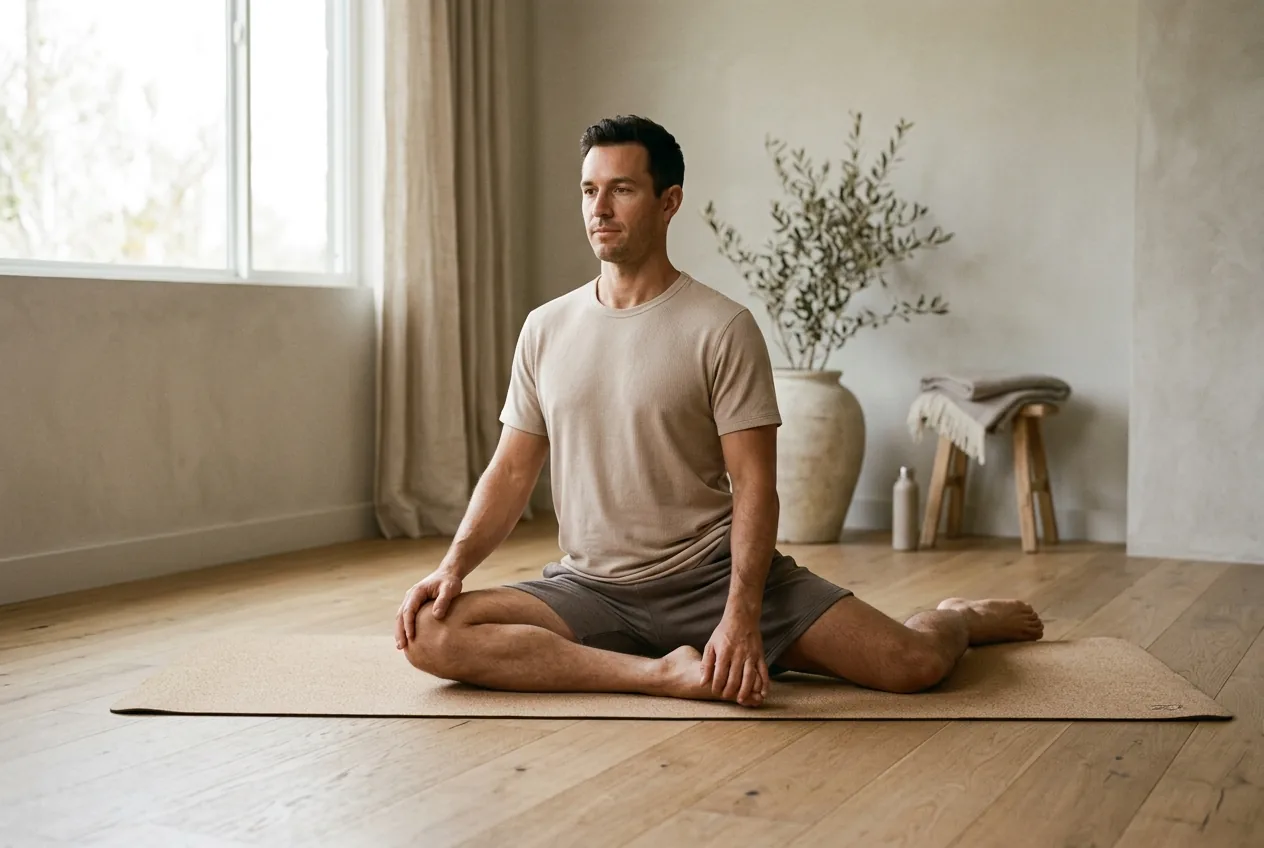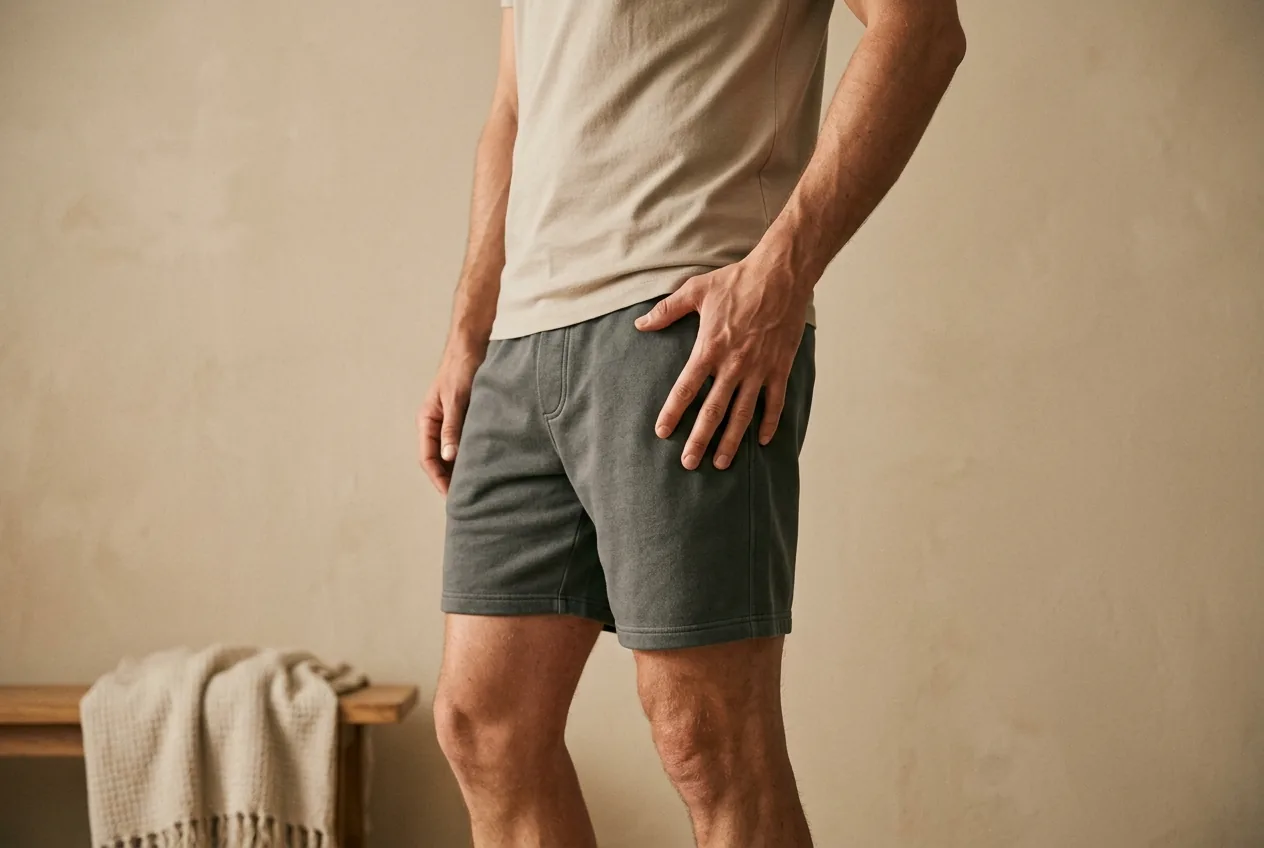
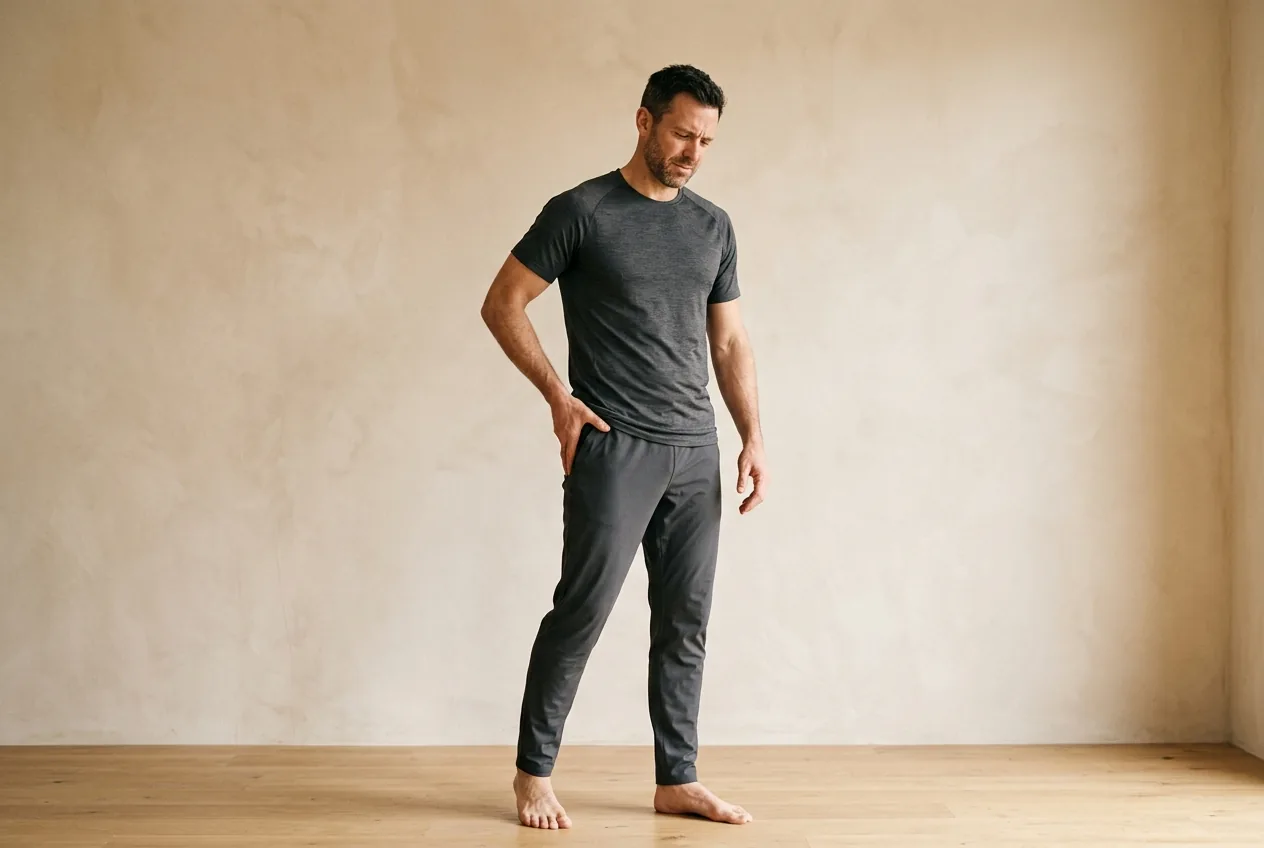
You go to lift your knee — getting out of the car, climbing a stair, kicking a ball with your kid — and a sharp catch fires at the very front of your hip, right in the crease where your thigh meets your torso. Sometimes it pulls when you stand up from a chair after a long sit. That deep, front-of-hip pull is the classic sign of a hip flexor strain, and the frustrating thing is that plenty of people get one without ever doing anything athletic.
If that's you — desk job, no big injury, just a nagging pull at the front of the hip that won't settle — the cause is probably the chair, not a workout. Here's how that happens and how to heal it.
Where the hip flexor actually is
The hip flexors are the muscles that lift your thigh toward your chest. The main one, the iliopsoas, is a deep muscle that runs from your lower spine and the inside of your pelvis, crosses the front of the hip joint, and attaches near the top of your thigh bone. A smaller one, the rectus femoris, runs down the front of the thigh and also crosses the knee.
A strain means some of those muscle or tendon fibres got overstretched or torn — usually a mild grade you can recover from at home. You feel it at the front of the hip or deep in the crease, and it bites most when you lift the knee or sprint, kick, or stand up quickly.
Why sitting causes it
This is the part that surprises people. You'd expect a strain to come from a sudden movement, and sometimes it does. But sitting sets the muscle up to fail.
When you sit, your hip flexors are held short for hours at a time. Muscles adapt to the position they live in, so a muscle kept short all day gradually loses the length it should have. Now it's tight and a little weak. Then you ask it to do something quick — sprint after the bus, lunge for a dropped phone, stand and pivot fast — and a shortened, underprepared muscle is exactly the kind that tears. The strain feels sudden, but it was years of sitting that loaded the gun.
There's a second layer. Tight hip flexors tip the pelvis forward, dragging the lower back into an exaggerated arch. That anterior pelvic tilt keeps tension on the front of the hip even at rest and makes the muscle prone to flaring. The same sitting habit behind tight hip flexors from sitting is the one behind most non-athletic strains.
A hip flexor strain usually isn't an accident. It's a shortened muscle finally meeting a demand it wasn't ready for.
How to heal a hip flexor strain
The first few days and the following weeks call for different things. Rushing the early stretch is the most common mistake.
First 2 to 3 days: settle it down
- Back off the aggravating moves. Avoid sprinting, kicking, deep lunges, and stairs taken fast. You don't need bed rest — gentle walking is fine — just stop reproducing the sharp pull.
- Ice the front of the hip for 10 to 15 minutes a few times a day if it's sore and feels inflamed.
- Don't stretch hard yet. Aggressively stretching fresh torn fibres can set you back. Easy, pain-free movement only.
After the sharp pain eases: restore length and strength
Once lifting your knee no longer catches sharply, start rebuilding. Go slow and stay out of pain.
Kneeling hip flexor stretch. Kneel on the sore side's knee in a lunge, front foot flat ahead. Tuck your tailbone under and squeeze that glute, then ease your hips gently forward until you feel a mild stretch across the front of the kneeling hip. Hold 30 seconds, two or three times. The tailbone tuck is what makes it work — without it you just arch your back and miss the muscle. The hip flexor stretch for back pain breaks this down further.
Glute bridge. Lie on your back, knees bent, feet flat. Drive through your heels and lift your hips, squeezing your glutes at the top. Strong glutes take load off the overworked hip flexors. Do 10 to 12, building over days.
Standing knee lift. When pain-free, slowly lift the sore-side knee to hip height and lower it under control. This rebuilds the muscle's strength through its range. Start with a few, add reps as it tolerates.
What slows healing down
- Sitting all day again the moment it feels better. That re-shortens the muscle you're trying to lengthen.
- Stretching through sharp pain. Mild pull is fine; a catch means stop.
- Ignoring the glutes. If the glutes stay weak, the hip flexor keeps overworking and the strain lingers or returns.
- Going back to full sprinting or sport before you can lift the knee hard without pain.
Most mild strains settle over two to six weeks with this approach. If it's not improving at all after a couple of weeks, that's a reason to get it looked at.
When to see a doctor
This is posture education, not medical advice. See a clinician promptly if the pain came with a sudden pop and you can barely lift the leg, if you can't bear weight, if there's significant bruising or swelling at the front of the hip or groin, numbness or weakness spreading down the leg, fever, or pain that's severe or steadily worsening rather than slowly improving. A strain that isn't budging after a few weeks of sensible rest also warrants a proper look.
Why the lasting fix is about your pattern
The rehab above heals the strained muscle. But if your pelvis stays tipped forward and your hip flexors keep living short from sitting, you're rebuilding a muscle that's still set up to strain again. The reason it happened sits in your everyday posture.
That's the case for a proper posture assessment rather than treating each flare on its own: find what's keeping the front of your hip tight, then retrain the balance so the muscle stops getting overloaded. Pair that with regular movement breaks and the same strain stops being a recurring visitor.
Common questions
How long does a hip flexor strain take to heal?
Most mild strains settle over two to six weeks with relative rest early, then gradual stretching and strengthening. A more severe tear takes longer. If there's no improvement at all after a couple of weeks, have it assessed.
Should I stretch a hip flexor strain?
Not in the first few days — stretching fresh torn fibres hard can set you back. Once the sharp pain eases, gentle pain-free stretching like the kneeling hip flexor stretch helps restore length. Mild pull is fine; a sharp catch means stop.
Can sitting all day cause a hip flexor strain?
Yes, indirectly. Sitting holds the hip flexor short for hours, so it loses length and gets a little weak. When you then ask it for something quick or forceful, a shortened, underprepared muscle is the kind that tears.
Where exactly is the hip flexor?
The main hip flexor, the iliopsoas, runs deep from your lower spine and pelvis, across the front of the hip joint, to the top of your thigh bone. You feel a strain at the front of the hip or in the crease where the thigh meets the torso.