
It's a weeknight, the back is aching again, and you're not about to book a doctor over it. You want to know what you can actually do at home tonight that helps — not a list of vague wellness tips, but the home remedies for lower back pain that earn their place.
Most everyday lower back pain is mechanical, and most of it responds well to a handful of simple things you can do without leaving the house. The trick is knowing which remedies do real work and which are just comforting noise. Here's the honest version.
Start by understanding what you're treating
Before reaching for a remedy, it helps to know what's usually going on. Common lower back pain is muscles, joints, and soft tissue reacting to overload — a strain, a spasm, a stiff joint, hours of bad sitting. The ache and the tightness you feel are largely your body guarding the area.
That matters because the best home remedies all do one of three things: calm the inflammation, release the protective tightness, or restore gentle movement. If a remedy doesn't do one of those, it's probably not doing much. And if your pain shoots down a leg, brings numbness, or doesn't respond to any of this, you're likely dealing with a nerve rather than a muscle, which is a different conversation.
The remedies that actually help
Heat and cold, used at the right time. This is the most reliable home tool you have. For a fresh, angry flare in the first day or two, a cold pack settles inflammation. After that, heat is better — a heating pad, a hot water bottle, or a warm bath relaxes the guarding muscles and eases the ache. People often get this backwards and reach for heat on day one. Heat or ice for back pain lays out exactly when to use which.
Gentle movement, not bed rest. The single most effective thing on this list is also the most counterintuitive: keep moving. A short, easy walk does more for most back pain than lying down. Bed rest beyond a day stiffens everything and slows recovery. Aim for frequent gentle movement over long stillness.
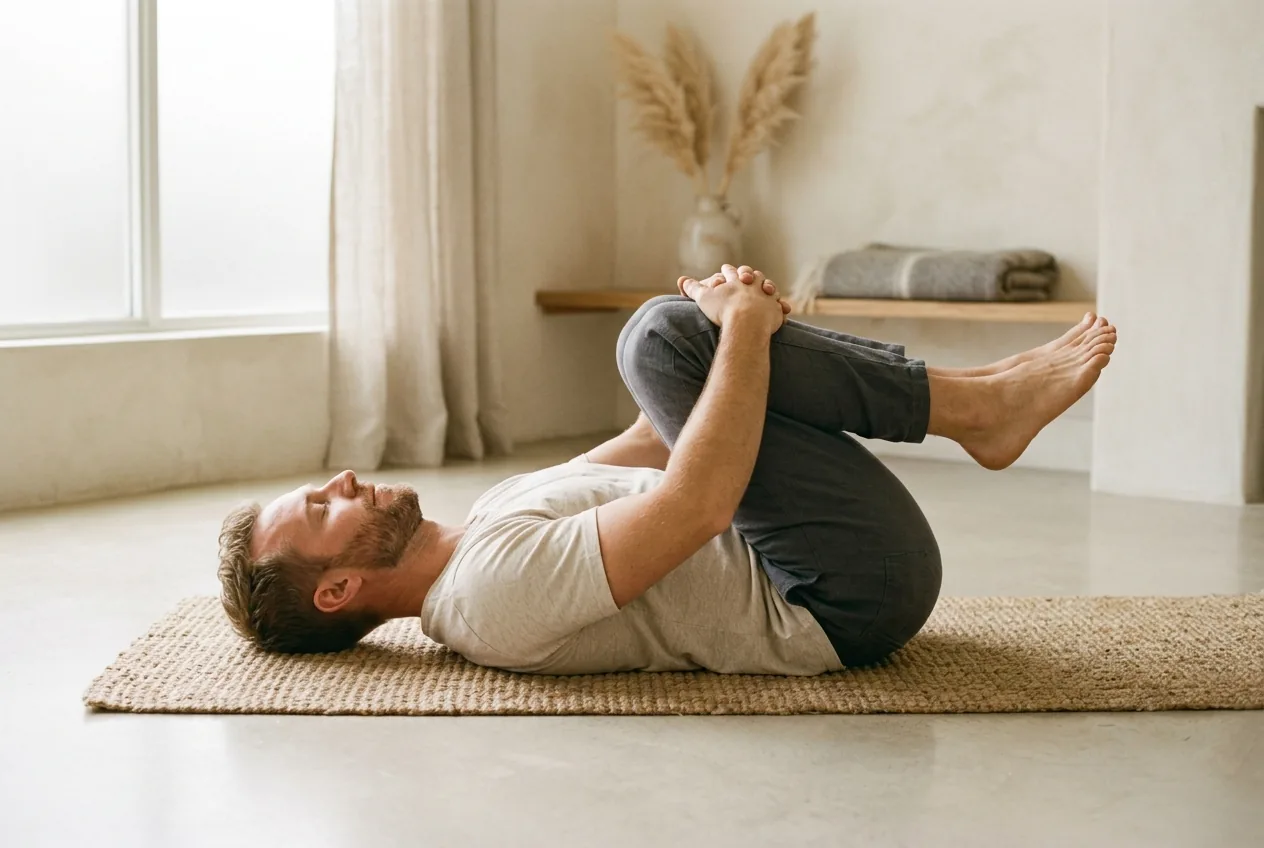
Simple decompression moves. A few floor positions take pressure off the lower back. Lie on your back and slowly draw one knee, then both, toward your chest. Do a slow pelvic tilt, flattening your lower back into the floor and releasing. Try a gentle cat-cow on hands and knees. None of these should hurt — a mild stretch is the target.
A warm bath with Epsom salts. The warmth is what does the work, relaxing tight muscles and easing the spasm. Whether the magnesium adds much is debatable, but a 20-minute soak is genuinely soothing and costs almost nothing.
Short-term over-the-counter help. Anti-inflammatories or topical rubs can take enough edge off to let you move, which is itself part of healing. Use them as a bridge to movement, not a substitute for it, and follow the label.
Breaking the position that's feeding it. If sitting all day set this off, no remedy will hold while you keep sitting the same way. Getting up every 30 to 40 minutes, supporting your lower back, and changing how you sit often does more than any cream.
For a ranked, do-this-first approach when the pain is bad, how to relieve lower back pain fast puts these in order.
Natural back pain relief, realistically
There's a long list of "natural" remedies online, and they're not all equal.
Worth your time: gentle stretching, walking, heat, sleep, and staying hydrated and reasonably active. Stress reduction genuinely matters too — tension drives muscle guarding, and a wound-up nervous system keeps the back braced. If your back tightens when life does, that link is real and worth taking seriously.
Probably harmless, possibly helpful: topical anti-inflammatory gels, turmeric and other anti-inflammatory foods as a small contribution, and a supportive sleep setup. None of these is a fix on its own, but they don't hurt.
Don't oversell to yourself: any single supplement, cream, or gadget promising to end back pain. They might soothe symptoms briefly. They don't address why the pain is there.
What to stop doing at home
Some habits quietly keep the ache going.
- Long stretches of slumped sitting. The most common culprit by far, especially after a flare when you're "resting."
- Sleeping in a position that loads your back all night. You spend a third of your life in bed; the wrong position keeps the back strained for hours. The best sleeping position for lower back pain is worth getting right.
- Aggressive stretching or "pushing through" sharp pain. Forcing a sore back into deep stretches can flare it. Gentle and frequent beats hard and occasional.
- Waiting it out flat on your back. Stillness is the enemy of a stiff, guarded lower back.
The best home remedy isn't a product — it's gentle movement, the right use of heat, and stopping whatever you're doing that keeps feeding the ache.
When to see a doctor
Home remedies handle most everyday lower back pain. A few signs mean you should be seen instead of self-treating: pain shooting down one or both legs, numbness or tingling spreading into the leg or the saddle area between your legs, weakness in a leg or foot, or any loss of bladder or bowel control — those last two need same-day care. Also get checked if the pain followed a fall or accident, comes with fever or unexplained weight loss, or is severe and steadily worsening rather than easing. If a few weeks of sensible home care does nothing, that's a reason for a proper assessment too.
Why home remedies help but don't always stick
Here's the limit of any general remedy: it treats the flare, not the reason your back flares. If the ache keeps coming back no matter how diligent you are with heat and stretches, the cause is usually structural — a pelvis tilted out of position, a flattened or over-arched lower back, weak glutes leaving the back to overwork. Generic remedies can't see which of those is driving yours.
That's the thinking behind a posture assessment: instead of treating the same flare on repeat, you measure your actual deviations and build a daily routine around the imbalance behind them. If home remedies help for a while but the pain always returns, knowing your own pattern is usually the missing piece — the posture therapy approach is built to find it.
Common questions
What is the best home remedy for lower back pain?
There's no single best one — the combination that works for most everyday back pain is heat (after the first day or two), gentle movement and short walks instead of bed rest, simple decompression moves like knee-to-chest pulls, and breaking the sitting or sleeping position that's feeding the ache.
Should I use heat or ice for lower back pain at home?
Use ice for a fresh, angry flare in the first day or two to settle inflammation, then switch to heat to relax the guarding muscles and ease the ache. Most lingering, stiff back pain responds better to heat than cold.
Is walking good for lower back pain?
Yes, for most everyday back pain it's one of the most helpful things you can do. Short, easy walks keep the muscles moving and the back from stiffening, and they beat bed rest, which slows recovery. Stop and rest if walking sharply increases the pain.
Why does my lower back pain keep coming back even after home remedies work?
Because remedies treat the flare, not the underlying cause. If pain returns no matter how diligent you are, there's usually a postural imbalance — a tilted pelvis, weak glutes, an over- or under-arched lower back — keeping certain muscles overloaded. That has to be addressed for the relief to last.