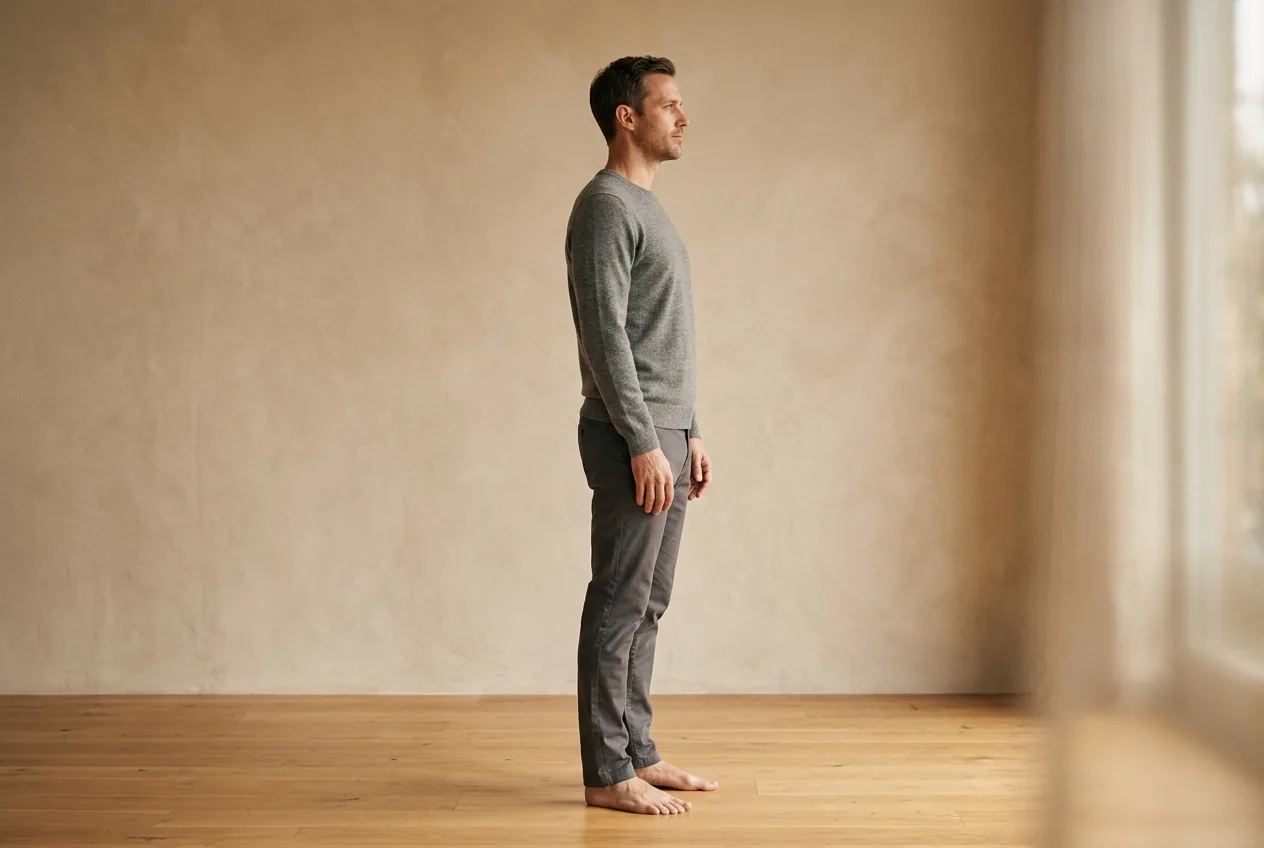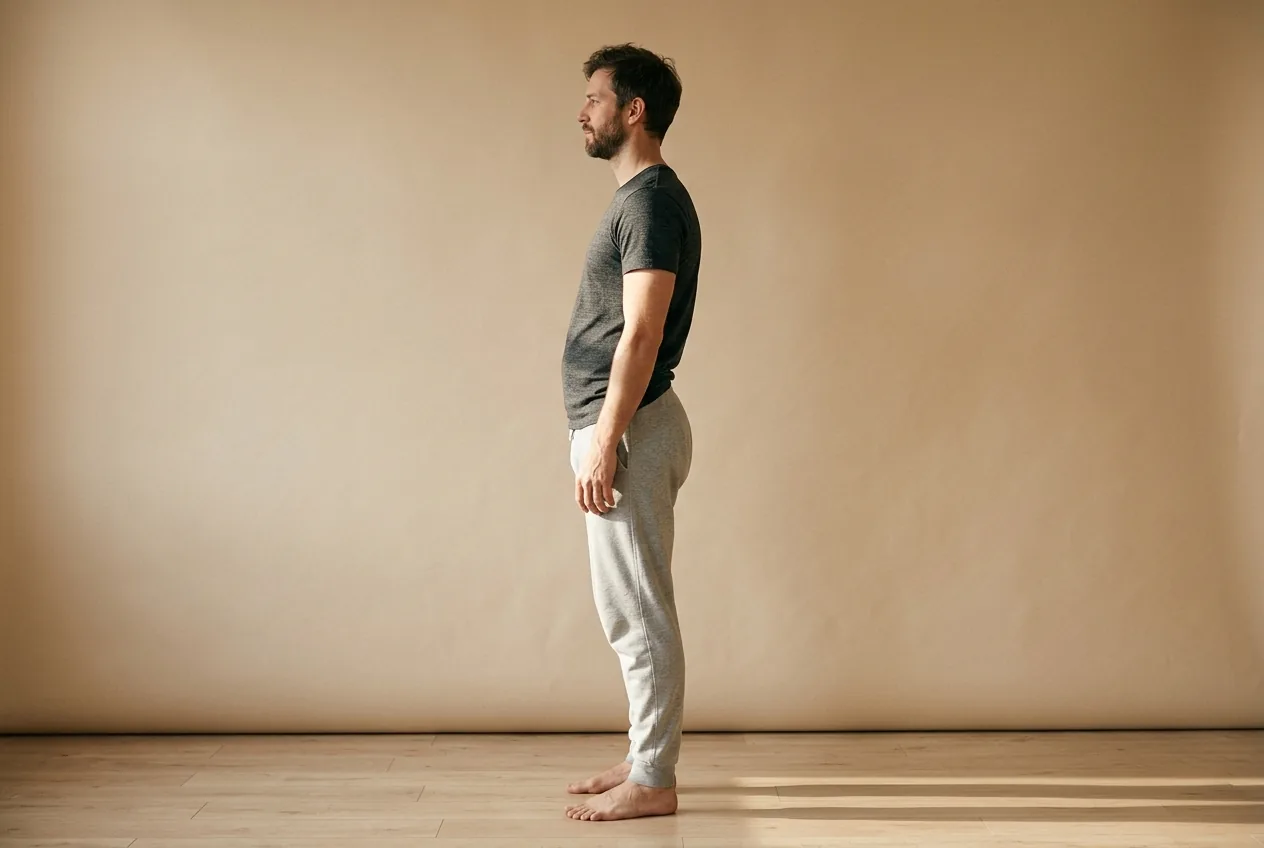

You've started the stretches. A week in, you feel a bit looser, you're catching yourself sitting taller now and then — and the obvious question lands: how long until this is actually fixed? Are we talking weeks, months, the rest of the year?
The honest answer is that there's no single number, and anyone who gives you one is guessing. But how long to fix posture isn't a mystery either. It follows a pattern with recognizable milestones, and the pace is decided by a handful of things you mostly control. Here's the realistic picture.
Why there's no fixed number
Fixing posture isn't like waiting for a cut to heal, where the timeline is roughly set. You're changing a balance your body built over years — tight muscles that need to release, weak ones that need to switch on and strengthen, and a nervous system that needs to relearn what "upright" feels like so it stops defaulting to the slump.
That's three different processes, and they move at different speeds. Tightness releases relatively fast. Strength builds slower. The habit — your body holding the new position without you thinking about it — is the slowest of all, because it only changes through repetition. So "fixed" arrives in stages, not on a single date.
You're not stretching a muscle once. You're retraining a balance, and balances change in steps, not overnight.
A realistic timeline
These are rough stages most people move through, not promises. Yours will shift depending on the factors further down.
Week 1 to 2: the loosening
The first thing you notice is the tight stuff letting go. The chest opens a little, the hips feel less locked, standing tall stops feeling like a fight. This is encouraging, and it's also where people mistake early relief for the finish line. It isn't — you've released tension, but you haven't yet built the strength to hold the new position.
Week 3 to 6: the holding
Now the weak muscles start to wake up and strengthen. The muscles between your shoulder blades begin to hold your upper back upright; your glutes and core start supporting your pelvis. You catch yourself sitting upright at the desk for longer stretches before you slump. The better position starts to feel less like effort.
Month 2 to 3: the new default
Around here, for many people, the upright stack starts to become the resting position rather than a pose. You stop consciously correcting as often because your body is doing more of it on its own. Aches that came from compensation often ease in this window, because the overworked muscles finally get relief.
Month 3 and beyond: making it stick
Past three months it's about consistency and depth. Long-standing patterns and stacked deviations keep improving, and the habit gets more durable. This is less "fixing" and more "keeping," though stubborn patterns can still be shifting here.
What decides the pace
Two people doing the same routine can be on very different timelines. These are the levers.
Frequency. This is the biggest one. Five focused minutes most days beats a thirty-minute session once a week, because you're building a habit, and habits answer to repetition. The day you skip isn't a problem; the week you skip is where the old pattern wins back ground.
How long you've had it, and how much. A mild forward head you noticed last year moves faster than a deeply grooved pattern you've carried since your twenties. More deviation, more time.
How many patterns are stacked. One isolated drift is quicker than several layered together — a forward head riding on rounded shoulders riding on a tilted pelvis. Stacks also need to be worked in the right order, or effort gets wasted.
Whether the routine matches your pattern. This is the quiet one. A generic routine that isn't matched to your actual deviations can spin its wheels for months. The same move that helps one posture type does little for another, so matched work is simply faster. People often ask whether bad posture is permanent — usually it isn't, but mismatched work makes it feel that way.
Age and starting point. Things change at any age, but younger and more mobile tends to mean faster. Older or stiffer means steadier, gentler progress — still real, just patient.
What "fixed" actually means
Worth resetting the goal. "Fixed" doesn't mean a perfectly symmetrical, textbook spine — almost nobody has that, and chasing it leads to frustration. A realistic finish line is this: you hold a comfortable, balanced posture without constant effort, the aches that came from compensation have eased, and you no longer have to think about it most of the time.
And it's never quite "done" in the sense of being able to stop. The forces that built your pattern — sitting, screens, daily life — don't go away. Keeping good posture is more like keeping fit than fixing a leak. A reduced, maintenance level of work usually holds it once you're there.
When to see a doctor
This is posture education, not medical advice. If your posture work coincides with pain that has numbness, tingling, or weakness spreading into a limb, any loss of bladder or bowel control, pain after a fall or accident, fever with back pain, unexplained weight loss, or pain that's severe or steadily worsening, see a clinician rather than pushing on. A timeline only applies to ordinary postural patterns, not to those signs.
The fastest route is the matched one
The single biggest thing you can do to shorten the timeline isn't to work harder — it's to work on the right things in the right order. Time spent on moves that don't match your pattern is time that doesn't move the needle.
That's the reasoning behind a real posture assessment: it measures your actual deviations and builds the sequence around them, so your daily minutes go where they count. For a first read on what you're starting from, check your posture at home.
The clock starts when the work matches the pattern. Until then you can put in months and wonder why the date keeps moving.
Common questions
How long does it take to fix posture?
There's no fixed number, but a common pattern is feeling looser in the first week or two, the better position starting to hold over weeks three to six, and the upright stack becoming more of a default around two to three months. Deeper, long-standing patterns keep improving past that. Frequency and whether the work matches your pattern decide the pace.
Can you fix posture in two weeks?
Two weeks is usually enough to feel the tight muscles release and to start catching yourself sitting taller, which feels like progress. But that's the loosening stage, not the finish — the strength and the habit that actually hold the new position take longer to build, typically weeks to months.
Why is my posture not improving?
The most common reasons are inconsistency and a routine that isn't matched to your actual pattern. Posture changes through frequent repetition, so occasional sessions stall, and a generic routine can work the wrong muscles for your specific deviations. Stacked patterns worked in the wrong order also slow things down.
Do you have to keep working on posture forever?
Not at the same intensity, but the daily forces that built your pattern — sitting, screens, life — don't disappear, so some maintenance keeps it. Once you've reached a comfortable, balanced default, a lighter routine usually holds it, much like staying fit rather than getting fit.