If lowering yourself into a chair makes you brace, and the first few seconds after you sit down decide how the next hour feels, you know exactly the problem this article is about. Learning how to sit with lower back pain is partly about the position and partly about not staying in any one position long enough for it to bite.
There's no single magic posture. But there are clearly better and worse ways to arrange yourself, and small changes often take the edge off within minutes.
Why sitting is so often the worst position
People assume sitting rests the back. For a sensitive lower back, it frequently does the opposite. When you sit, the pelvis tends to roll backward, the natural inward curve of the lower spine flattens or reverses, and the load shifts onto the discs and ligaments instead of being shared by the muscles. Slump into a soft couch and that effect gets stronger.
On top of that, sitting shortens the hip flexors at the front of your hips and lets the glutes go quiet. Tight hip flexors tug on the pelvis and lower back; sleepy glutes stop supporting it. Several hours in, the lower back is doing a job two other muscle groups have clocked off from. That's a big part of why lower back pain when sitting is one of the most common complaints there is.
So "how to sit" really means "how to sit without flattening the curve, dumping load on the discs, and locking the hips short."
The baseline: how to sit in an office chair
Get the chair right first, because most of your sitting happens there.
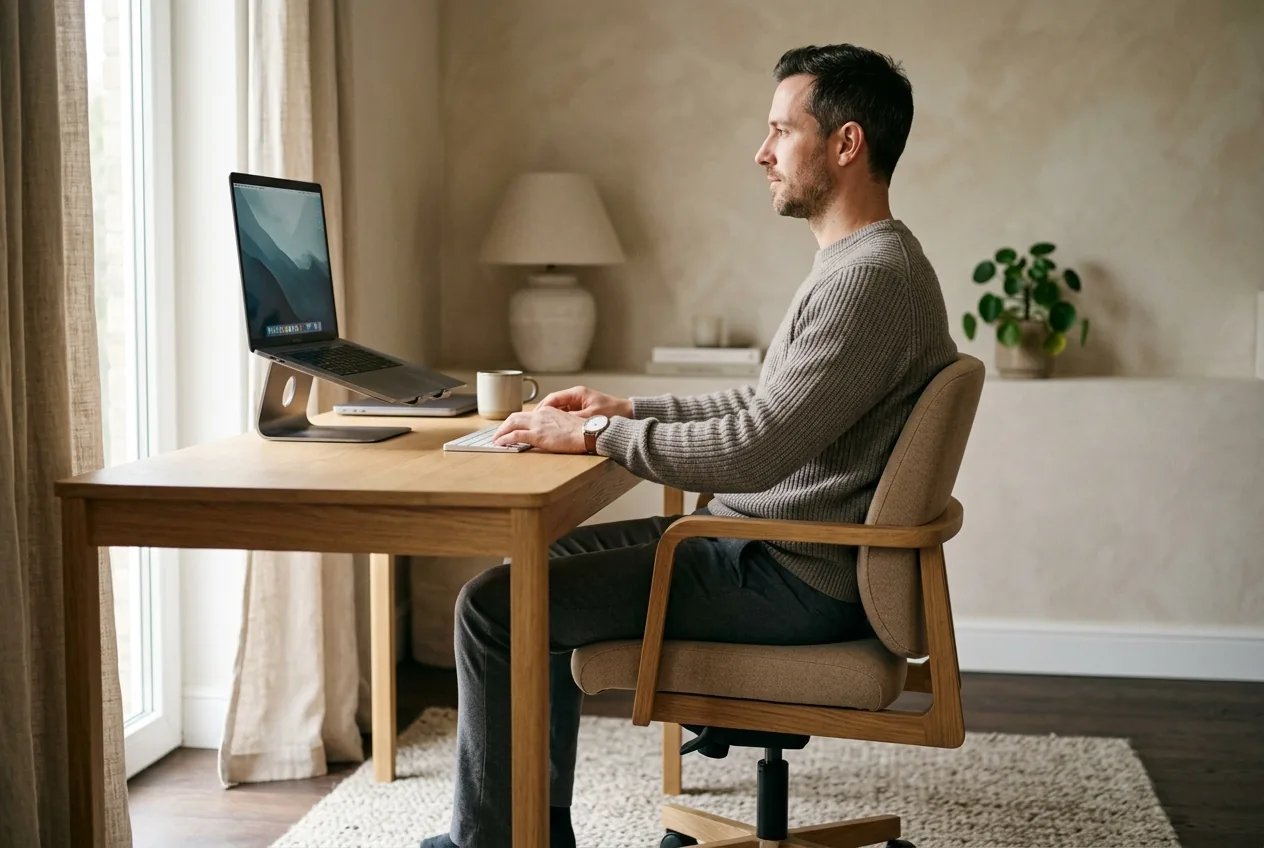
- Hips back in the seat. Sit all the way back so your hips meet the backrest. Don't perch on the front edge with a gap behind you.
- Support the curve. If the chair leaves a hollow at your lower back, fill it with a small cushion or rolled towel. This keeps the natural inward curve instead of letting it collapse.
- Feet flat, knees level. Feet on the floor, knees at roughly hip height or a touch lower. Dangling feet pull you forward; a footrest fixes short legs.
- Stack, don't slump. Ears over shoulders, shoulders over hips. Bring the screen to eye level so you're not craning forward, the same point made in any ergonomic desk setup.
- Change it up. Even a good position fatigues if held. Shift, stand, and walk every 30 to 40 minutes.
That last point matters most. The best sitting posture is the one you keep leaving.
Sitting in the car, on the couch, and on the floor
Different seats fail your back in different ways.
The car. A car seat reclines and slides in ways an office chair doesn't, and the vibration of driving adds load. Bring the seat close enough that your knees aren't reaching, set a gentle recline, and use lumbar support or a rolled towel behind your lower back. Long drives deserve their own setup, covered in car seat back support.
The couch. Soft couches are the enemy of a sore lower back. They swallow your hips, round your spine backward, and offer nothing to support the curve. If you have to use one, sit toward the firmer front edge, put a cushion behind your lower back, and prop your feet so your knees aren't higher than your hips. The same trap shows up working remotely, which back pain working from home tackles directly.
The floor. Cross-legged sitting rounds most people's backs hard. If you sit on the floor, prop your hips up on a cushion so they're higher than your knees, which lets the pelvis tip slightly forward and the lower back keep its curve.
A firm chair with your hips above your knees beats a soft one every time.
What to stop doing
Half of sitting well is dropping the habits that make it worse:
- Don't sit on a wallet, phone, or anything that tilts your pelvis to one side. That uneven load builds an asymmetry over time.
- Don't cross your legs for long stretches. It rotates the pelvis and loads one side.
- Don't sink into the deepest, softest seat available because it feels relaxing. Soft is comfortable for two minutes and punishing for two hours.
- Don't sit through a flare without moving. If a position hurts, the answer is usually to change it, not to grit through.
- Don't perch forward on the chair edge with no back support, hunting for the "active sitting" feeling. Most people just slump there within minutes.
A 20-second reset you can do anywhere
When you've been sitting a while and the ache creeps in, try this before you stand: sit tall, roll your pelvis gently forward and back a few times to find the middle where your lower back feels most neutral, then squeeze your glutes for a few seconds. It re-engages the muscles that went quiet and reminds your back it doesn't have to do this alone. A few gentle cat-cow movements work well on a break too.
When to see a doctor
Posture-related sitting pain usually eases when you change position and support the curve. Some signs need a professional. See a clinician promptly if you have numbness or weakness spreading down a leg, any loss of bladder or bowel control, back pain after a fall or accident, fever with back pain, unexplained weight loss, or pain that's severe or steadily worsening.
Why the "right" position is different for you
Notice that none of this is a single fixed posture. That's deliberate. The position that relieves one person's lower back can aggravate another's, because they're compensating around different imbalances. Someone whose pelvis tips forward needs a different default from someone whose lower back has flattened out. A generic rule gets you close; your own pattern gets you the rest of the way.
That's the case for measuring rather than guessing. A short posture assessment that reads your actual deviations shows which way your pelvis and spine sit, then builds a daily routine to wake up the muscles that should be supporting you when you sit. Once those are doing their job, good sitting stops feeling like effort.
Start with the chair this week, fill the lumbar gap, and get up more often than feels necessary. The first few seconds after you sit down should start to feel less like bracing for impact.
Common questions
What is the best sitting position for lower back pain?
There's no single fixed posture. Most people are easier with feet flat, hips slightly above knees, and the lower-back curve supported, but the right default depends on how your own pelvis and spine sit.
Should I sit on a cushion or a firm chair for back pain?
It depends on your pattern. Some people need a wedge to tip the pelvis forward, others need firmer support to stop sinking. The right choice is the one that makes the first seconds of sitting feel less like bracing.
How long should I sit before getting up?
Aim to break up sitting every 20 to 30 minutes. Movement matters more than any single perfect position, because no posture is meant to be held for hours.
Why does sitting hurt more than standing for me?
Sitting loads the lower spine and shortens the hip flexors, and if your supporting muscles have switched off, the back takes the strain. Which positions help depends on the imbalance you're working around.