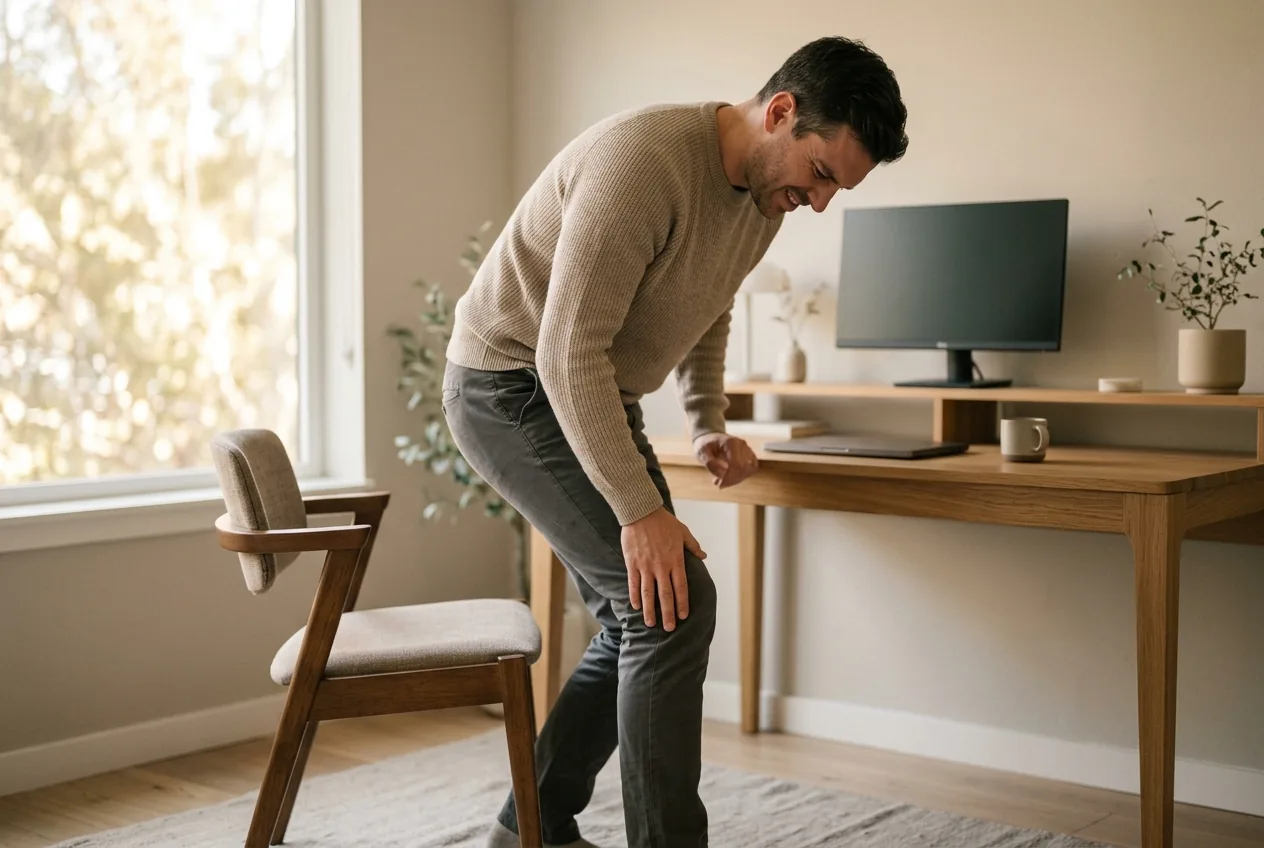
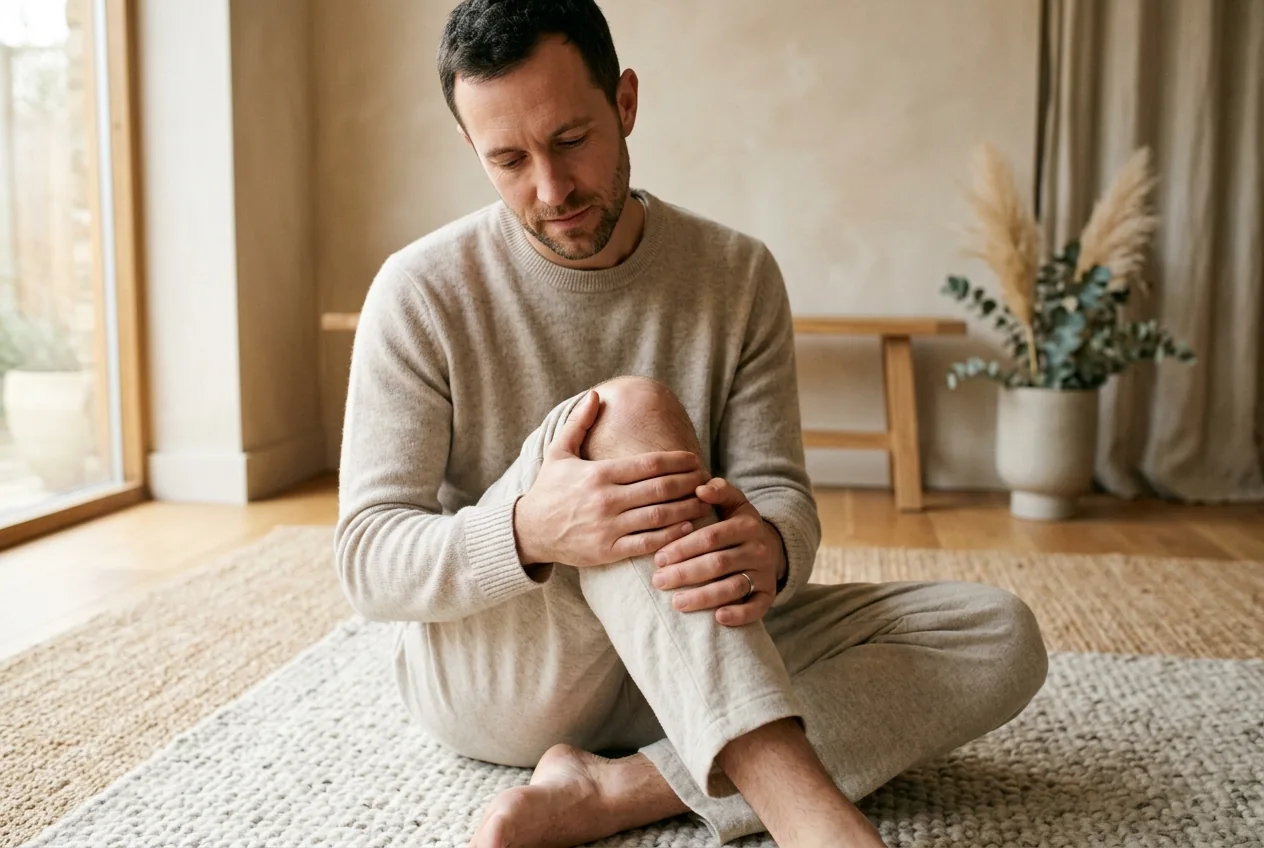
You kneel down to plug something in behind the couch, and the front of your knee complains for the rest of the day. Or you notice a soft, squishy lump sitting right over the kneecap that wasn't there last week. It doesn't feel like the deep ache of a worn joint — it's more on the surface, tender to touch, and it flares the moment you put pressure on it. That's the picture of knee bursitis, and most cases settle down once you stop irritating the spot and give it room to quiet.
The trick is knowing which bursa is grumpy and what kept setting it off. Calm the swelling, take the pressure off, and most knees come back without anything dramatic.
What knee bursitis actually is
A bursa is a thin, fluid-filled sac that sits between things that slide against each other — bone and skin, or bone and tendon — so they glide instead of grind. Your knee has several. When one gets squeezed or rubbed too much, it fills with extra fluid and turns tender. That's a swollen knee bursa, and it's a surface problem, not damage inside the joint.
The one people meet most is the prepatellar bursa, the sac right in front of the kneecap. Press on the front of your knee and that's the area. Kneel on a hard floor for an hour and you've loaded it directly. This is why prepatellar bursitis got the old nickname "housemaid's knee" — it shows up in anyone who kneels a lot, from flooring installers to gardeners.
There's another sac lower down, on the inside of the knee a couple of inches below the joint line, called the pes anserine bursa. It tends to ache there rather than swell visibly, and it often shows up alongside tight hamstrings or a knee that rolls inward when you walk.
Bursitis is a cushion getting squeezed, not the joint wearing out. That's why it's tender on the surface and why pressure, not deep load, is what lights it up.
What causes knee bursitis
It's usually pressure or rubbing, repeated until the sac protests.
- Kneeling on hard surfaces is the classic for the kneecap bursa. The bone presses the sac flat against the floor, over and over.
- A direct knock to the front of the knee can set it off in one go.
- Repeated bending and load — lots of stairs, deep squatting, a sudden ramp-up in walking — can irritate the lower bursae.
- A knee that tracks inward. When the knee caves toward the midline on each step, the tissues on the inside of the joint rub more than they should. That's where alignment comes in, and it ties into the same patterns behind knee pain when squatting.
That last one matters more than people think. A bursa over a well-aligned knee tolerates a lot. A bursa over a knee that collapses inward — often because the hip and glute aren't steering the leg — gets rubbed with every step. The flare is the symptom; the way the leg is loading is often the reason it keeps coming back.
How to calm it down
Settle the swelling first, then take the pressure off so it doesn't refill.
Settle the flare
- Stop kneeling on it. This is the single biggest thing for the kneecap bursa. If you have to kneel for work, use a thick pad or knee cushion so the bone isn't pressing the sac into a hard floor.
- Ice the tender spot for 10 to 15 minutes a few times a day while it's puffy and warm.
- Back off the aggravators for a week or two — deep squats, fast stair climbing, long kneeling sessions, anything that presses directly on the sore area.
- Elevate when you can if it's visibly swollen, to help the fluid drain.
Don't crank it into a stretch
Forcing a swollen, irritated knee into a deep bend to "stretch it out" usually backfires. Gentle range of motion is fine — slow, pain-free bends to keep the knee moving — but sharp pain is a signal to stop, not push through.
Take the load off the cause
Once the swelling settles, the goal is a knee that tracks straight so the tissues stop rubbing.
Glute strength. The muscles on the side of your hip steer the knee. When they're weak, the knee caves inward. A side-lying leg raise — lie on your side, lift the top leg a foot or so, leading with the heel — targets them directly. So does a glute bridge. Start with 8 to 10 reps, pain-free.
Quad activation without deep bend. A straight-leg raise — lie on your back, one knee bent, the other leg straight, lift it to the height of the bent knee, lower slowly — wakes up the front of the thigh without compressing the kneecap.
Watch your tracking. When you go up stairs or stand from a chair, keep the kneecap pointing over the middle toes, not drifting inward. This is the same low-impact, alignment-first thinking behind a sensible set of exercises for arthritic knees.
When to see a doctor
This is posture education, not medical advice. See a clinician promptly if the knee is hot, red, and very swollen, especially with a fever — that combination can signal an infected bursa, which needs prompt treatment, not self-care. Also get it checked if the swelling came after a hard fall or blow, if you can't bear weight or straighten the knee, if there's numbness or spreading weakness, or if it isn't improving at all after a couple of weeks of sensible rest. When in doubt about a hot, angry, swollen knee, have it looked at rather than waiting.
Why the alignment piece is the part that lasts
You can ice and rest a swollen kneecap bursa into quiet. But if your knee keeps caving inward on every step because the hip isn't steering it, the tissues keep rubbing and the swelling keeps circling back. Generic knee advice treats the flare. It doesn't ask why your leg is loading the way it is.
That's the case for knowing your own pattern. A posture assessment looks at how your pelvis, hip, and knee line up — whether a dropped hip or a weak side is sending the knee inward — and builds the strengthening around that, so the bursa stops getting squeezed in the first place.
Common questions
What is the fastest way to calm knee bursitis?
Stop pressing on it. For the kneecap bursa, that means no kneeling on hard floors — use a thick pad if you must kneel. Ice the tender spot, elevate it if it's swollen, and back off stairs and deep squats for a week or two. Most flares settle with pressure removed.
How do I know it's bursitis and not the joint?
Bursitis is a surface problem: a soft, tender swelling you can feel on or around the kneecap, sore to press and worse with direct pressure like kneeling. Joint problems tend to ache deep inside, stiffen up, and hurt more on weight-bearing than on a light press.
Should I keep walking with knee bursitis?
Gentle, level walking is usually fine and helps keep the knee mobile. Avoid the things that load the sore spot — kneeling, deep squats, fast stairs, steep downhills — until the swelling settles. Sharp pain means ease off.
What happens if knee bursitis is left untreated?
A mild flare often settles on its own once you stop irritating it. But if you keep pressing or rubbing the spot, it can stay swollen and become chronic. A hot, red, very swollen knee with fever is different — that may be an infection and needs prompt medical attention.