
There's a patch on the outside of your thigh that burns, tingles, or feels numb — like a small area of skin has fallen asleep and won't wake up, sometimes prickly to the touch of your jeans. It doesn't run down to your foot the way sciatica does. It just sits there on the side of the thigh, and tight pants or a long day of sitting seem to make it worse.
That burning outer thigh pain has a name that sounds more dramatic than it usually is: meralgia paresthetica. It's a trapped-nerve problem at the hip, not a spine-down-the-leg problem, and once you understand where it's pinched, the fixes make a lot more sense. Here's the plain version.
What meralgia paresthetica actually is
There's a sensory nerve — the lateral femoral cutaneous nerve, which is a mouthful — that supplies feeling to the skin on the outer thigh. It passes near the front of the hip, just inside the bony point where your hip bone juts out, and it travels under or through a tough ligament there.
That spot is a chokepoint. If the nerve gets compressed where it passes the hip, it stops carrying clean signals. You feel that as burning, tingling, numbness, or a sensitive patch on the outer thigh. Crucially, it's a skin-sensation nerve only — it doesn't control any muscles. So meralgia paresthetica causes odd sensations but not true weakness. That's one of the ways it differs from sciatica.
What pinches it is usually mechanical and often fixable:
- Tight waistbands, belts, or compression garments pressing right on the spot at the front of the hip.
- Extra weight around the middle, which loads the area.
- Long periods of sitting, especially with the hips bent and a belt digging in.
- Pregnancy, from the change in load and posture at the front of the pelvis.
- A forward-tilted pelvis, which crowds the front of the hip where the nerve passes.
Why it gets mistaken for sciatica
People understandably assume any burning leg sensation is sciatica. But the two are different animals. Sciatica usually starts in the back or buttock and travels down the back or side of the leg, often past the knee, and can come with weakness. Meralgia paresthetica stays on the outer thigh, stops above the knee, and never causes weakness because the nerve only carries sensation.
If your symptoms run lower or involve the foot, or your leg feels weak, the picture leans toward a spine source instead — the leg numbness and tingling from the back and broader sciatica articles fit that better. Telling them apart matters because the fixes differ: meralgia is about releasing the front of the hip, not the lower back.
A burning patch on the outer thigh that never reaches the knee and never causes weakness usually isn't sciatica — it's a nerve pinched at the hip.
What tends to help
Most cases settle once you stop compressing the nerve. The approach is to take pressure off the front of the hip.
- Loosen what's squeezing. Swap tight belts and waistbands for looser ones, and drop the compression wear over that spot. This alone resolves a surprising number of cases.
- Break up sitting. Stand and walk every twenty to thirty minutes. Long hip-bent sitting keeps the nerve compressed and the belt digging in.
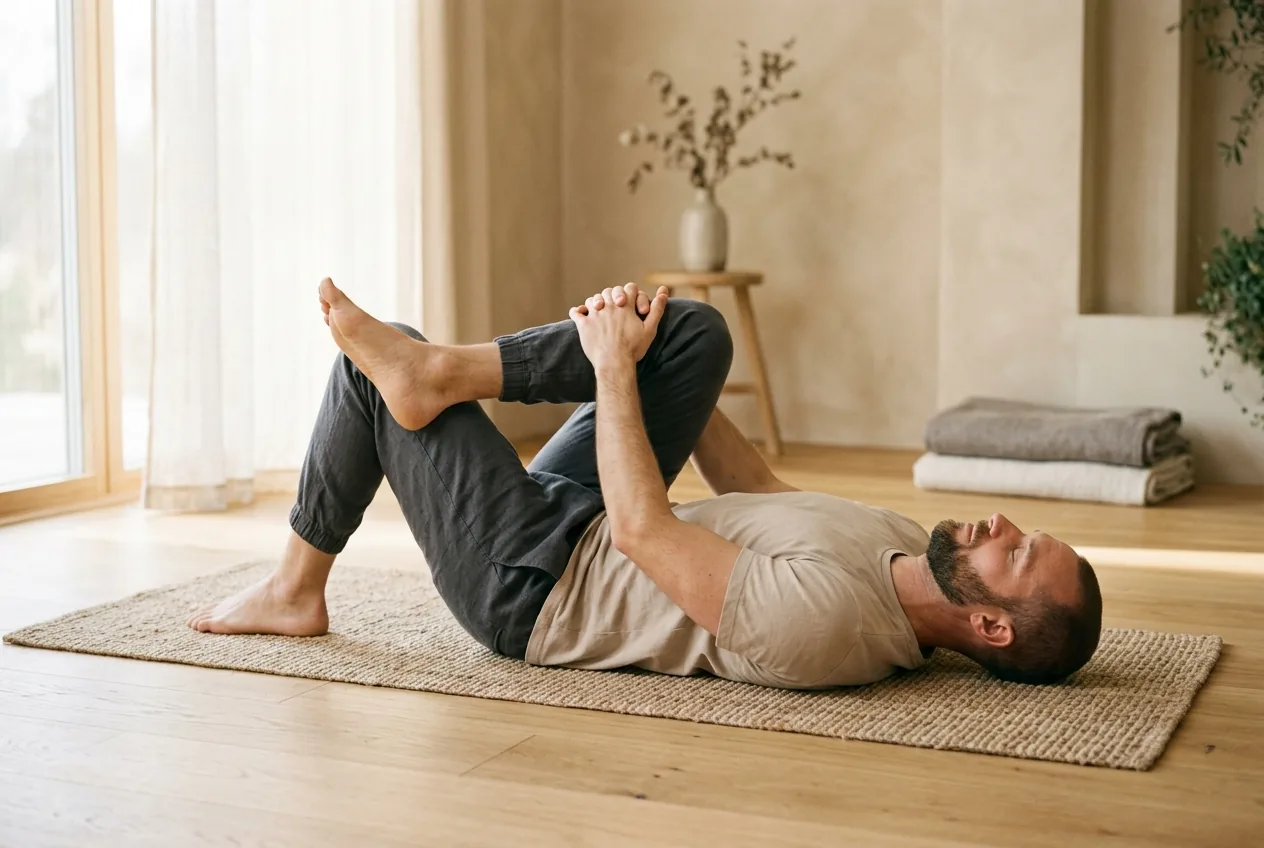
- Open the front of the hip. Tight hip flexors pull the pelvis forward and crowd the area. A gentle hip flexor stretch done daily can ease the pressure — and if you sit all day, tight hip flexors from sitting is likely part of the picture.
- Address a forward pelvic tilt. If your pelvis tips forward, the front of the hip stays jammed. Working on anterior pelvic tilt takes load off the chokepoint.
- Lose pressure at the waist if extra weight is a factor. Even a modest change reduces the load on the area.
Avoid the urge to dig or massage hard right on the burning spot — pressing the nerve more rarely helps. Gentle, consistent changes to load and posture do more.
When to see a doctor
Meralgia paresthetica is usually benign, but it's worth confirming rather than assuming. See a clinician if the burning is severe, spreading, or not improving with the simple changes above, or if you're unsure whether it's this or something else. Get checked promptly if you notice actual leg weakness, numbness reaching down toward the foot, or symptoms in both legs — those point away from this diagnosis and toward a spine source that needs assessing.
Seek same-day care for the usual emergencies: numbness in the saddle area or any loss of bladder or bowel control. And see someone if symptoms followed a fall, come with fever or unexplained weight loss, or pair with severe, climbing back pain. This is education, not a diagnosis — a clinician can confirm meralgia paresthetica and rule out the things it can mimic. Knowing when to worry about back pain helps you judge.
The posture angle worth knowing
Plenty of meralgia paresthetica clears up just by loosening a belt. But the cases that linger often have a postural piece: a pelvis tilted forward, tight hip flexors from years of sitting, and a front-of-hip that stays compressed even without a tight waistband. Treat only the symptom and it tends to come back when you sit long enough.
Knowing your own pattern is what addresses that. A posture assessment measures how your pelvis is actually sitting, so the routine opens the front of the hip and rebalances the pelvis instead of just chasing the burning patch. If your outer-thigh symptoms keep returning, the posture therapy approach is built to find the setup feeding the compression.
Release the chokepoint, loosen what's squeezing it, and address the pelvis underneath — that's the way to quiet a thigh that won't stop burning.
Common questions
Is meralgia paresthetica the same as sciatica?
No. Sciatica comes from a nerve being crowded at the spine and usually travels down the leg, sometimes with weakness. Meralgia paresthetica is a sensory nerve pinched at the front of the hip, causing burning or numbness on the outer thigh only, with no weakness.
What triggers burning outer-thigh pain?
Common triggers are tight belts or waistbands, extra weight around the middle, long periods of sitting with the hips bent, pregnancy, and a forward-tilted pelvis — anything that compresses the nerve where it passes the front of the hip.
Does meralgia paresthetica go away?
Often, yes. Many cases settle within weeks once you stop compressing the nerve — looser clothing, more movement, and easing the front of the hip. Lingering cases usually have a postural component worth addressing.
Can tight pants cause this nerve pain?
They can. A tight waistband pressing right on the spot at the front of the hip is a classic trigger. Switching to looser clothing over that area resolves a good number of cases on its own.