
You go to check your blind spot, or someone calls your name from the other room, and your neck stops you halfway with a sharp catch. So you turn your whole torso instead, like a mannequin on a swivel. Neck pain when turning your head has a way of shrinking your world down to whatever is directly in front of you.
It's one of the most common neck complaints, and most of the time it's not a sign of damage. It's a sign that something in the neck — a small joint, a clamped muscle — is irritated and bracing. The good news is that the same thing that makes it feel alarming also makes it responsive to the right approach.
Why your head won't turn
A turn of the head is a team effort. Several small joints in the cervical spine glide, and a layer of muscles on each side guide and brake the movement. When one of those joints gets irritated — from a night in an awkward position, hours poked forward at a desk, or a quick unguarded movement — the muscles around it tighten up to protect it. That protective tightening, called guarding, is what stops the turn.
So the pain you feel at the end of the range usually isn't the joint being injured in that moment. It's the muscles refusing to let you go further. That distinction matters, because it tells you forcing the turn will backfire. You're not freeing a stuck joint; you're fighting a guard that tightens the harder you push.
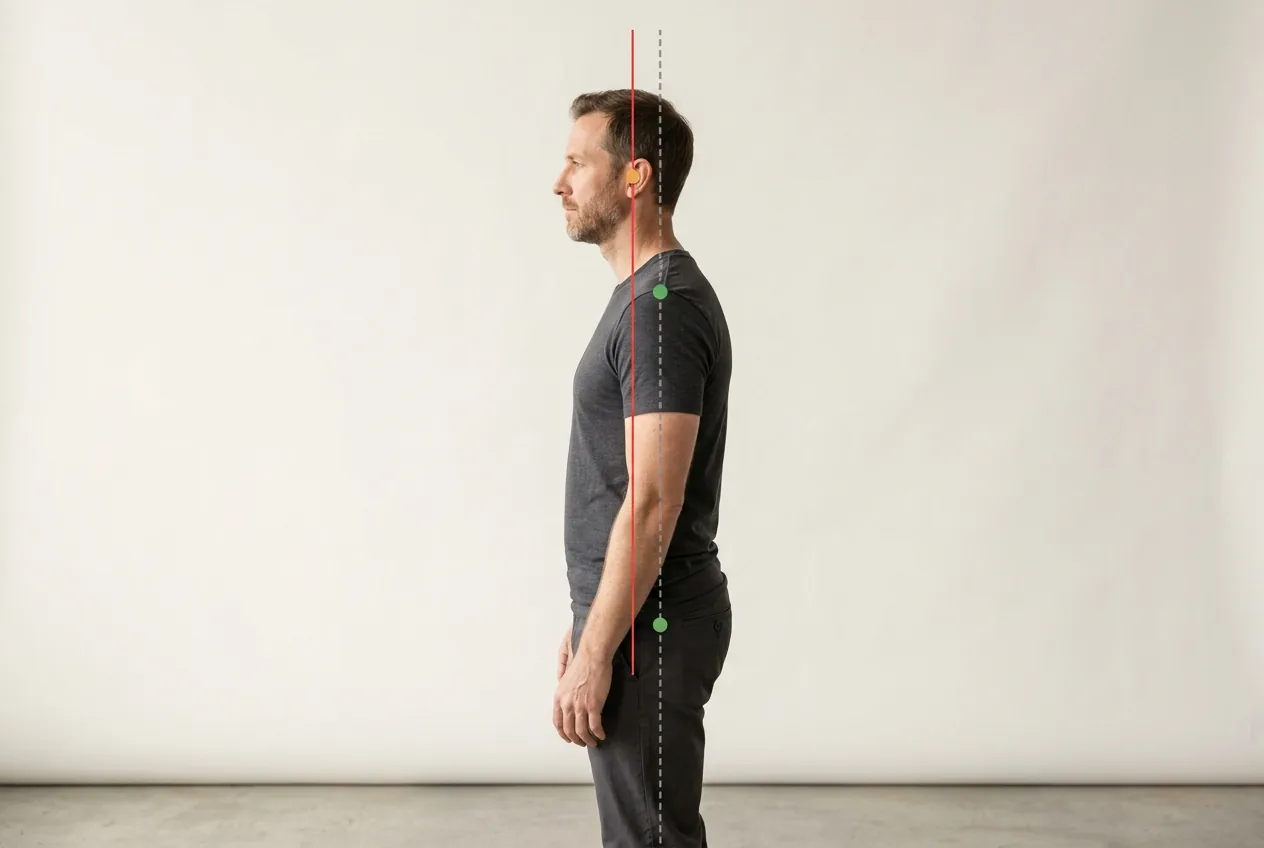
There's usually a setup behind it, too. A neck that already carries the head forward all day starts every movement from a position of tension. The muscles at the back of the neck are working overtime just to hold the head up, so they're primed to seize when you ask them to do anything quickly. That forward-loaded pattern is described in forward head posture, and it's often the quiet reason the same neck keeps catching.
The block at the end of the turn isn't your joint tearing. It's muscle bracing around a joint it decided to protect.
What to do in the first day or two
Move it gently, often, within the pain-free range
The worst response is to hold your neck dead still all day out of fear. Stillness lets the guarding settle in and stiffen. Instead, every hour or two, slowly turn your head toward the sore side only as far as it goes without sharpening the pain. Hold a second, return to center. Tilt your ear toward the easier shoulder, hold, return. Small, frequent, pain-free reps remind the neck it's safe to move.
Use warmth before you move
Heat helps a guarding muscle let go. A warm shower aimed at the back of your neck, or a heat pack for fifteen minutes, often buys you more range than any stretch on the first day. Apply warmth first, then do your gentle turns while the muscles are already loosening. If there's a sharp, hot feeling early on, a few minutes of ice is reasonable too — go with whatever eases it.
Drop your shoulders and breathe out
A sore neck makes you hold your whole upper body braced, which feeds the spasm. Every so often, lift your shoulders toward your ears, then let them drop completely as you breathe out slowly. The release in the shoulders often lets the neck loosen a little, because the muscles share connections.
Reintroduce controlled movement
Once the sharpest catch eases, gentle chin tucks bring back smooth, controlled motion without aggravating things. The chin tucks exercise guide shows how to do them so you stay in the safe range. If your pain started after a bad night, the overlap with morning stiffness is worth reading in stiff neck from sleeping.
What to stop doing
- Don't crank your head toward the stuck side to "release" it. You'll deepen the guarding.
- Don't crack or yank your neck. It feeds the spasm rather than freeing it.
- Don't immobilize it all day in a collar or by holding it rigid. Movement is the cure, not rest.
- Don't push into sharp pain in any direction. Sharp means stop.
Why it keeps happening
A single episode is often just bad luck — a strained sleep position, one quick wrong turn. A pattern of them usually points to something steady underneath: a neck that lives forward of where it should, with the upper-back muscles too long and weak to hold the head back and the front of the neck too tight.
That's why generic neck stretches give mixed results. A stretch that helps a neck held in one position can aggravate a neck held in another. The move that loosens one person's tight side can overstretch the already-strained side of the next. Without knowing which way your own neck is loaded, you're guessing.
A few steady habits help most people regardless:
- Keep your head stacked back over your shoulders rather than poked toward the screen.
- Break up long stretches in one position. Even a thirty-second reset every half hour keeps the joints from getting irritated.
- Fix the pillow if catches keep arriving overnight — enough height to keep the head level when you're on your side, less when you're on your back.
When to see a doctor
Posture work is education, not medical care, and it doesn't replace a clinician. Most turning-related neck pain eases within a few days. But see a doctor promptly if the stiffness comes with a fever or a sudden severe headache, if you have numbness, tingling, or weakness spreading into an arm or hand, if you feel unsteady or dizzy, or if the pain followed a fall, crash, or other trauma. Pain that's severe, steadily worsening, or not improving after a week or so deserves a proper look.
The setup worth fixing once it eases
Gentle movement, warmth, and patience handle the catch in front of you. But if your neck keeps locking on the turn, the real question is why it's primed to seize in the first place — and that comes down to how your head and neck actually sit through the day, which is specific to you.
A proper posture assessment measures where your head sits and builds a daily routine around your actual deviations rather than generic stretches. Settle the underlying load, and the next quick turn is far less likely to stop you halfway.
Common questions
Why does my neck hurt only when I turn one way?
Usually because the irritated joint and the guarding muscles are on one side. Turning toward the sore side compresses or stretches the protective muscles more, so that direction catches while the other feels relatively free. It's common and usually settles as the guarding releases.
How long does neck pain when turning the head last?
Most cases ease noticeably within two or three days and clear within a week, especially if you keep it gently moving and use warmth. If it's no better after a week, or it's getting worse, get it checked.
Should I stretch my neck if it hurts to turn?
Gently, yes — small, pain-free turns and tilts done often help more than rest. What you should not do is force the head into the painful range or yank it to "free" the joint. Stay in the range that doesn't sharpen the pain.
Can bad posture cause neck pain when turning?
Often, indirectly. A head that sits forward of the shoulders all day keeps the neck muscles overworked and tense, which makes the neck quicker to seize when you turn quickly. Addressing that daytime loading is usually what stops the episodes from repeating.