The ache lives right at the front of your knee, under or around the kneecap. It bites going downstairs more than up. It stiffens after you've sat through a film or a long meeting, so you stand up creaky and have to walk it off. And squatting down to reach a low shelf makes it grind. If that's your knee, you're likely dealing with patellofemoral arthritis — wear in the joint between your kneecap and the groove it slides in.
It's a discouraging diagnosis to hear, because "arthritis" sounds like a one-way street. It isn't, quite. You can't un-wear cartilage, but you can change how much load the worn surface takes with every step — and that's what decides whether it grumbles in the background or rules your day.
What patellofemoral arthritis actually is
Your kneecap, the patella, isn't a free-floating bone. It sits in a groove at the end of your thigh bone and glides up and down that track every time you bend and straighten the knee. The back of the kneecap and the floor of the groove are lined with smooth cartilage so they slide cleanly.
Patellofemoral arthritis is wear of that cartilage — the kneecap-and-groove surface specifically, as opposed to the inner or outer joint. As the cartilage thins, the surfaces don't glide as cleanly. You feel it as front-of-knee pain, a grinding or clicking sensation called crepitus, and stiffness after the knee's been held bent and still.
The telltale pattern is the load-on-the-kneecap one. Going downstairs, squatting, and getting up from low chairs all drive the kneecap hard into its groove, so those movements hurt most. Sitting with the knee bent for a long stretch compresses it too, which is why standing up after a long sit is the classic stiff, sore moment.
Cartilage wear sets the stage, but how hard your kneecap is pressed into its groove sets the pain. Change the pressure and you change the day.
Why how the kneecap tracks matters more than the wear
Here's the part that gives you something to work with. Two people can have the same amount of wear on an X-ray and very different amounts of pain, and a big reason is how the kneecap tracks in its groove.
If the kneecap rides slightly off-centre — pulled outward, tilted, pressed too hard on one side — it loads a small patch of cartilage over and over instead of spreading the load. That mistracking is rarely about the knee itself. It's usually driven from above and below:
- Weak or quiet glutes let the thigh rotate inward, which drags the kneecap off its track. This is the single most common driver.
- Tight outer-thigh tissue pulls the kneecap toward the outside of its groove.
- A pelvis that tips or drops changes the angle the whole leg hangs at, which changes how the kneecap sits.
So the wear is real, but the pain often comes from concentrating load on the worn patch. Spread the load by fixing how the leg lines up, and the same worn joint can go quiet.
What helps
The aim isn't to regrow cartilage. It's to take pressure off the kneecap and improve how it tracks.
Strengthen what aims the knee
The most useful work happens at the hip, not the knee. Strong glutes stop the thigh from rotating inward, which centres the kneecap in its groove and shares the load.
- Glute bridges to wake up the back of the hip.
- Side-lying leg raises for the side glutes that keep the leg from collapsing inward.
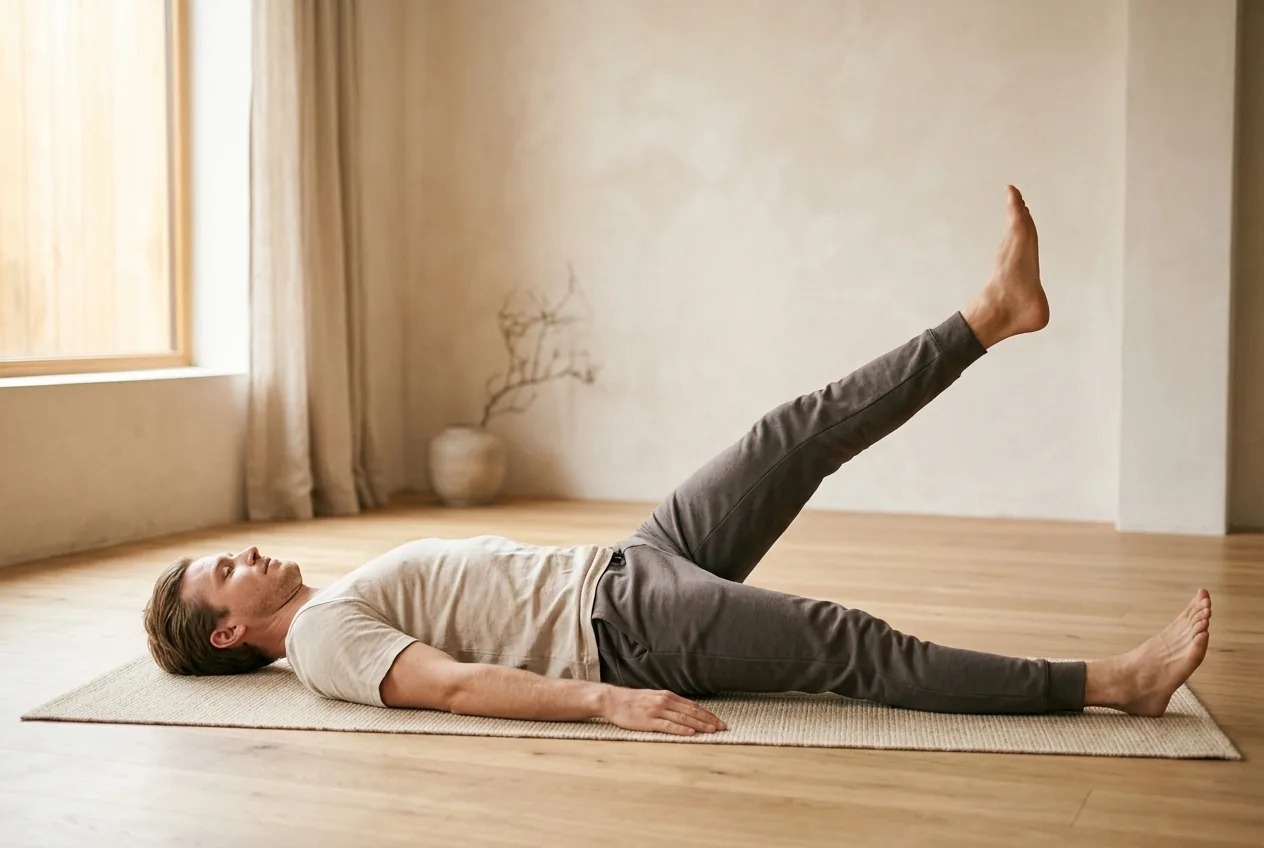
- Quad strengthening through a pain-free range — partial squats and straight-leg raises rather than deep, loaded squats that crush the kneecap.
The full toolkit for front-of-knee pain, including kneecap-tracking work, is laid out in patellofemoral syndrome exercises, and it overlaps heavily with what helps arthritis here.
Change the loads that grind it
- Take stairs more slowly, and let the stronger leg lead going down where you can.
- Raise low chairs or use the armrests so you're not pushing up through a deeply bent, loaded knee.
- Break up long sits — stand and straighten the knee every half hour so it doesn't stiffen compressed.
- Keep moving overall. Gentle, regular movement nourishes cartilage; long stillness stiffens it.
Manage flares
Ice after a flare, and use heat to loosen a stiff knee before activity. Stay within a pain-free range while building strength — pushing into sharp pain to "work through it" just irritates the worn surface. The broader strategy for an arthritic knee, including pacing and load management, is covered in knee arthritis exercises.
When to see a doctor
This is posture and self-care education, not medical advice. See a clinician promptly if the knee is hot, red, and swollen or you have a fever, if it locks, gives way, or you can't bear weight, if the pain followed a fall or twist, if there's significant swelling that won't settle, or if there's numbness or weakness spreading down the leg. Unexplained weight loss or pain that's severe or steadily worsening should always be assessed.
Why your own alignment decides what works
Generic knee advice assumes every kneecap mistracks the same way. It doesn't. One person's kneecap is dragged off-track by weak glutes; another's by a tipped pelvis throwing the whole leg's angle off. The strengthening that helps the first can do little for the second. That's why the same set of exercises eases one person's kneecap arthritis and barely touches another's.
A posture assessment that measures your own deviations reads how your pelvis sits and how your legs line up under it, so the work targets why your kneecap is tracking off — which is what actually takes load off the worn patch. You can't undo the wear. You can change how much of your weight it carries every time you take a step.
Common questions
What is patellofemoral arthritis?
It's wear of the cartilage in the joint between your kneecap and the groove it slides in at the end of the thigh bone. As the cartilage thins, the surfaces stop gliding cleanly, which produces front-of-knee pain, grinding or clicking, and stiffness — felt most on stairs, when squatting, and after sitting with the knee bent.
What helps kneecap arthritis?
Taking pressure off the kneecap and improving how it tracks. Strengthening the glutes so the thigh stops rotating inward centres the kneecap in its groove and spreads the load, while quad work through a pain-free range supports it. Changing loads — slower stairs, higher chairs, breaking up long sits — eases day-to-day grind.
Why does my knee hurt more going downstairs than up?
Going downstairs drives the kneecap hard into its groove as the knee bends under your full body weight, loading the worn surface more than climbing does. That heavy compression on a thinned cartilage patch is what produces the sharper pain on the way down.
Can you reverse arthritis under the kneecap?
You can't regrow the worn cartilage, but you can reduce the pain substantially by changing how much load the kneecap takes — strengthening the hip so the knee tracks better, managing the movements that grind it, and staying gently active. Many people with clear wear on imaging have little pain once the load is spread differently.