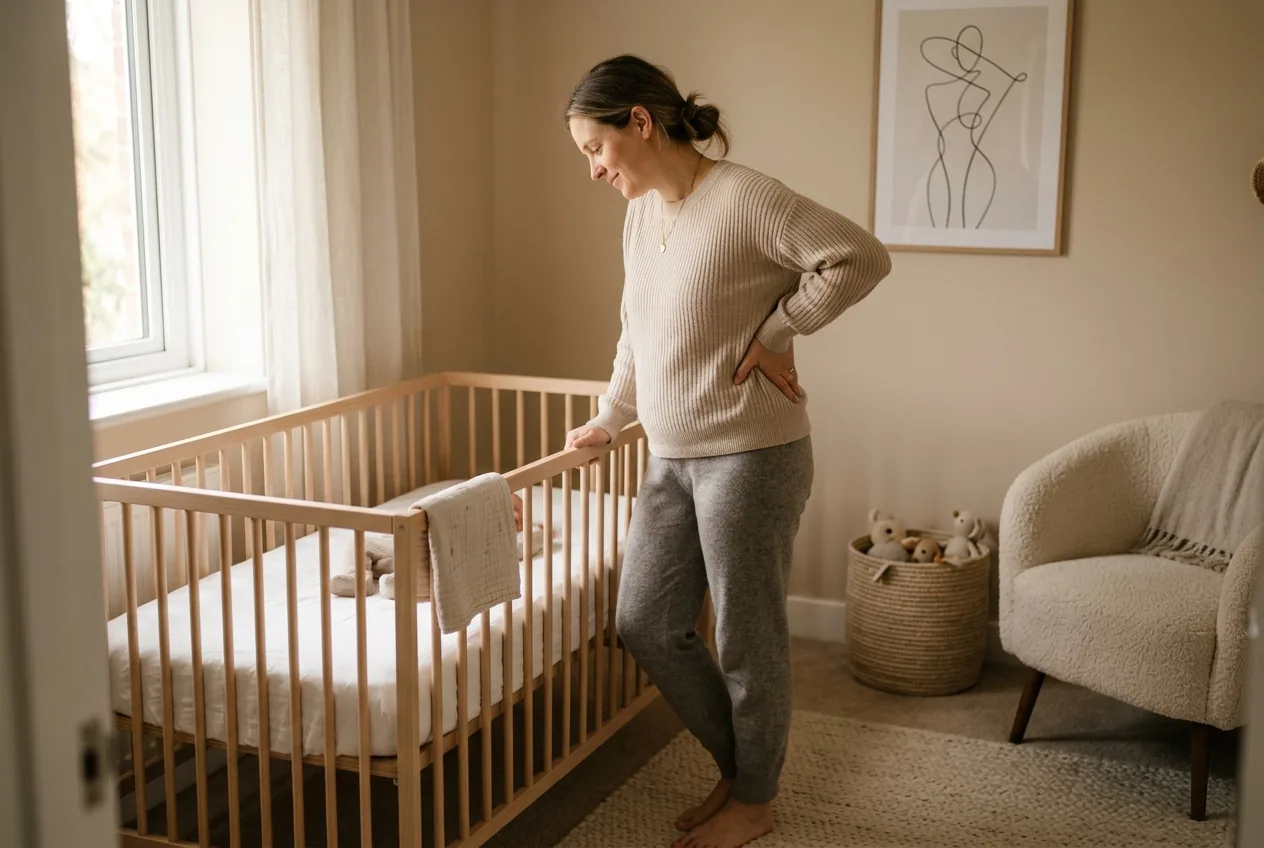
You expected the bump to leave and the back pain to leave with it. Instead, weeks or months after birth, your lower back still aches by the end of the day, and bending over the crib still makes you wince. Postpartum back pain is common, and the fact that it lingers past delivery surprises a lot of new parents.
It makes sense once you see what your body has been through, and what it's doing all day now. None of the gentle suggestions below replace your own care. If anything feels wrong, check with your doctor or OB before pressing on, especially in the first weeks of recovery.
Why the pain lingers after birth
The pregnancy is over, but several of its effects take time to fade, and new ones arrive.
The ligaments loosened by relaxin during pregnancy don't snap back the day you deliver. The hormone can stay in your system for a while, especially with breastfeeding, so the pelvis and lower back may still feel less stable for weeks or longer. On top of that, your abdominal muscles stretched over nine months and are weaker than they were. Some people also have a gap down the middle of the abdominals, called diastasis recti, which leaves the core less able to support the spine. When the front isn't pulling its weight, the lower back covers for it.
Then there's the job itself. New-parent life is a posture stress test: hours of feeding hunched forward, lifting a car seat at an awkward angle, rocking a baby on one hip, leaning into a low crib. The load is constant, often one-sided, and rarely done with great form because you're exhausted. That overlaps heavily with back pain from carrying your baby.
So lingering postpartum back pain is usually a weaker core, looser joints, and a demanding new physical routine all landing at once. It's mechanical, and it's workable.
Gentle ways to ease postpartum back pain
Go slowly. Early recovery is not the time to chase intensity, and if you had a C-section or any complication, get your provider's clearance before starting core work.
Rebuild the core gently. Before crunches or planks, start with quiet breathing and connection work. Lying on your back with knees bent, breathe out slowly and gently draw the lower belly toward your spine, then release. This wakes up the deep core that stabilizes the lower back. If you suspect diastasis recti, ask your provider or a pelvic-floor physio before doing harder ab work, since the wrong moves can widen the gap.
Use the feeding setup, don't fight it. Bring the baby up to you with pillows rather than curling your whole spine down to the baby. Support your own back against a chair or headboard, and switch sides and positions so one shoulder isn't always rounded.
Mind the lifts. Car seats and carriers are heavy and always at a bad angle. Get close, square your feet, bend at the hips and knees, and keep the load near your body. The habits in back pain from carrying your baby are worth building early.
Stop the hip-carry habit. Resting the baby on one hip tips your pelvis and loads one side all day. Alternate sides, or use a well-adjusted carrier that spreads the weight.
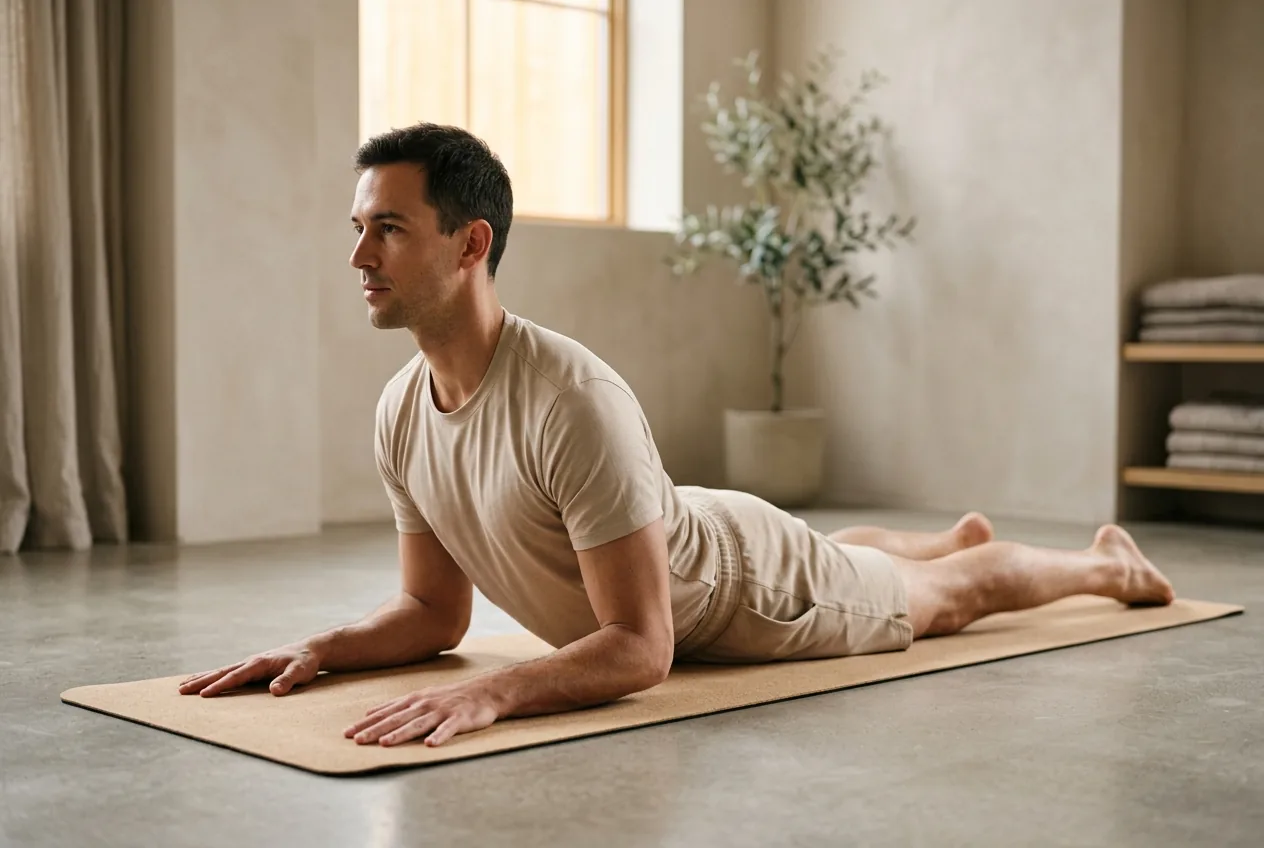
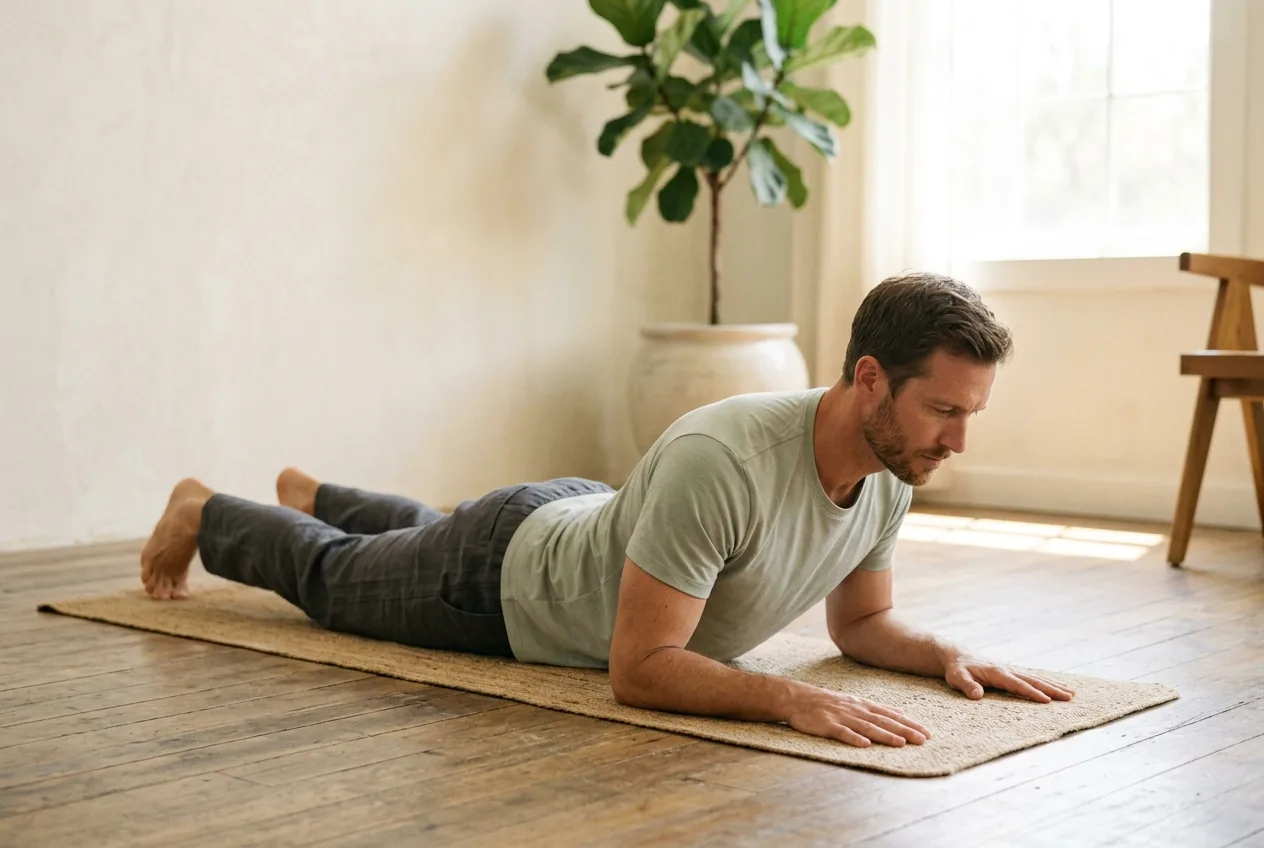
Move a little, often. Short walks and gentle stretching keep the hips and back from stiffening. Many find cat-cow and a slow glute bridge helpful once cleared, because they wake up the muscles that support the lower back. Keep everything within a comfortable range.
Strong, awake glutes and a reconnected core take pressure off a lower back that's been covering for both.
A simple posture reset for new parents
You can't control how much you lift in a day, but you can reset between the lifts.
- Stand tall and notice if you're leaning back or jutting the hips forward, a habit carried over from pregnancy.
- Roll your shoulders back and down, the same idea behind fixing rounded shoulders from all that hunched feeding.
- Gently squeeze your glutes for a few seconds to re-engage them.
- Take one slow breath out, drawing the lower belly in lightly.
A few times a day, this nudges the supporting muscles back on and gives the lower back a break. It takes twenty seconds.
What to ease off early on
- Don't rush back to hard core work, heavy lifting, or high-impact exercise. Get cleared first, usually around your postnatal check, sooner or later depending on your birth.
- Avoid twisting under load, like swinging a car seat across your body.
- Skip pushing through sharp pain. Ache that eases with movement is one thing; sharp or worsening pain is a stop sign.
- Don't ignore pelvic-floor symptoms, which often travel with back and core issues after birth.
When to call your doctor
Most postpartum back pain is mechanical and improves as your core and joints recover. Some symptoms need prompt attention. Contact your doctor or OB right away if you have:
- Severe or steadily worsening back pain
- Fever with back pain, which can signal infection
- Numbness, tingling, or weakness spreading down a leg
- Any loss of bladder or bowel control beyond expected early recovery, or new pelvic-floor problems
- Back pain after a fall, or pain with calf swelling or redness
- Pain that isn't improving over weeks
This isn't a full list. In the postpartum period, when something feels off, it's always reasonable to call.
Why your routine should match your pattern
Two new parents with the same baby can have very different backs. One came out of pregnancy with the pelvis tipped forward, another flattened out, and a third carries everything on the right hip. The body compensates around its own imbalance, which is why a stretch that rescues one friend does nothing for you. Generic advice is a fine starting point, but lasting relief comes from knowing your specific pattern and working it daily.
A short posture assessment that reads your actual alignment can show which way your pelvis and spine sit now, so gentle daily work targets the muscles that switched off. Get clearance from your provider first, then keep it gentle and consistent.
Start with the feeding and lifting setups this week, alternate the hip you carry on, and add the twenty-second reset. The body recovers, and a little structure speeds it up.
Common questions
How long does postpartum back pain last?
It varies. Many people improve over a few months as the core rebuilds and ligaments tighten, but it can linger longer with heavy lifting and poor setups. Persistent or worsening pain is worth raising with your doctor.
Can I do core exercises to fix postpartum back pain?
Gentle reconnection work usually helps, but get cleared first, especially after a C-section, and check for diastasis recti before harder ab moves. A pelvic-floor physio can guide what's safe for you.
Why does my back hurt more now than during pregnancy?
A weaker, stretched core, still-loose joints, and constant lifting and hunched feeding can combine to load the lower back more than the bump did. It's mechanical and usually improves with recovery and better setups.
When should I see a doctor for postpartum back pain?
Call promptly for severe or worsening pain, fever, leg numbness or weakness, loss of bladder or bowel control, new pelvic-floor problems, or calf swelling. When unsure, checking with your provider is always reasonable.