
Sciatica is supposed to run down the back of your leg. So when the ache shows up in your groin or along your inner thigh instead, it throws you. You start wondering whether it's even your back at all, or something else entirely — and that uncertainty is its own kind of stress. If your sciatica pain is reaching the groin, you're not imagining a connection, but the connection is worth getting right.
The short version: true sciatic pain usually travels down the back of the leg, but nerve irritation in the lower back can absolutely produce pain in the front, the groin, and the inner thigh — just through slightly different routes. Sorting out which is happening points you toward the right fix.
Why nerve pain reaches the front of the body
Your lower back is a junction box. Several nerve roots exit the spine there, and they don't all feed the same territory. The sciatic nerve, formed from lower roots, mostly serves the back of the leg. But higher lumbar roots — around L1 through L4 — feed the front of the thigh, the inner thigh, and the groin through different nerves, including the femoral and obturator nerves.
So when people say "sciatica in the groin," a few different things can be going on:
- A higher lumbar nerve root is irritated, sending pain into the groin and inner or front of the thigh rather than down the back of the leg.
- A lower back problem is referring pain forward, the way a disc or joint can broadcast a deep, hard-to-pinpoint ache that doesn't follow a clean line.
- A tight, guarded muscle deep in the hip or pelvis is part of the picture, pulling on structures that send pain toward the groin.
The common thread is that the source sits in the lower back or pelvis, and the groin is where the message gets delivered. The nerve is the messenger, not the source — which is why pressing on the groin itself rarely changes anything.
What it tends to feel like
Groin-and-inner-thigh nerve pain has a recognizable flavor once you know what to listen for.
- It's often deep and hard to locate precisely — you can't put one finger on it.
- It can be nervy: a burning, tingling, or electric quality rather than a clean muscular ache.
- It may come and go with position — worse sitting, worse standing, or worse when you twist or rise from a chair.
- It frequently travels with a more familiar back or hip ache, so the groin pain is one branch of a bigger pattern rather than a lone symptom.
If it also runs down the back of the leg on the same side, that ties it more firmly to the lower back as the address. The broader map of sciatic nerve pain is worth a read to see where your particular pattern fits.
When pain shows up somewhere odd, the question isn't "what's wrong with this spot" — it's "what's the spot reporting on."
What else causes groin and inner-thigh pain
This is the part where careful thinking pays off, because not everything in the groin is a back problem, and a couple of the alternatives matter.
The hip joint itself can refer pain to the groin — that's actually the classic location for hip-joint trouble, and it tends to worsen with weight-bearing or rotation rather than with bending the back. A hip flexor or adductor (inner thigh) muscle strain can mimic the area too, but it usually has a clear "I felt it tweak" history and hurts with specific movements. In some cases the pain pattern overlaps with lower back and groin pain from the lower back and pelvis together, which is common and untangling it is exactly the point.
The reason this matters: groin pain occasionally signals something that isn't muscular or postural at all — a hernia, a kidney or urinary issue, or in rarer cases something that needs prompt attention. So while most groin-plus-back patterns are mechanical, groin pain that arrives with fever, blood in the urine, a visible bulge, or testicular pain is a reason to get checked rather than stretch it out.
What actually helps
For the mechanical, posture-and-nerve version, the same principles that calm sciatica apply.
Find the position that eases it. Notice whether sitting, standing, or a gentle backward lean settles the pain, and lean into that direction through the day. If a position increases the groin or leg pain, it's the wrong one for now.
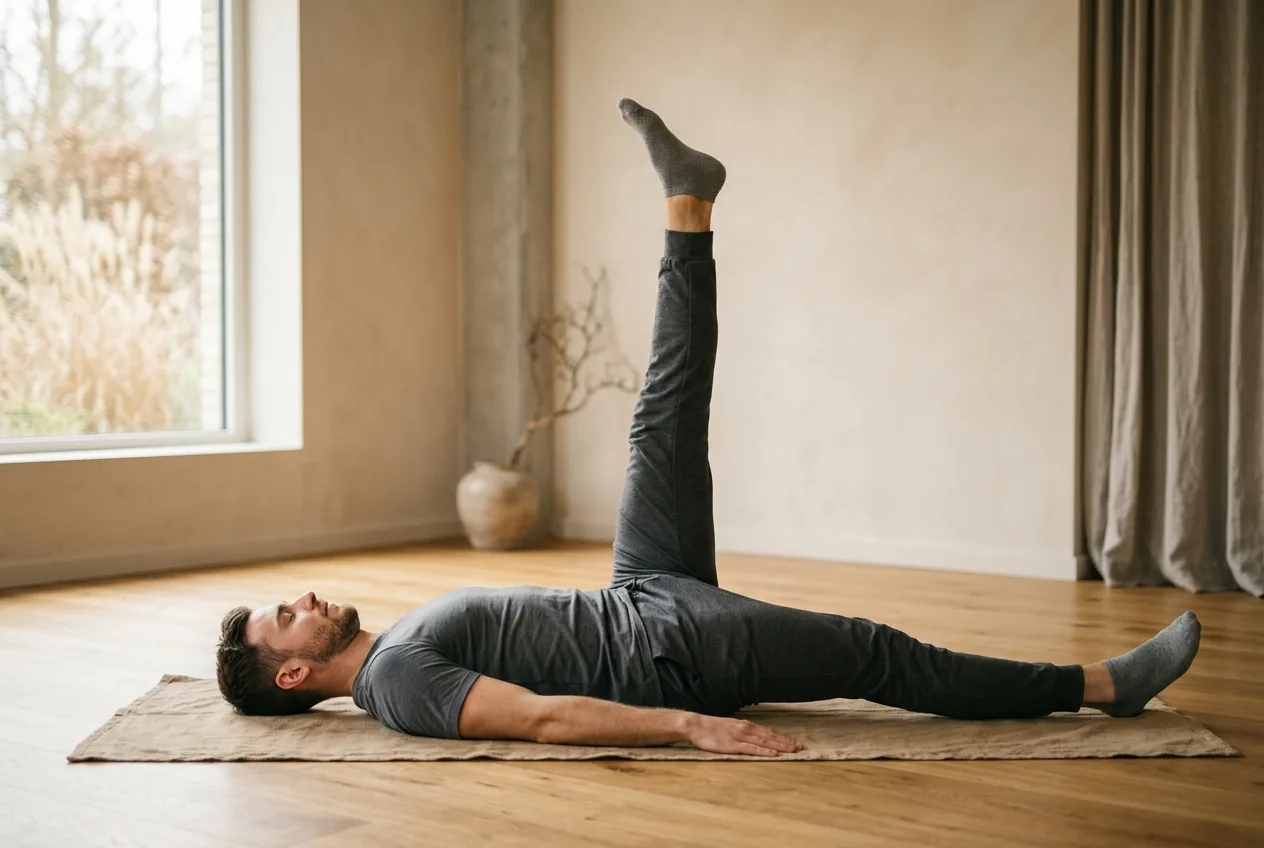
Loosen the hip gently. Tight hip flexors and deep hip rotators often ride along with this pattern, especially in people who sit for a living. Gentle, daily hip work — stopping short of any sharp or shooting pain — helps take tension off the structures feeding the groin.
Keep moving. Short, frequent walks beat long stillness. Sitting all afternoon loads the lower back and shortens the hip, which is often what stirs the whole thing up.
Fix the hours you sit. Hips slightly above knees, a small support behind the lower back, and standing up every 30 to 40 minutes take pressure off the lumbar nerve roots that feed the front of the leg.
Watch the trend. If the pain is retreating toward the spine and the leg or groin over days, you're on the right track. If it's spreading or intensifying, back off and reassess.
When to see a doctor
Most groin-and-back pain is mechanical and settles with the right movement. Some of it isn't. See a clinician promptly if you have leg weakness that's clearly worsening, numbness spreading into the saddle area between your legs, or any loss of bladder or bowel control — those last two can signal cauda equina syndrome, a surgical emergency, so go to urgent care the same day. Also get checked for groin pain that comes with fever, blood in the urine, a visible bulge, testicular pain or swelling, or that followed a fall — those point away from a simple posture problem and toward something that needs its own diagnosis.
Why your pattern decides the fix
Here's the honest limit of any guide. Whether your groin pain comes from a higher lumbar root, a referred ache, or a guarded hip muscle, the reason it's irritated in the first place usually traces back to how your pelvis and lower back are loaded. A pelvis tilted too far forward, hips that sit unevenly, a lower back stuck in the wrong curve — each changes which nerve roots get crowded and which moves help or hurt.
Generic advice can't see your particular pattern, which is why people chase odd, shifting pains for years. That's the idea behind a posture assessment: you measure your own deviations and build a daily routine around what's actually loading the nerve, instead of guessing at a symptom that keeps moving around. If these steps help a little but the pain keeps circling back, knowing your specific alignment is usually the missing piece — and the posture therapy approach is built to find the cause underneath the symptom.
Common questions
Can sciatica cause groin pain?
Not classic sciatica, which runs down the back of the leg — but lower back nerve irritation can absolutely send pain into the groin and inner thigh through higher lumbar nerve roots. The source is still the lower back or pelvis; the groin is where the pain is delivered.
How do I know if my groin pain is from my back or my hip?
Back-related groin pain often comes with a deep, nervy quality and travels with lower back or leg symptoms, and it changes with how you sit or bend. Hip-joint pain tends to worsen with weight-bearing and rotation and feels more mechanical. Pain with fever, a bulge, or urinary changes needs a doctor regardless.
Why does my inner thigh hurt with sciatica?
The inner thigh is fed by lumbar nerve roots higher than the main sciatic nerve. When those roots are irritated in the lower back, the pain shows up along the inner thigh and groin rather than down the back of the leg.
When should I worry about groin pain?
Get prompt care if it comes with fever, blood in the urine, a visible bulge, testicular pain or swelling, worsening leg weakness, or any loss of bladder or bowel control. Those point to causes beyond a posture or nerve issue.