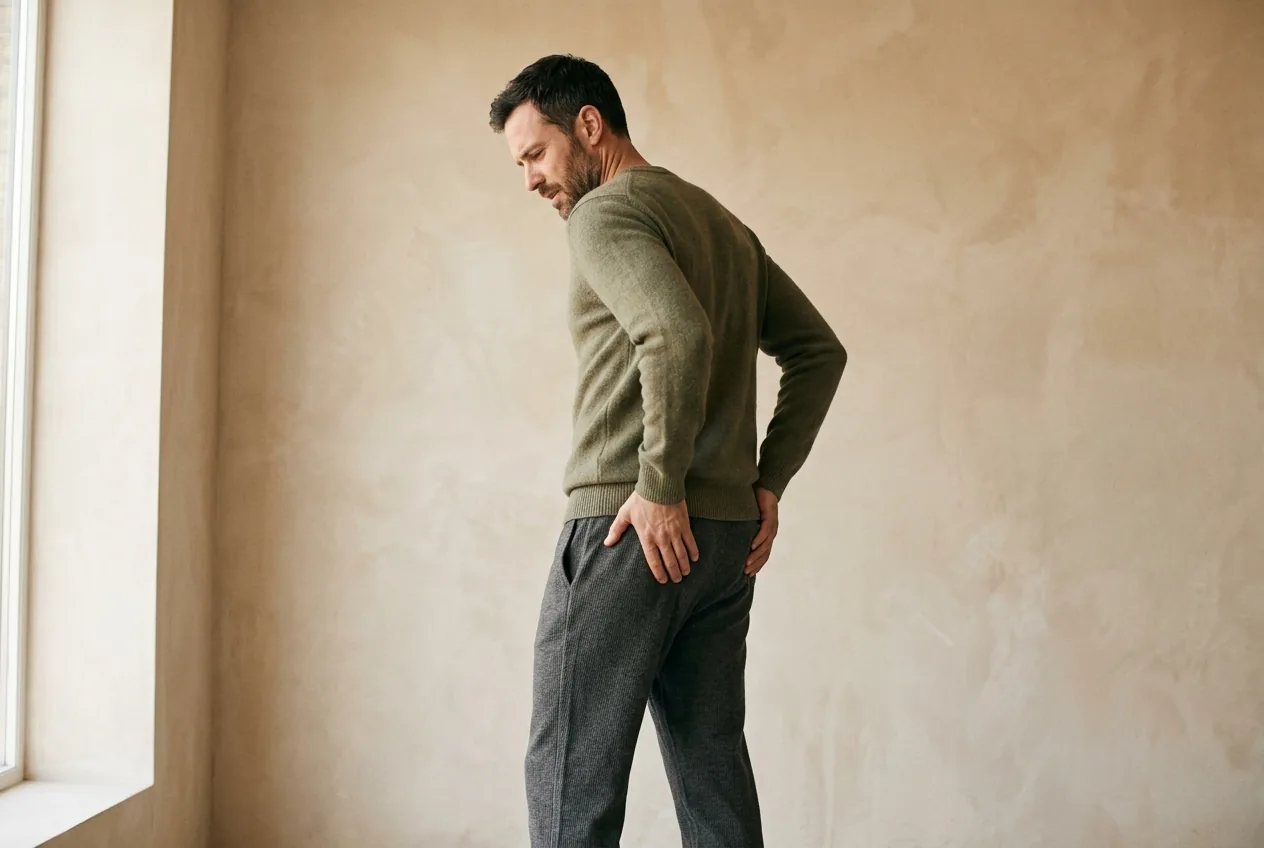

You've got buttock pain that sometimes shoots down the leg, and you've been down enough internet rabbit holes to know there are two names for what feels like the same thing. Is it sciatica, or is it piriformis syndrome? And does it even matter which one you call it?
It does matter, a little — because the two have different starting points, and the moves that help one can aggravate the other. The trouble with sciatica vs piriformis syndrome is that they overlap so heavily that even a careful clinician can find them hard to separate. Here's the honest version of how they differ and what you can actually tell on your own.
The one-line difference
Both involve the sciatic nerve. The difference is where the nerve is getting irritated.
Sciatica is a symptom, not a diagnosis — it describes pain that travels along the sciatic nerve, usually because a nerve root is being crowded at the spine. The most common cause is a disc pressing on the root in the lower back.
Piriformis syndrome is when the piriformis muscle, deep in the buttock, compresses or irritates the sciatic nerve as it passes underneath. The trouble starts in the buttock, not the spine.
So both can send pain down the leg. The question is whether the irritation began at the back or at the buttock. That's the fork in the road.
Clues that point to a disc (true sciatica)
A few patterns lean toward the problem starting at the spine:
- It started with back pain or a back event. Pain that began in the lower back and then traveled down the leg often points to the disc.
- Coughing, sneezing, or straining spikes the leg pain. That bearing-down pressure provokes a disc-related root, not usually a muscle. If that's you, lower back pain when coughing or sneezing lines up with disc involvement.
- The pain follows a clear line past the knee, often to the calf or foot, sometimes with numbness or pins and needles in a specific patch.
- Bending forward or sitting slumped makes the leg worse. Forward flexion loads the disc.
If several of these fit, you're likely looking at nerve-root irritation from the spine — read is it muscle or disc back pain for more on telling those apart.
Clues that point to the piriformis
Other patterns lean toward the muscle in the buttock:
- The pain centers in the buttock, with a deep ache right in the cheek, sometimes radiating down but often staying mostly local. The sciatica pain in the buttock only pattern often turns out to be piriformis-related.
- Sitting is the big trigger, especially on hard seats or after a long drive — the muscle gets pressed onto the nerve.
- It hurts to press deep into the buttock, and there's often a tender spot you can find.
- No clear back story. The lower back itself feels fine; the trouble is all in the buttock and hip.
- Certain hip rotations reproduce it — crossing the leg, or rotating the thigh outward against resistance.
The catch: many people have features from both lists. That's normal, and it doesn't mean you're failing to figure it out. It means the two genuinely overlap.
The cleanest tell is the starting point. Spine-first usually means a disc. Buttock-first usually means the piriformis. The leg pain can look identical either way.
Why the distinction changes what you do
This is where it stops being academic. A disc-related nerve often calms with gentle backward-leaning positions and gets angrier with deep forward stretches and forced hip rotations — the very moves people use to "stretch out" a tight piriformis. So aggressively stretching the buttock when the real problem is a disc can stir the nerve up.
The reverse is also true: a genuinely tight piriformis often does respond to careful stretching and to waking up weak glutes so the muscle stops overworking. Apply the wrong template and you spin your wheels.
A safe middle path while you sort it out:
- Calm before you stretch. Short walks, easy movement, and changing positions often, rather than forcing anything.
- Test gently. If a careful piriformis stretch eases things, lean that way. If it sparks sharp leg pain, back off — that points more toward a disc.
- Strengthen the glutes either way. A daily glute bridge helps both pictures, because strong glutes take load off the piriformis and stabilize the lower back.
- Fix your sitting. Both conditions hate long, slumped sitting. Small changes to sciatica when sitting help regardless of the label.
When to see a doctor
The label matters less than the safety signs. Get checked promptly for leg or foot weakness that's worsening, foot drop, numbness spreading into the saddle area, or any loss of bladder or bowel control — that last one needs same-day care. Also see a clinician if pain followed a fall, comes with fever or unexplained weight loss, or is severe and climbing rather than easing.
A hands-on exam, and sometimes imaging, is genuinely the reliable way to separate these two. This article is education, not a diagnosis — if the pain is significant or stubborn, a proper assessment is worth it.
The cause underneath both
Here's what gets missed in the sciatica-versus-piriformis debate: both often grow out of the same root problem. A pelvis that tilts or sits unevenly overloads one side. The piriformis on that side tightens to compensate. The discs in the lower back take uneven pressure. So you can end up with features of both because the underlying postural setup is feeding both.
That's why chasing the label alone rarely fixes it for good. Knowing your own pattern — how your pelvis and spine are actually positioned — is what addresses the cause feeding the irritation. A posture assessment measures your specific deviations so the routine targets them, and the posture therapy approach is built around finding that cause rather than guessing at a name.
Sort the starting point, respect the red flags, and treat the imbalance underneath — that beats arguing over which label fits.
Common questions
What's the main difference between sciatica and piriformis syndrome?
Sciatica is leg pain from a nerve root being crowded at the spine, most often by a disc. Piriformis syndrome is the sciatic nerve being irritated by a tight muscle in the buttock. The leg pain can feel the same; the starting point differs.
Can you have both at once?
Yes, and it's common. The same postural imbalance that loads a disc can also tighten the piriformis, so people often have features of both. That overlap is why they're hard to separate.
Does stretching help piriformis but hurt sciatica?
Often, yes. A tight piriformis tends to respond to careful stretching, while a disc-related nerve can flare with the same deep stretches and hip rotations. Test gently and back off anything that sparks sharp leg pain.
How do doctors tell them apart?
Through a hands-on exam — checking which movements reproduce the pain, testing strength and reflexes, and sometimes imaging. There's no single home test that settles it with certainty, which is why a proper assessment helps.