
You can walk the dog, stand at the counter, even sleep through the night — but the second you sit down at your desk, the pain comes back down the leg like clockwork. Sciatica pain when sitting is one of the most common patterns there is, and one of the most maddening, because sitting is exactly what your job and your commute demand most of.
There's a clear mechanical reason for it. Once you understand what sitting does to the nerve, the fixes make sense.
Why sitting loads the nerve
Stand up and your spine carries your weight through its natural curves, with the load shared across the discs, joints, and muscles. Sit down, especially slumped, and that lower-back curve flattens or reverses. The discs in the lumbar spine take noticeably more pressure sitting than standing, and that pressure pushes a bulging disc backward — toward the nerve roots that feed the sciatic nerve. Crowd the root, and the leg lights up.
Sitting also folds the hip closed. That shortens the hip flexors and puts the piriformis and deep hip muscles in a position where they can press on the nerve where it runs through the buttock. So you get a double hit: more disc pressure and more muscular crowding, both at once, the moment you fold into a chair.
Sustained sitting makes it worse than brief sitting. Tissue under steady load creeps and stiffens, the nerve stays compressed, and inflammation builds over the hour. That's why the pain often isn't bad when you sit down but is awful by the end of a meeting. The same loading explains why ordinary lower back pain when sitting is so common, sciatica just adds the leg.
Fix the setup first
Before any stretch, change what your chair is doing to your spine.
- Support the lumbar curve. A small cushion or rolled towel in the small of your back keeps the lower spine from collapsing into the rounded shape that loads the disc. This one change helps a lot of people.
- Sit hips slightly above knees. Drop the seat or raise yourself so your hips are a touch higher than your knees. This opens the hip angle and eases the disc, instead of folding you into a deep crouch.
- Get your feet flat and weight even. Sitting on a wallet, crossing the same leg, or perching on one cheek twists the pelvis and tilts the load onto the irritated side.
- Bring the screen and keyboard to you. Reaching forward pulls you into a slump no cushion can fix. The monitor should meet your eyes; the keyboard should come to your hands.
A proper chair and desk setup for back pain covers this in more depth, and most of it applies directly to sciatica.
Break the sitting up
Even a perfect setup fails if you hold it for three hours. Movement is the part most people skip.
- Stand and walk for a minute or two every 30 to 40 minutes. A timer beats willpower.
- When you stand, gently arch backward a few times — hands on your hips, a slow, small backbend. For many disc-related cases this gentle extension reverses the forward pressure of sitting and pulls the leg pain back toward the spine.
- Alternate sitting and standing if you have a standing desk. Neither posture is good for hours; switching is the point.
The nerve doesn't hate sitting. It hates being loaded in one position for an hour straight.
Driving and the couch — the sneaky ones
Desks get the blame, but two other seats catch people out. The car seat reclines and slumps you, the pedals fix your hips at an awkward angle, and a wallet in your back pocket tilts the whole pelvis to one side — a setup almost engineered to flare sciatica on a long drive. Move the wallet to a front pocket, sit tall, and on longer trips stop to stand and walk for a couple of minutes the way you would at a desk.
The couch is worse than it looks. Soft cushions let your pelvis sink and roll back, dragging the lower spine into a deep slump for a whole evening. "Resting" on a soft sofa after a painful day often makes the next morning worse. If you're going to sit a long stretch in the evening, a firmer seat with your hips supported beats sinking into the cushions.
A couple of moves for relief at the desk
When the leg starts talking, you don't need the floor. Try a seated figure-four: cross one ankle over the opposite knee, sit tall, and hinge gently forward from the hips until you feel a stretch deep in the buttock. Stop before any zing down the leg. Hold 20 to 30 seconds, switch sides.
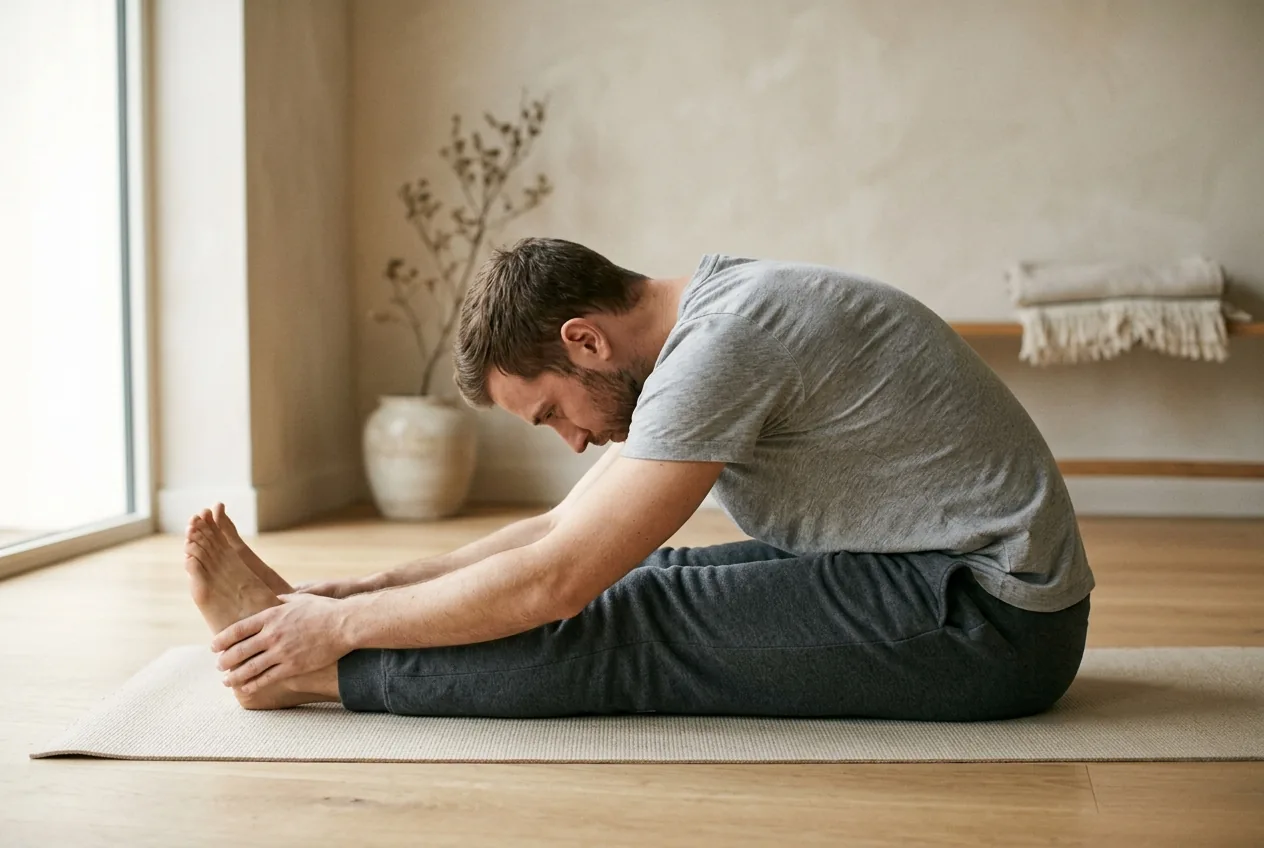
Off the clock, a short daily routine of gentle sciatica stretches you can do at home keeps the hip and back from tightening back up overnight. Just steer clear of the deep seated forward folds — among the sciatica exercises to avoid, they load the disc the same way bad sitting does.
When to see a doctor
Sitting-triggered sciatica that eases when you stand and walk is usually mechanical and manageable. Get assessed promptly, though, if you notice leg or foot weakness that's worsening, foot drop, numbness creeping into the saddle area, or any change in bladder or bowel control — those last two point to cauda equina compression and need emergency care. Also see a clinician if the pain came after a fall, comes with fever or unexplained weight loss, or is severe and not letting up.
Why your "good posture" might still hurt
You can do everything on this list and still flare, because the right sitting posture for you depends on how your spine and pelvis are actually built. Someone with a flattened lumbar curve needs a different setup than someone with too much arch. A lumbar roll that rescues one person crowds the disc in another. There's no universal correct chair position — there's the one that fits your alignment.
That's the value of measuring your own pattern instead of guessing. A posture assessment reads how your pelvis tilts and where your spine is biased, then matches the routine and the positions to it. If you've optimized your chair and the leg still complains, that fit is usually what's missing — and the posture therapy approach is built around finding it.
Fix the setup, break up the sitting, and give the nerve room. Most desk-driven sciatica responds within a couple of weeks.
Common questions
What is the best sitting position for sciatica?
There isn't one universal answer, but most people feel better with hips slightly above the knees, feet flat, and support filling the curve of the lower back. The right setup depends on how your own spine and pelvis sit.
Why does my sciatica get worse the longer I sit?
Sitting loads the lower spine and keeps the nerve in a crowded position. The longer you hold it, the more the irritation builds, which is why breaking up sitting matters as much as the chair itself.
Does a lumbar roll help sciatica?
It helps some people and crowds others. If filling the gap behind your lower back eases the leg, keep it. If it adds pressure, it's the wrong fit for your pattern.
How often should I stand up when sciatica flares while sitting?
Every 20 to 30 minutes is a reasonable target. Even a short walk to refill a glass of water gives the nerve room and resets the load on your spine.