You can stand at the kitchen counter and feel fine. Walk to the end of the block and your legs start to ache, go heavy, maybe tingle — until you stop, lean on a railing or a shopping cart, and within a minute it eases. If that's your pattern, this article is written for you. That lean-forward relief is a clue, and it points toward how the right spinal stenosis exercises work.
Spinal stenosis is a narrowing of the spaces inside the spine where nerves travel. As those spaces tighten, the nerves get less room, and certain positions crowd them further. The result is usually leg symptoms that come on with walking or standing and ease when you sit or bend forward. Unlike a disc that hates bending, a stenotic spine often prefers it — which is exactly why generic back advice can backfire here.
Why bending forward helps
Picture the spine's canal as a doorway. When you arch backward — standing tall, reaching overhead, walking with an upright sway — the doorway narrows and the nerves get pinched. When you bend slightly forward, the doorway opens and the pressure comes off. That's the lean-on-the-cart phenomenon, and it's the principle behind a flexion-friendly routine for stenosis.
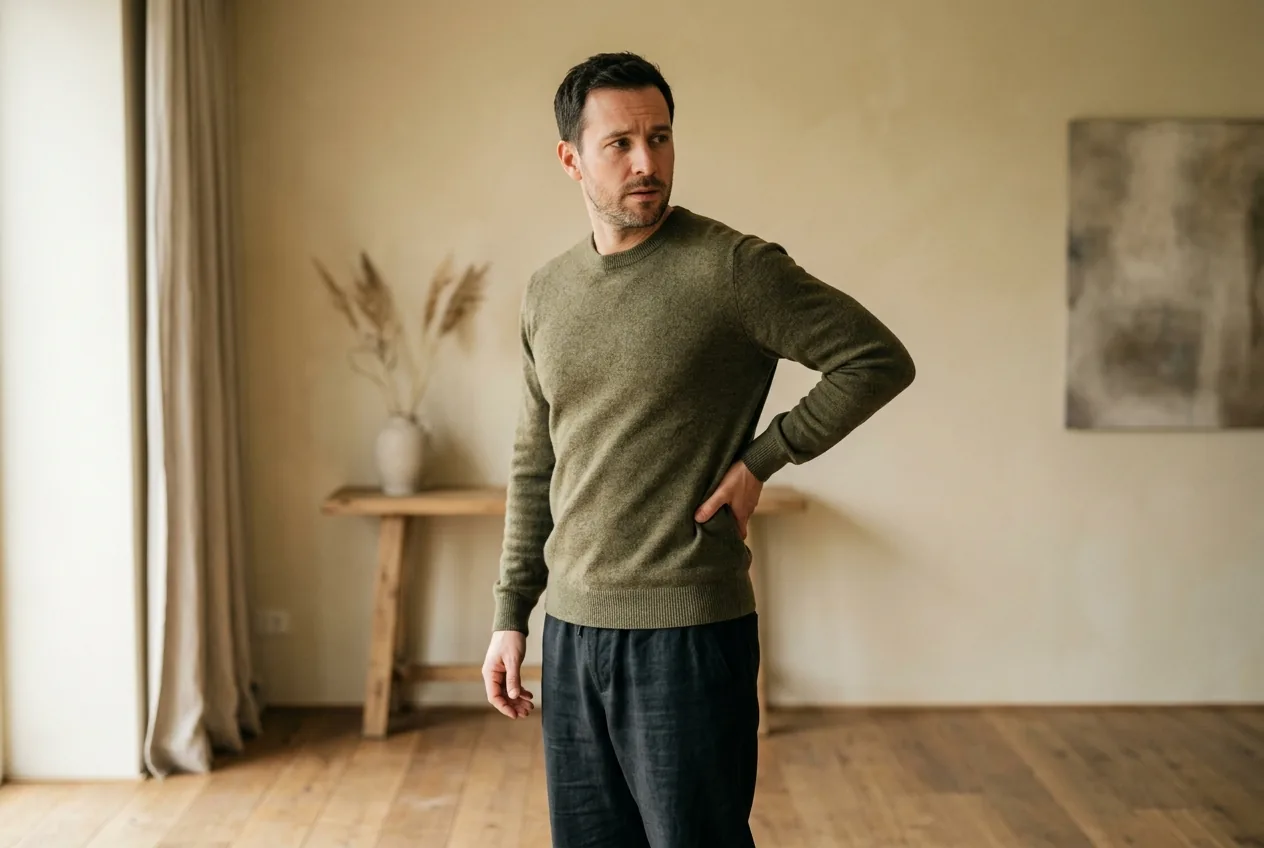
There's a postural layer underneath it. Many people with stenosis stand with the lower back over-arched, often because tight hip flexors tip the pelvis forward and the back compensates. That habitual arch keeps the canal narrower than it needs to be all day. Learning to unstack that arch — to find a neutral, slightly less-extended posture — can buy real comfort. The narrowing itself doesn't reverse, but how much you crowd the nerves is partly in your control.
Positions and exercises that help
The theme is gentle flexion, opening the spine and taking pressure off the nerves, paired with strength that lets you hold a kinder posture.
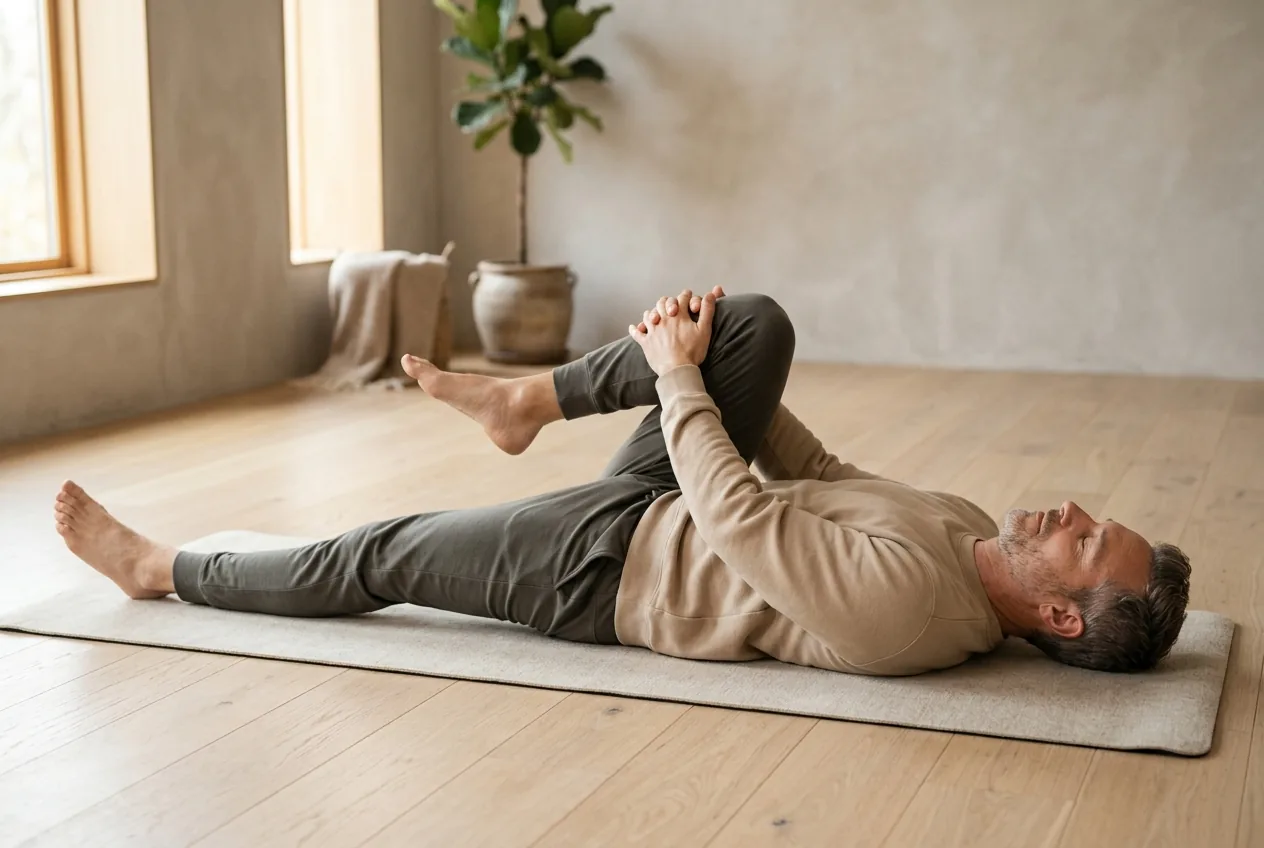
- Knees to chest. Lie on your back and draw both knees gently toward your chest. This opens the lower spine and often gives quick relief. Breathe and hold for a few easy breaths.
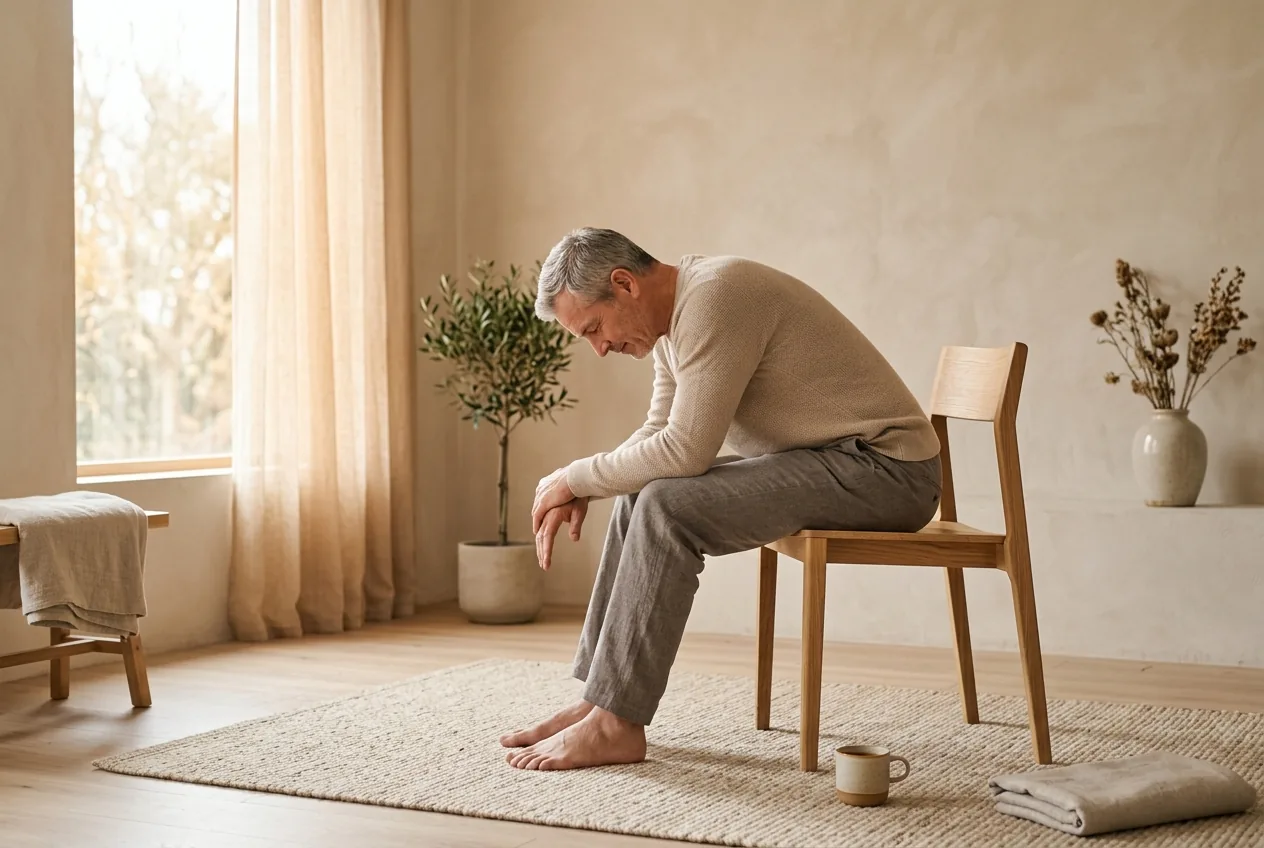
- Seated forward bend. Sit on a chair and slowly fold forward, letting your hands drift toward the floor. A classic position for opening the canal. Come up slowly.
- Posterior pelvic tilt. On your back, knees bent, gently flatten the lower back into the floor by rolling the pelvis. This trains the un-arching motion that takes pressure off the nerves and is a useful thing to repeat through the day.
- Stationary cycling or a slight forward lean while walking. Walking with a mild forward lean (or using a cart or poles) lets you go further before symptoms build. Cycling keeps the spine flexed and is often well tolerated.
- Glute and core strength. Bridges and gentle deep-core work build the support that lets you hold a neutral posture instead of falling back into the arch.
With stenosis, the spine usually asks you to open it, not extend it.
What to ease off
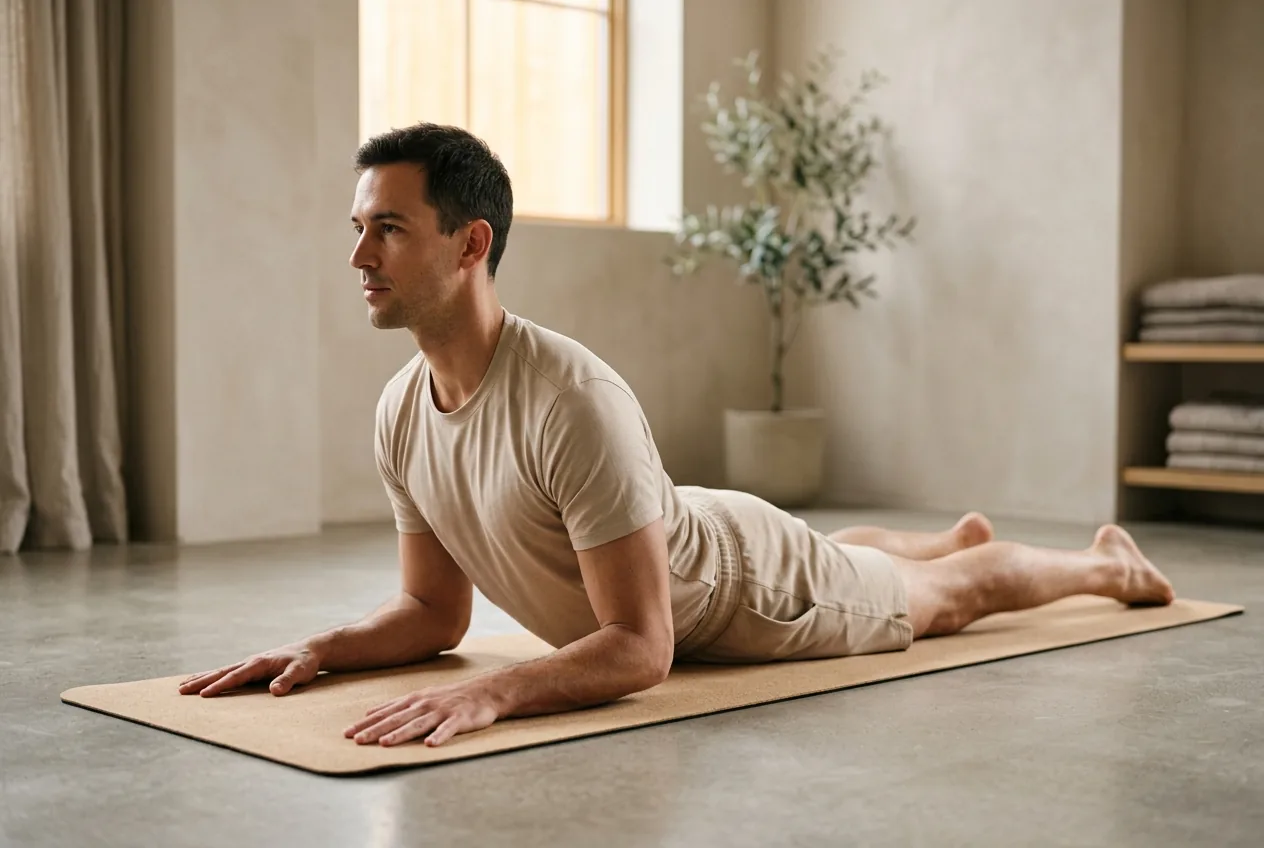
- Repeated or sustained back extension. Backbends, lying face down and arching up, and standing in a deep sway tend to crowd the nerves further. This is the opposite of the advice many disc patients get, which is why a matched plan matters.
- Long periods standing still. Standing tends to provoke symptoms more than sitting. If you have to stand, shift weight, put one foot up on a low step, and take sitting breaks.
- High-impact pounding. Running and jumping on a stiff, narrowed spine often aggravates it. Build strength on gentler ground first.
For a broader sense of what tends to provoke a sensitive back, exercises to avoid with lower back pain is worth reviewing. And because stenosis sends symptoms into the legs, some of the nerve-calming ideas in sciatica stretches at home overlap — just lean toward the flexion-friendly ones.
Walking further, one trick at a time
For most people with stenosis, the daily frustration is walking. You used to cover the supermarket without a thought; now you're mapping the bench between the car park and the door. A few practical adjustments can stretch how far you go before the legs complain.
The first is the forward lean. Walking poles, or even pushing a cart, let you tip slightly forward and open the canal as you move — which is why so many people find the supermarket easier than the open street. The second is interval walking: rather than pushing through until your legs force you to stop, sit or bend forward for a minute before symptoms peak, then carry on. Resetting early lets you rack up more total distance than grinding to a halt. The third is choosing your ground. Walking downhill or on a slight decline encourages a touch more flexion and is often easier than walking uphill, which pulls you into extension.
None of these fix the narrowing. They work with it. Over time, as your glutes and core get stronger and you spend less of the day stacked into that habitual arch, the distance you can manage tends to grow on its own.
When to see a doctor
Stenosis is usually managed conservatively, but a few signs deserve prompt attention. See a clinician if leg weakness is getting worse, if you're tripping or your foot catches when you walk, or if numbness is spreading. Seek urgent care for any loss of bladder or bowel control or numbness in the saddle area between the legs — uncommon, but treated as an emergency. Also get assessed for pain that's severe, steadily worsening, or comes with fever or unexplained weight loss. This is a short safety list, not a cause for alarm. Your clinician is the right person to confirm the diagnosis and to discuss whether other treatments make sense for you.
Why your routine should fit your spine
Stenosis is the clearest example of why generic back advice fails. The same backbend that frees up a disc can crowd a stenotic nerve, and the same forward fold that frees a stenotic nerve can flare a disc. If you're not sure which picture is yours — disc-dominant or stenosis-dominant — the signs in how to tell muscle pain from disc pain help you read your own symptoms.
Lasting comfort tends to come from knowing your own pattern: how much your lower back over-arches, how tight the hips are, which positions open your spine and which crowd it. A routine built around your specific deviations, repeated daily, is what gradually lets you stand longer and walk further. That's the approach behind the posture-based method for chronic back pain, which starts by measuring how you're actually aligned rather than guessing.
No exercise reverses the narrowing, and nothing here replaces your doctor's guidance. But for many people, opening the spine, easing off the positions that crowd it, and building the strength to hold a kinder posture is enough to get the ordinary things back — a full walk with the family, an afternoon on your feet, a grocery run without scouting for the nearest place to sit.
Common questions
Why does bending forward ease my stenosis symptoms?
Bending slightly forward opens the spaces inside the spine where the nerves travel, taking pressure off them. Arching backward narrows those spaces and crowds the nerves, which is why leaning on a cart or railing brings quick relief.
What exercises are best for spinal stenosis?
Flexion-friendly moves: knees to chest, seated forward bend, posterior pelvic tilts, and cycling, paired with glute and core strength so you can hold a neutral posture. These open the spine rather than extend it.
Why does generic back advice sometimes make stenosis worse?
Much back advice favours extension, like backbends and arching up from the floor. With stenosis those positions crowd the nerves further. The same forward fold that frees a stenotic nerve can flare a disc, so the right plan depends on which picture is yours.
How can I walk further without my legs giving out?
Try a slight forward lean, using poles or a cart, and interval walking — sit or bend forward for a minute before symptoms peak rather than grinding to a halt. As your glutes and core get stronger, the distance you can manage tends to grow. See a clinician if leg weakness is getting worse or your foot catches when you walk.