By the time you finally get to bed, your lower back has been quietly clenched since about 2pm. You've sat, hunched, carried a kid on one hip, sat some more. You lie down, and instead of unwinding, your back stays tight — and a few hours later you're awake, shifting around, trying to find the position that doesn't ache. A few well-chosen stretches before bed for back pain can release some of that accumulated tension so you fall asleep in a body that's actually relaxed.
The goal at night is different from the morning. In the morning you want to wake the back up. At night you want to wind it down — gentle, slow movements that let the muscles let go, paired with the breathing that helps you settle. Nothing strenuous. This is the cooldown, not a workout.
Why the end of the day matters for your back
Whatever posture you held all day doesn't switch off just because you stopped moving. If you spent eight hours with your pelvis tipped forward in a chair, the muscles doing that work are still short and tense when you lie down — and they keep pulling on your lower back through the night. That's a big reason people wake up stiff even though they "rested." The link between the day's posture and the night's pain is covered in why you wake up with lower back pain.
A short evening routine gives those muscles a chance to release before you ask them to hold still for eight hours. It also signals to your nervous system that it's time to power down, which makes falling asleep easier.
A calm pre-bed routine
Do these on the floor or in bed, dimly lit, breathing slow and long. Move into each stretch gently and hold — no bouncing, no forcing.
1. Knees to chest
On your back, draw both knees gently toward your chest and wrap your arms around them. Let your lower back round softly into the floor. Hold 20–30 seconds, breathing deep. Releases the lower back after a long day of sitting.
2. Supine figure-four
Lying on your back, cross one ankle over the opposite knee, then gently draw that thigh toward you until you feel a stretch in the hip and glute. Hold 30 seconds each side. Tight glutes and hips quietly feed lower back pain, so this one earns its place.
3. Lying hip-flexor release
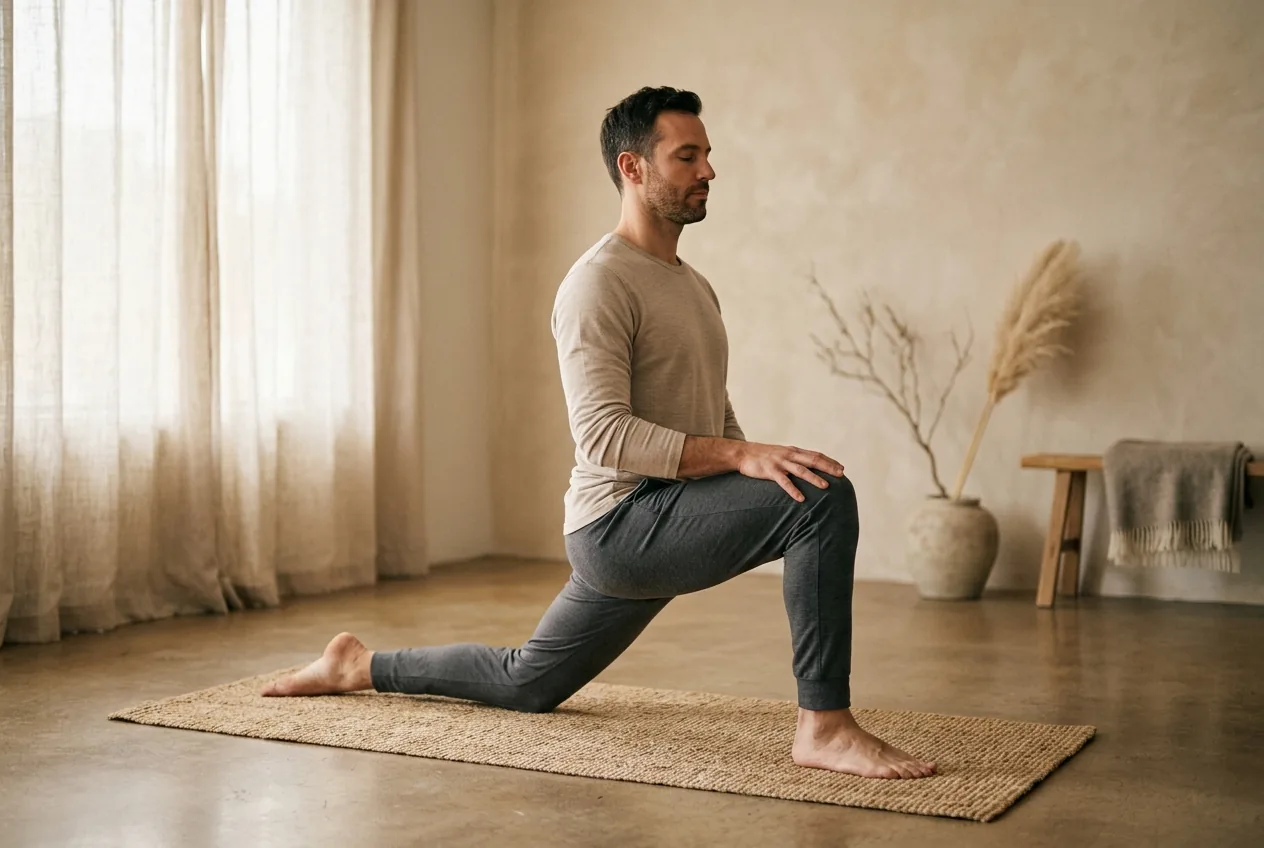
If you've been sitting all day, the front of your hips is tight, and that tightness pulls your lower back into an arch. A gentle hip-flexor stretch before bed counters it — kneel tall in a half-kneeling position, tuck your tailbone slightly, and ease your hips forward until you feel a stretch at the front of the back hip. Hold 30 seconds each side. This connects directly to the hip flexor and back pain connection, which is worth reading if your back is worse after sitting.
4. Gentle knee rolls
Back on the floor, knees bent, let them drop slowly side to side. Small, easy, relaxing. A handful each way.
5. Child's pose with slow breathing
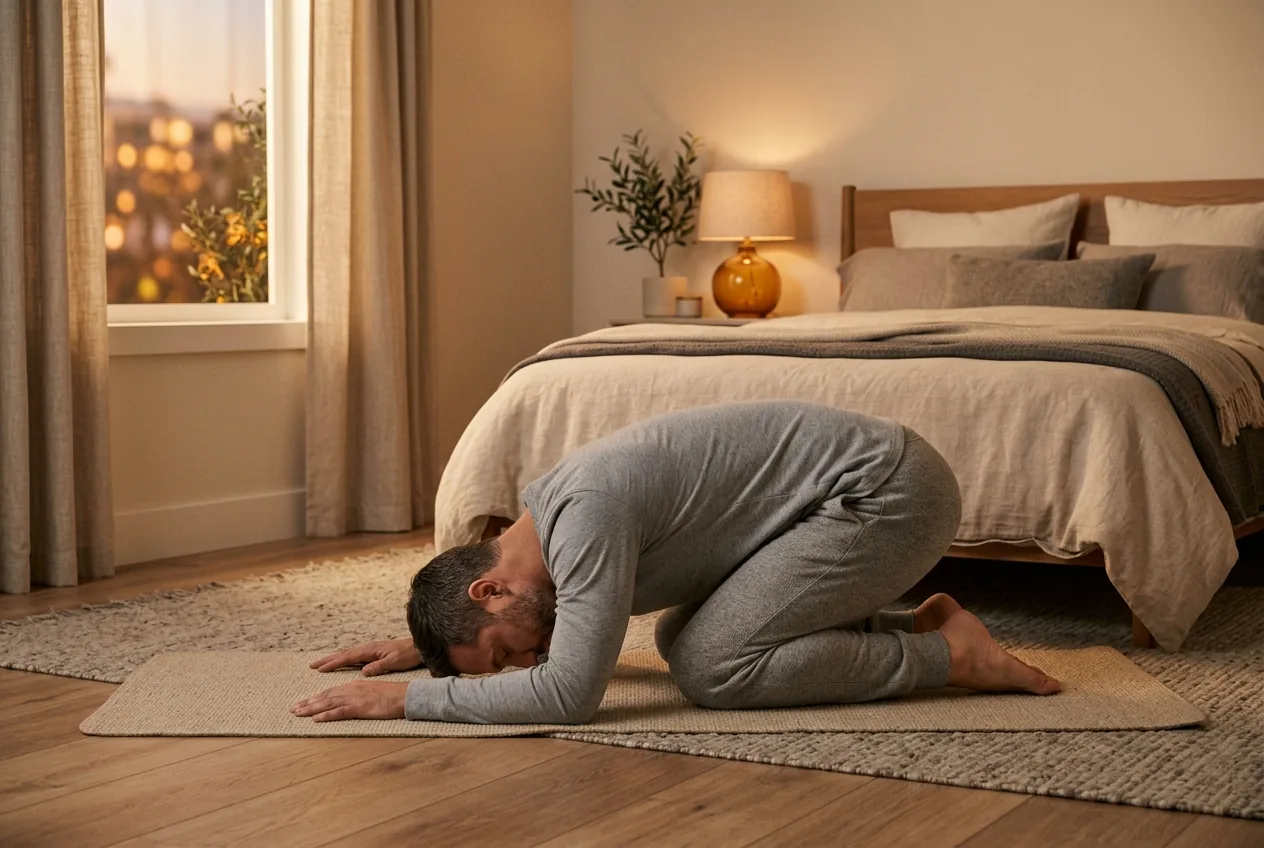
Finish in child's pose — hips back toward heels, arms reaching forward — and just breathe for a minute. Let the lower back lengthen and the shoulders soften. This doubles as a wind-down for your mind.
Add slow breathing on its own
Once you're settled in bed, spend a minute or two on slow breathing — in through the nose for a count of four, out for six. This isn't filler. Many people carry the day's stress as a low, constant clench in the muscles around the spine, and that tension doesn't switch off just because the lights are out. Slow exhales tell your nervous system the threat is over, and the muscles follow. If you tend to lie there with a tight back replaying the day, this does more than another stretch would.
Evening stretching is about letting go, not pushing. If you're straining, you're doing it too hard for bedtime.
What to leave out at night
- Anything intense or energizing. Hard core work or deep, effortful stretches wake your system up when you want it calming down. Save strengthening for daytime.
- Aggressive stretches on an irritated back. If a move sharpens your pain, drop it. Bedtime is the worst time to provoke a flare you'll lie awake with.
- Stretches that don't suit you. A few popular moves can aggravate certain backs. Knowing which exercises to avoid with lower back pain for your pattern keeps the routine helping rather than hurting.
After stretching, set up your sleep position properly — pillow under the knees on your back, or between the knees on your side. The stretching and the best sleeping position for lower back pain work together; one releases the tension, the other keeps it from building back up overnight.
Keep it short enough that you'll actually do it
The routine above takes about eight minutes. If that feels like too much at the end of a long day, you'll skip it — and a routine you skip helps no one. So strip it down on tired nights. Knees-to-chest, the hip-flexor release, and a minute of slow breathing covers the most common culprits in under four minutes. Do it in dim light, off your phone, as the last thing before you turn over to sleep.
The point isn't to do every move every night. It's to give the muscles that worked all day a signal to let go before you ask your body to hold still for hours. A small, repeatable habit beats an ambitious one you abandon by Wednesday.
When to see a doctor
Evening stretching is for ordinary mechanical tension. See a clinician promptly if you have numbness, tingling, or weakness spreading into a leg, any loss of bladder or bowel control, pain after a fall or accident, fever with back pain, unexplained weight loss, pain that wakes you in the early hours night after night, or pain that's severe or steadily worsening.
Why your routine should match your pattern
A gentle wind-down helps almost anyone, because it's low-load and calming. But the specific stretches that help most aren't the same for everyone. If your hips tip forward, the hip-flexor release will feel like a revelation; if your back is already flat and your hamstrings are doing the pulling, you need a different emphasis. The same routine lands differently depending on what your body is actually doing.
That's why lasting relief comes from knowing your own pattern rather than running a generic set. A posture-based approach to chronic back pain measures your actual deviations first, then builds the routine around them — so your evening minutes go toward the muscles that need them. Before-bed stretches ease tonight's tension; a matched routine works on why the tension keeps coming back.
Try the five moves above tonight, kept gentle and slow, then set up your position. If you fall asleep easier and wake up less stiff over the next week, you've found a habit worth keeping.
Common questions
Is it good to stretch before bed for back pain?
For most people, yes. A short, gentle routine releases the tension that built up during the day and signals your nervous system to wind down, which can make falling asleep easier.
What stretches help back pain at night?
Knees-to-chest, a supine figure-four, a gentle hip-flexor release, and child's pose all work well before bed. Keep them slow and easy rather than deep or strenuous.
Can stretching before bed help me sleep better?
It can. Releasing the day's muscle tension and adding a minute of slow breathing tells your body it's time to power down, so you settle into a more relaxed position instead of lying there with a tight back.
Should I stretch if my back already hurts at bedtime?
Keep it light. If a move sharpens the pain, drop it — bedtime is the worst time to provoke a flare you'll lie awake with. Stick to gentle, comfortable stretches and slow breathing.