You bend down to tie your shoes and your back feels like a board — no give, just a stiff, reluctant arc that takes a second to ease into. Or you twist to grab something off the back seat and your spine moves about half as far as it used to before it catches. That sense of a back that's gone rigid is what most people are chasing when they look for stretches for back flexibility.
A flexible back isn't about touching your toes or doing a backbend. It's about your spine moving freely through the everyday ranges — bending, twisting, reaching — without stiffness or that bracing-for-pain feeling.
Why your back feels stiff in the first place
Stiffness usually isn't the spine itself seizing up. It's the muscles around it deciding to guard. When some of your core and hip muscles aren't pulling their weight — common after years of sitting — the muscles around your spine tighten up to add stability. That guarding feels like stiffness, and stretching alone only half-solves it, because the muscle tightens right back up if the underlying support is missing.
The other big driver is simple disuse. Your spine has segments designed to bend and rotate, and if you spend most of the day in one folded-forward desk position, those segments stop moving through their full range. The tissue around them shortens and stiffens, and the body trims the range you don't use.
So how to increase back flexibility is really two jobs: gently restore the movement your spine has lost, and keep the supporting muscles strong enough that your back doesn't feel it has to guard. The stretching is the part this article covers; if your back locks up hard, the companion piece on how to loosen a tight lower back goes deeper on the acute side.
Daily stretches for a more flexible back
Do these slowly, breathe out as you move into each stretch, and never bounce or force. You're coaxing range back, not yanking it. A gentle pull is right; sharp pain or anything shooting down a leg means stop.
Cat-cow
On hands and knees, slowly round your back toward the ceiling, then let it sag and lift your chest. Move with your breath, one segment flowing into the next. This is the single best move for waking up segmental movement in the spine, and it costs almost nothing. The full cat-cow stretch for the back breaks down the timing if you want it. Eight to ten slow cycles.
Knee-to-chest
Lie on your back and draw one knee gently toward your chest, holding behind the thigh. Hold 20 to 30 seconds, switch, then try both knees together. This eases the lower back into flexion and releases the muscles that guard it.
Lower-back rotation
Lie on your back, knees bent and together, feet flat. Let both knees drop slowly to one side while your shoulders stay on the floor, feel the gentle twist, then bring them to the other side. This restores the rotation most stiff backs have lost. Keep it gentle and controlled.
Child's pose
From hands and knees, sit your hips back toward your heels and reach your arms forward, letting your back lengthen. Breathe into it for 30 seconds or so. A quiet, low-effort way to let the whole back decompress.
Seated or standing forward fold (soft knees)
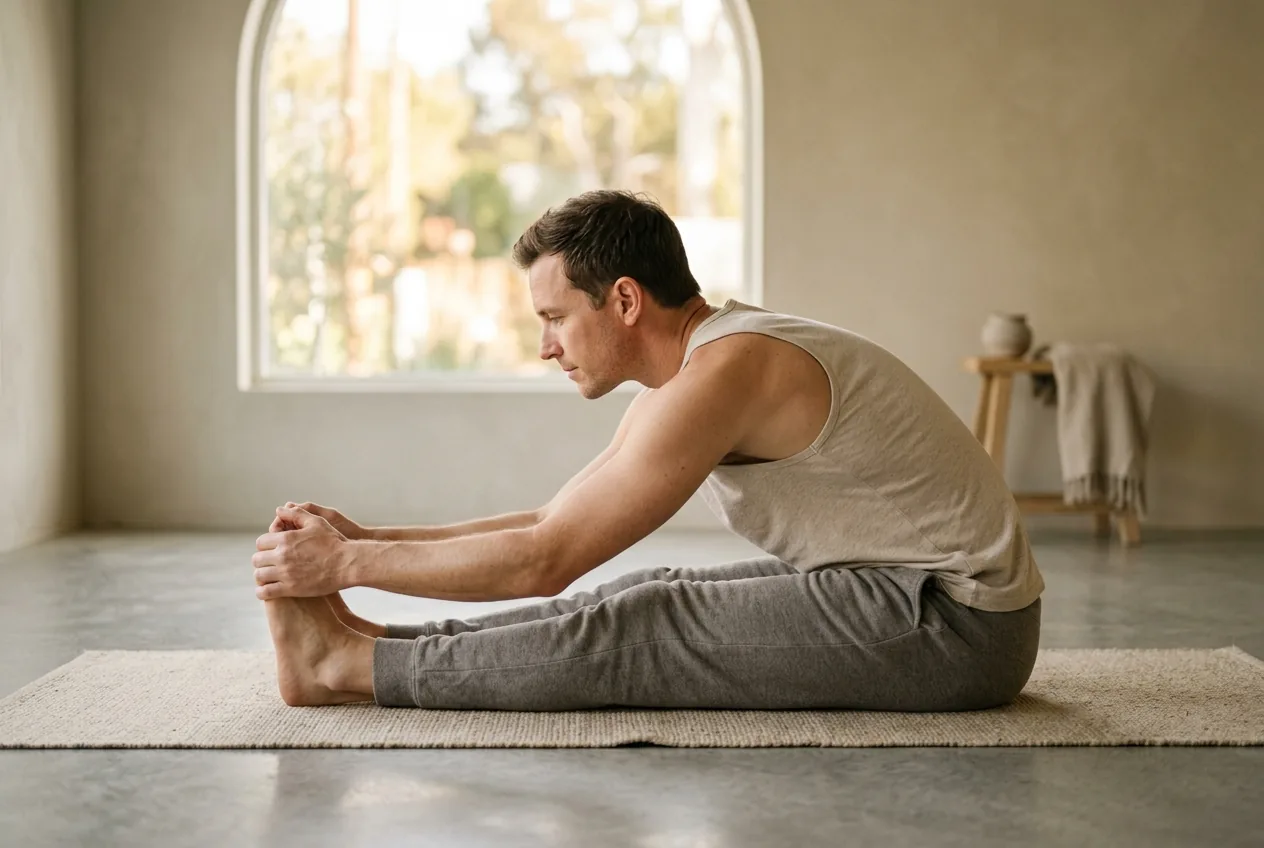
Standing, soften your knees and hinge forward, letting your upper body hang and your head go heavy. The bent knees keep the stretch in the back and hamstrings rather than straining the lower spine. Don't reach for your toes — let gravity do it. Tight hamstrings pull the pelvis and limit back movement, so this often helps more than it looks like it should.
Thoracic opener
Sit tall, hands behind your head, and gently arch your upper back over the back of a chair, opening through the mid-spine. The upper back is where a lot of desk-driven stiffness hides, and freeing it takes pressure off the lower back and neck.
How to actually gain flexibility (not just feel loose for an hour)
A stretch makes you feel looser for a while, but lasting flexibility comes from a few habits:
- Daily beats heroic. Five to ten minutes most days changes range far more than one long session a week. Tissue adapts to what it sees often.
- Move warm. A few minutes of walking before stretching makes everything give more easily and safely.
- Pair stretching with strength. A back that's supported by a strong core stops guarding, so it stays loose. This is why mobility work and core exercises for lower back pain work better together than either alone.
- Hold, don't bounce. Slow holds of 20 to 30 seconds let the muscle release; bouncing makes it tense up.
When to see a doctor
Stiffness that loosens with movement is usually mechanical and safe to stretch. See a clinician promptly if your back stiffness comes with numbness or weakness in the legs, any loss of bladder or bowel control, pain after a fall or accident, fever, unexplained weight loss, or morning stiffness that lasts hours and won't ease — that last one can point to an inflammatory cause worth checking.
Why your stiff spots are yours alone
The reason a generic stretching routine helps some people and barely touches others is that stiffness clusters around an individual's specific imbalance. One person's spine is stuck in too much forward rounding; another's is jammed into an arch. The same forward fold that frees the first can aggravate the second. General stretches are a fine place to start, but the fastest gains come from loosening the segments that are actually stuck for you and strengthening what's letting them stiffen. A posture assessment that maps where your spine has lost range is one way to aim your stretching instead of spreading it thin.
A flexible back is a back that doesn't feel it has to brace — restore the movement, support the spine, and the stiffness stops coming back.
Common questions
How long does it take to improve back flexibility?
You'll usually feel looser within a session, but real, lasting gains in range take four to eight weeks of near-daily stretching. Connective tissue adapts slowly. Keep at it most days and pair it with strength work, and the new range tends to hold rather than slipping back.
Can you make a stiff back flexible again?
In most cases, yes. Stiffness is usually muscle guarding and disuse rather than permanent change, and both respond to gentle, consistent movement. Age and past injury can limit the ceiling somewhat, but almost everyone can recover meaningful range with patient daily work.
Should I stretch a stiff back every day?
Daily gentle stretching is ideal and safe for most people, as long as you keep it slow and stop short of pain. Short sessions most days beat occasional long ones. If a stretch consistently leaves your back more painful afterward, ease the range or check it with a clinician.
Why does my back get stiff after sitting?
Long sitting holds your spine in one flexed position, shortens the hip flexors, and lets the supporting muscles switch off, so the back tightens up to compensate. Standing, walking, and a few of the stretches above every hour or so usually undo it before it sets in.