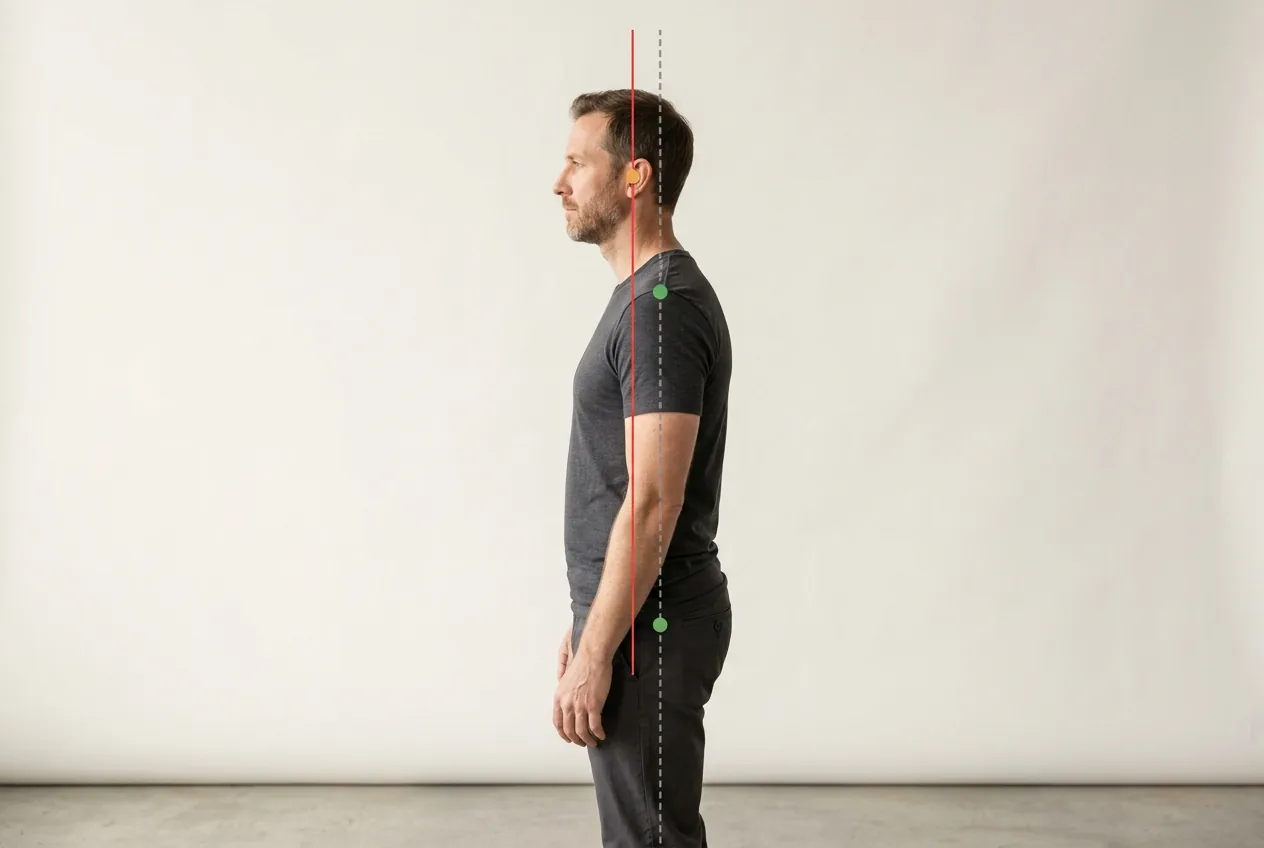

You reach back to scratch between your shoulder blades and find a band of muscle that feels like a guitar string. By midday there's a dull, gripping tightness across the upper back that no amount of shrugging shakes off. You've tried stretching it, leaning into a chair, getting someone to dig a thumb into it — and it loosens for an hour, then knots right back up.
A tight upper back is one of the most common complaints from anyone who sits at a desk, and one of the most frustrating, because the usual fixes don't hold. The reason is that the tightness is rarely the real problem. It's a symptom of how your upper body is positioned all day. Understand that, and how to relieve upper back tightness stops being a guessing game.
Why the upper back knots
The muscles across your upper back — the mid and lower trapezius, the rhomboids between the shoulder blades — have one main job: to hold the shoulder blades back and steady, and to keep the upper spine upright. They're built for endurance, not bursts.
When you sit hunched over a screen, your shoulders round forward and your upper back curls. In that position, those back muscles get stretched long and held there, hour after hour, while they try to stop you collapsing all the way forward. A muscle held long and loaded like that doesn't feel loose — it feels tight and achy, because it's working the whole time without rest. That's the knot: not a tight muscle that needs lengthening, but an overstretched one that's never allowed to switch off.
Meanwhile the front of the chest does the opposite. The chest muscles shorten and tighten, and a tight chest pulls the shoulders further forward, which loads the back even more. The two feed each other. This is the same loop behind the familiar upper back pain between the shoulder blades — the back aches because the front won't let go.
The upper back doesn't knot from doing too little. It knots from holding you up against a slumped posture all day long.
How to release it — the order that works
Most people only attack the back. The trick is to take pressure off it first, then wake it up.
Loosen the tight front
- Doorway chest stretch. Stand in a doorway, forearm on the frame with your elbow at shoulder height, and step gently through until you feel a stretch across the front of the chest. Hold 20–30 seconds each side. This releases the chest that's pulling your shoulders forward — relieve that, and the back has less to fight.
- Foam roller chest opener. Lie lengthways along a foam roller, head and tailbone supported, arms out to the sides. Let gravity open the chest for a minute or two. A few practical variations are in the foam roller exercises for posture guide.
Free up the stiff mid-back
- Thoracic extension over the roller. Place the foam roller across your upper back, support your head with your hands, and gently arch back over it, working a few spots up and down. This restores the extension that hours of rounding take away.
- Thread the needle. On all fours, slide one arm under and across your body, lowering that shoulder toward the floor. Hold 20–30 seconds each side. It opens the part of the back between the shoulder blades you can't otherwise reach.
Wake up the muscles that should hold you up
- Wall angels. Stand with your back against a wall, arms up in a goalpost shape, backs of the hands touching the wall. Slide the arms up and down slowly, keeping contact. This switches on the mid and lower back muscles that have gone quiet — the ones that, when working, hold your shoulders back without the constant strain.
- Band pull-aparts. Hold a light resistance band at shoulder height and pull it apart, squeezing the shoulder blades together. Two sets of ten to fifteen. Strengthening here is what lets the upper back hold position instead of straining to.
That last step is the one most people skip. Stretching alone gives short relief; pairing it with waking up the right muscles is what makes the release last.
What to stop doing
- Only massaging the knot. Digging into the sore spot feels good and helps for an hour, but if you go straight back to the slump, the muscle goes straight back to working overtime.
- Stretching the back harder. The back muscles are already overstretched. Cranking them further can make the achy, pulled feeling worse, not better.
- Ignoring the screen height. If you stare down at a laptop all day, the rounding never stops. Raise it toward eye level so the upper back isn't braced for hours.
When to see a doctor
Most upper-back tightness is mechanical and eases with movement. See a clinician promptly if the tightness comes with numbness, tingling, or weakness spreading into an arm; if there's pain that wraps around the ribs or sharpens with deep breaths and doesn't ease with position; if it follows a fall or injury; or if it comes with fever, unexplained weight loss, or pain that's severe and steadily worsening. Those aren't typical muscle tightness.
Why it keeps coming back
If the tightness returns no matter how diligently you stretch, it's because the posture creating it hasn't changed. The shoulders still round, the chest still pulls, the back still works overtime to hold you up. Release the muscle and the same position re-tightens it within the hour.
What actually frees the upper back for good is changing the posture underneath it — and the right changes depend on your particular pattern. How rounded your shoulders are, how far your head sits forward, what's tight versus what's switched off all differ from person to person, which is why the same routine helps one desk worker and not another. A posture assessment measures your real deviations and builds the work around them. If your upper back keeps knotting back up, that's the cue to stop chasing the knot and see how a posture-based method works from your actual alignment.
Loosen the front, free the mid-back, wake up the muscles meant to hold you tall — and the band across your shoulder blades stops setting like concrete by lunch.
Common questions
Why is my upper back so tight all the time?
Usually because it's working constantly to hold you up against a rounded, slumped posture. The mid-back muscles get held in a long, stretched position for hours, which feels tight and achy even though they're overstretched rather than short. The tight chest at the front pulls the shoulders forward and makes it worse.
How do I relieve upper back tightness fast?
Open the tight chest first with a doorway stretch, then free the mid-back with a thread-the-needle stretch or gentle thoracic extension over a foam roller. That order — release the front, then mobilize the back — tends to give faster relief than attacking the knot directly. Brief, frequent resets beat one long session.
Does stretching the upper back actually help?
It helps for short-term relief, but the back muscles are often already overstretched, so stretching alone rarely lasts. Pairing gentle mobility with exercises that wake up the mid and lower back — like wall angels and band pull-aparts — is what holds the release, because it lets those muscles hold your posture instead of straining.
Can a tight upper back cause neck pain or headaches?
Yes. The tight band across the upper back and shoulders connects to the muscles of the neck and the base of the skull, so upper-back tension often travels upward into neck stiffness and tension-type headaches. Easing the upper-back posture frequently calms the neck and head symptoms along with it.