
You did the icing, you rested it, the outer-hip pain calmed down — and then it came roaring back after a long walk, a night sleeping on that side, or a stretch that felt like it should have helped. If that's the loop you're stuck in, the missing piece usually isn't more treatment. It's knowing what keeps re-lighting the bursa. Half of getting hip bursitis to settle is simply not poking it all day without realizing.
This is the companion to the relief side of things. If you want the full picture of what bursitis is and how to rebuild the support, start with the hip bursitis guide. Here, the focus is narrower: what aggravates it, and what to stop doing.
A quick reminder of the mechanism
The bursa is a thin cushion sitting over the bony point on the outside of your hip — the greater trochanter. Over it runs a band of tissue and the muscles of the outer hip. Bursitis flares when that tissue rubs or presses the sac too much. So anything that increases the rubbing or piles pressure onto that exact spot will aggravate it. That's the lens for everything below.
Hip bursitis is a cushion being squeezed and rubbed. Fix the squeezing and rubbing, and the cushion gets to heal.
Daily habits that keep it lit
These are the quiet ones — the things you do without thinking that load the bursa hour after hour.
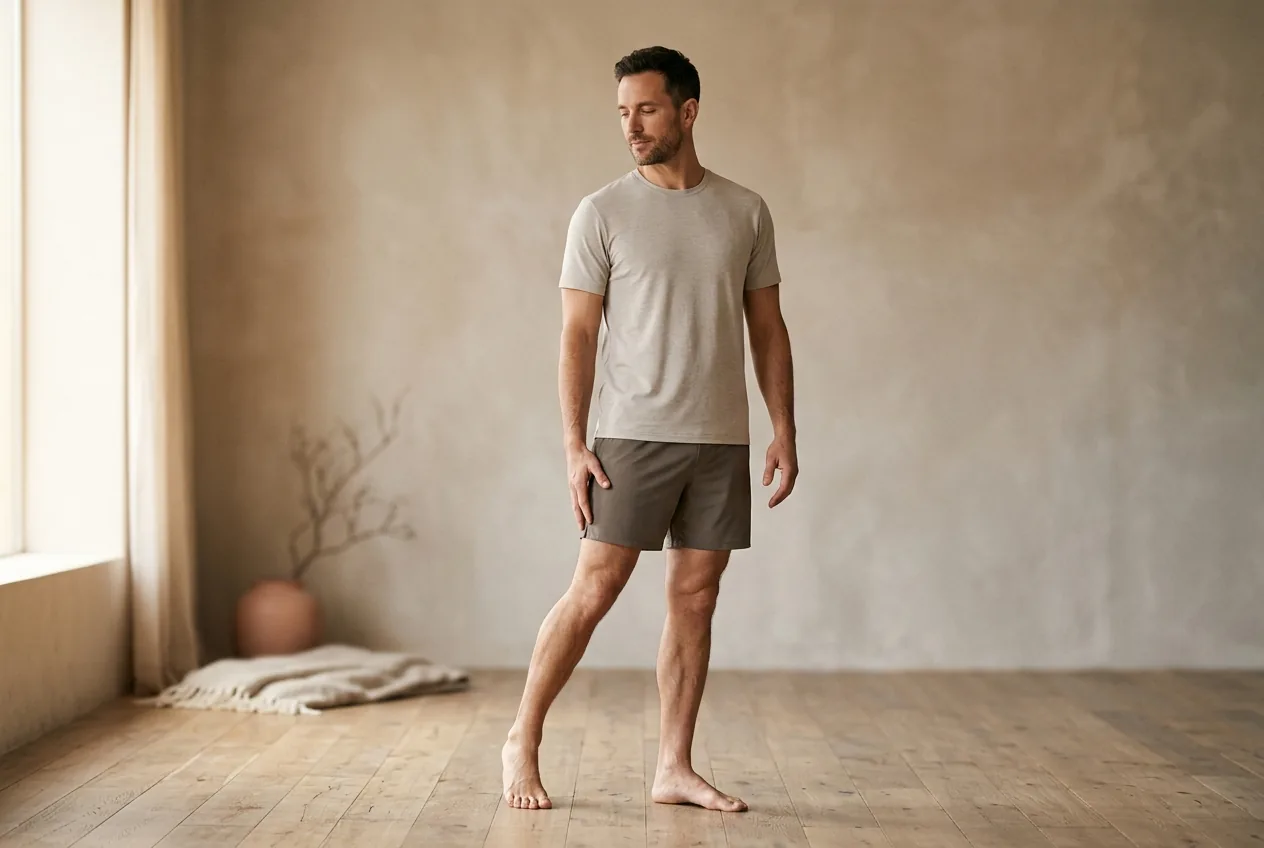
- Standing slumped on one hip. Cocking your weight onto one leg with the hip pushed out sideways jams the band of tissue across the bursa and holds it there. If you stand a lot, this is often the main culprit. Keep your weight even on both feet.
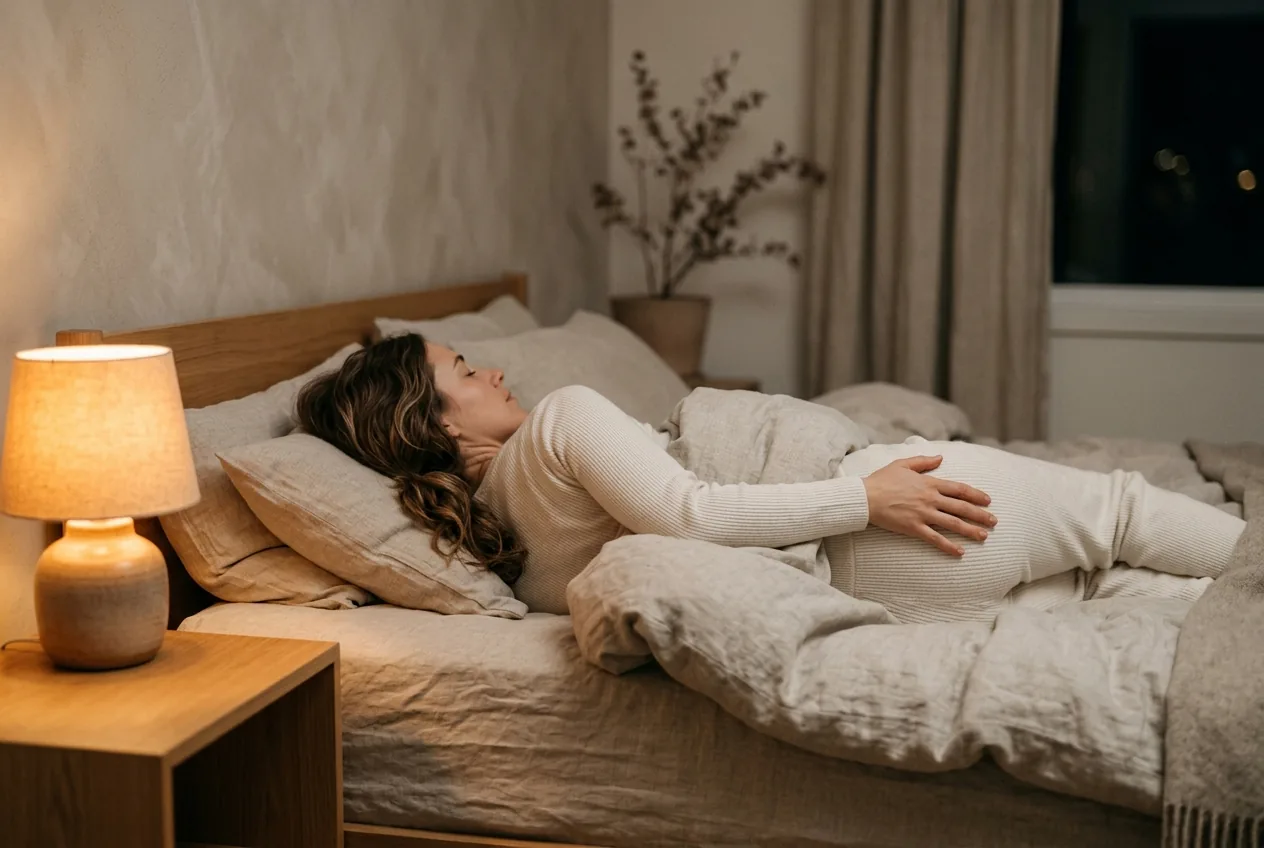
- Sleeping on the sore side. A full night of body weight pressing the bursa into the mattress is one of the most reliable aggravators. It's also why the pain is often worst at night.
- Sleeping on the good side with the top leg dropping. Lie on the pain-free side and the top leg falls across the body, yanking the band of tissue tight over the bursa on the down side. A firm pillow between the knees fixes this. The hip pain at night positions cover it in detail.
- Sitting cross-legged or with knees crossed, which pulls the outer-hip tissue taut across the sac.
- Carrying a child on one hip all day, which both presses and tilts the pelvis onto one side.
Activities that flare it
- A sudden jump in walking or running. Going from couch to a long hike, or ramping mileage too fast, overloads the outer hip before it's ready.
- Long downhill walks. Going downhill makes the outer-hip muscles work hard to control each step, grinding the bursa more than level ground does.
- Stairs taken fast or two at a time. Climbing loads the side of the hip with each step.
- Running on a cambered road — the slope drops one hip lower on every stride, loading that side unevenly.
You don't have to stop moving. You have to stop the spikes. Cut back the aggravating activity for a week or two while it settles, then build back gradually.
Exercises to avoid (and the stretch trap)
This is where well-meaning people make it worse. The instinct with a sore, tight-feeling hip is to stretch it hard. But the classic outer-hip stretch — pulling the leg across the body, the figure-four cranked deep, an aggressive IT-band stretch — compresses the irritated bursa against the bone. It can feel productive in the moment and leave the hip angrier the next day.
Hip bursitis exercises to avoid while it's flared:
- Aggressive cross-body and IT-band stretches that pull the leg hard across the midline.
- Deep figure-four stretches pushed into sharp pain.
- Foam rolling directly on the bony point — rolling the sore spot crushes the very sac you're trying to calm.
- Heavy side-loading like loaded side lunges while it's acutely tender.
The rule: if a move produces sharp pain right on the sore point, stop. That's compression of the bursa, not a healthy stretch. Gentle, pain-free movement is fine — it's the hard, point-pressing stuff to skip.
What to do instead
Take the pressure off, then strengthen the muscle that lets the pelvis drop — the glute medius. When it's weak, the pelvis tips on each step and the band snaps tighter over the bursa, which is the root of a lot of cases and ties into patterns like weak glutes and back pain. A pillow between the knees at night, even standing, and gentle glute strengthening do more than any stretch. The full how-to is in the hip bursitis guide.
When to see a doctor
This is posture education, not medical advice. See a clinician promptly if the hip pain came after a fall, if you can't bear weight on the leg, if the area is red, hot, and swollen or you have a fever — that combination can signal an infection rather than simple bursitis and needs prompt care. Also get it assessed if there's numbness or weakness spreading down the leg, unexplained weight loss, or pain that's severe or steadily worsening, or if it hasn't improved at all after several weeks of sensible self-care.
Why the pattern is the part that lasts
You can remove every aggravator for a week and feel better. But if your pelvis keeps dropping on one side because a hip muscle is weak, the band keeps grinding the bursa the moment you go back to normal life. Avoiding the triggers buys time; it doesn't change why the bursa was overloaded.
That's the case for knowing your own setup. A posture assessment looks at whether your pelvis is tipped, dropped, or held up by an overworked outer hip on a weak base — then trains the muscles that should be keeping it level, so you're not just dodging triggers for the rest of your life.
Common questions
What is the worst thing for hip bursitis?
Two things tend to top the list: sleeping on the sore side, which presses the bursa into the mattress all night, and aggressively stretching the outside of the hip, which compresses the irritated sac against the bone. Both feel like they shouldn't matter, and both reliably flare it.
What activities should you avoid with hip bursitis?
While it's flared, avoid sudden long walks or runs, long downhill walking, fast stair climbing, standing slumped on one hip, sitting cross-legged, and carrying a child on one hip all day. Cut these back for a week or two, then build activity up gradually.
Should you stretch hip bursitis?
Not aggressively. Hard cross-body or IT-band stretches and foam rolling the sore point compress the bursa and often make it worse. Gentle, pain-free movement is fine. Strengthening the glutes usually helps far more than stretching the painful spot.
Why does my hip bursitis keep coming back?
Usually because the cause was never addressed. If a weak hip muscle lets the pelvis drop with each step, the tissue keeps grinding the bursa as soon as you return to normal activity. Avoiding triggers calms a flare; strengthening the weak side is what stops the cycle.