By about three in the afternoon, the band across your shoulders and the base of your neck has tightened into something you can feel with every glance at the screen. You roll your shoulders, you crack your neck, it loosens for a minute, and then it creeps back. You've heard yoga helps. You're not wrong — but only if you do the parts that match what's actually happening up there.
Yoga for upper back and neck tension isn't about hitting a long list of poses. A handful of well-chosen movements, done with attention, will do more for that desk-bound knot than a full studio class of poses aimed at hamstrings and hips. The trick is knowing why your upper back tightens in the first place, then picking the poses that undo it.
Why your upper back and neck lock up
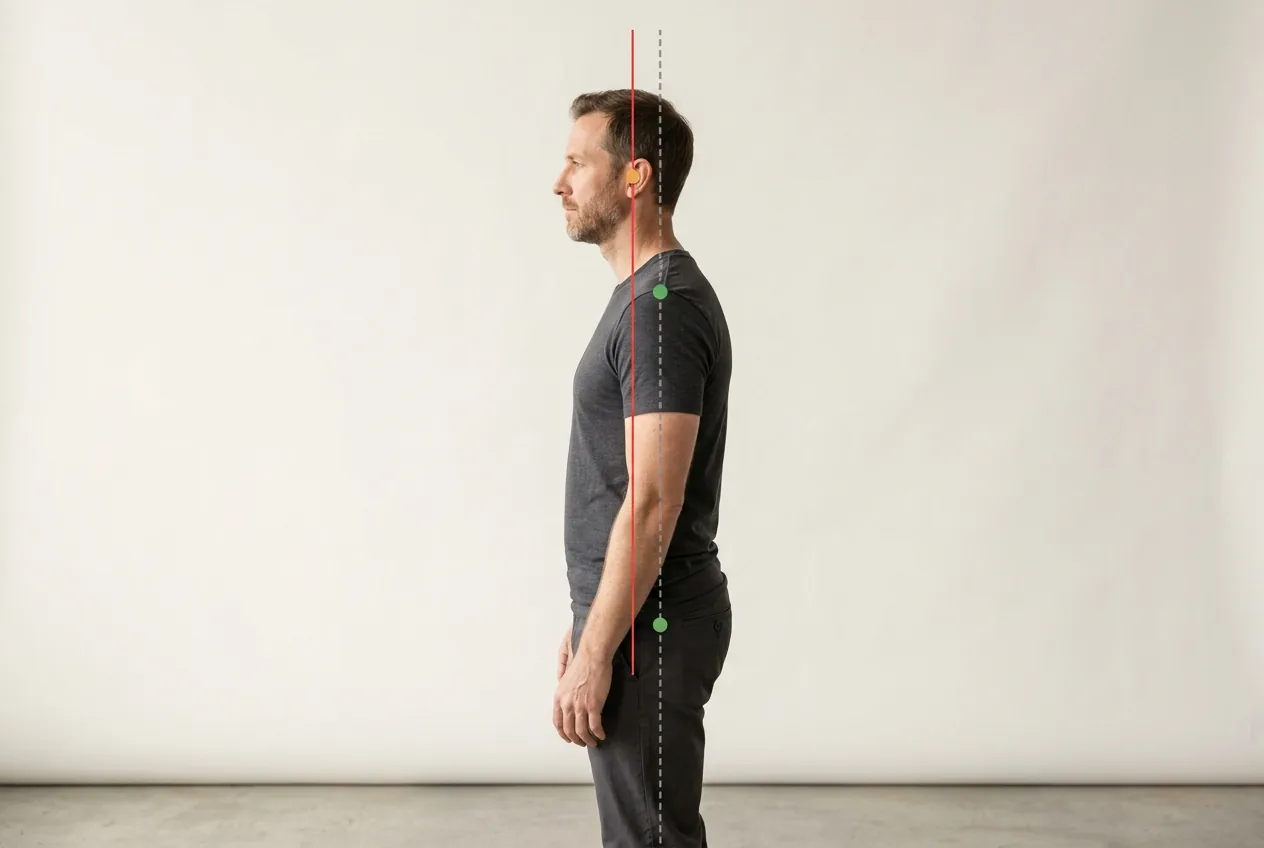
Sit at a desk long enough and a predictable thing happens. Your head drifts forward, your shoulders round inward, and your upper back rounds with them. The muscles across the front of your chest shorten. The muscles between your shoulder blades and along the back of your neck get pulled long and held under tension, hour after hour.
That's the source of the tightness. The muscles that feel tight — the upper traps, the band across the shoulders — aren't tight because they're strong and short. They're tight because they're stretched and overworked, fighting to hold your rounded posture up against gravity. Meanwhile the chest muscles are quietly short, and the deep muscles that should stabilise your upper back have gone quiet.
This is why stretching alone often disappoints. You stretch the achy back muscles, which are already over-lengthened, and ignore the tight chest that's pulling everything forward. A useful upper-back yoga routine does both: it opens the front and strengthens the back, so your posture actually shifts.
Poses that open the front
These counter the chest tightness that pulls you into the slump.
Doorway-style chest opener. You don't need a doorway. Clasp your hands behind your back, straighten your arms, and gently lift them away from your body while drawing your shoulder blades together. Lift your chest. Hold for five slow breaths. This directly stretches the chest muscles that desk posture shortens. For the framed-doorway version, see the doorway chest stretch.
Sphinx. Lie on your front, forearms on the floor under your shoulders, and gently lift your chest. Keep your shoulders down away from your ears. This extends a spine that's been rounded forward all day. Hold for several breaths, breathing into the front of your chest.
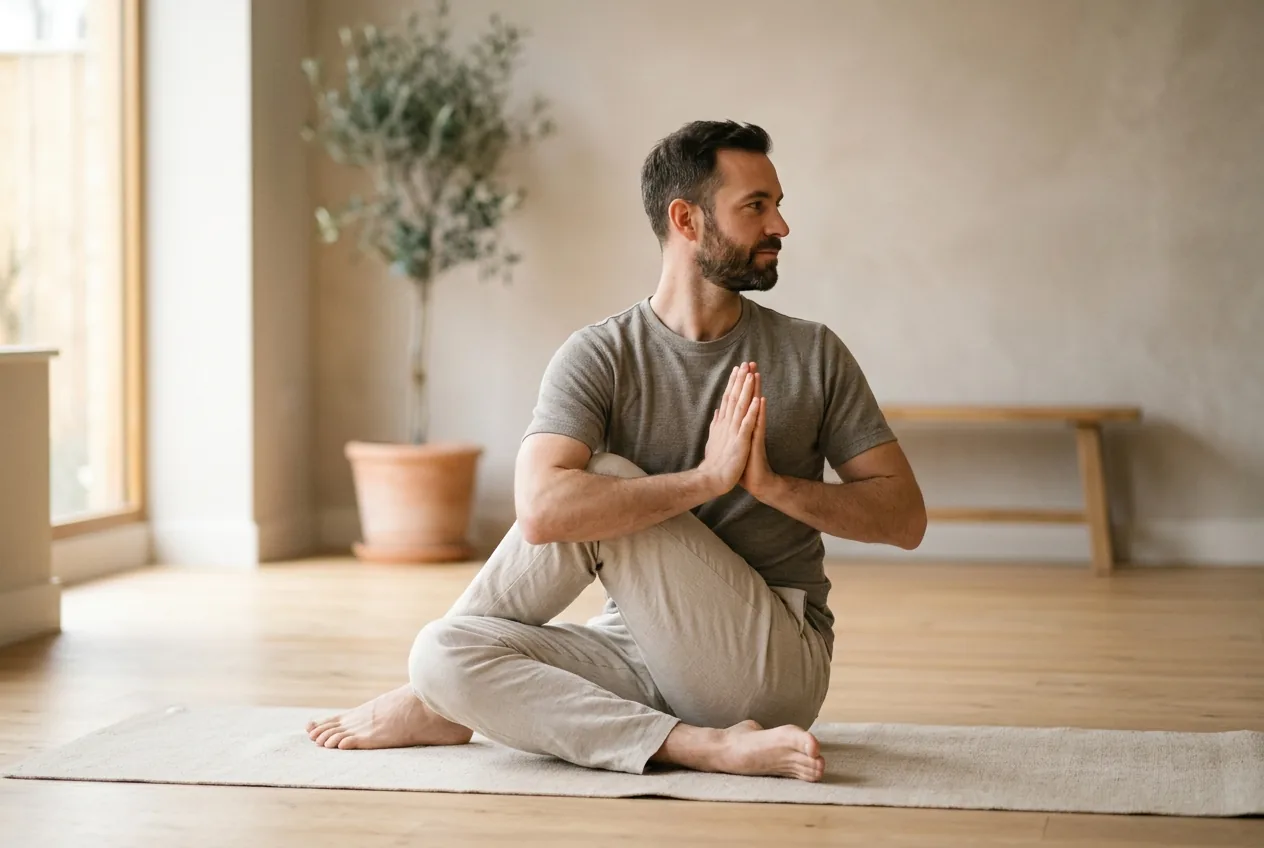
Thread the needle. On hands and knees, slide one arm under your body and across, lowering that shoulder and the side of your head toward the floor. This unwinds the muscles between the shoulder blades and rotates the upper spine — a gentle release for the knotted mid-region. The full version is in thread the needle.
Poses that wake up the back
Opening the front is half the job. These restore the muscles that should hold you upright.
Cat-cow. On hands and knees, alternate slowly between rounding your back toward the ceiling (cat) and dropping your belly while lifting your chest and gaze (cow). Move with your breath. This mobilises the whole spine and reminds your upper back how to extend instead of staying stuck in a slump.
Locust, gentle version. Lie on your front, arms by your sides. Lift your chest and arms slightly off the floor, drawing your shoulder blades together. Hold for three breaths, lower, repeat. Small lifts, not heroic ones. This strengthens the mid-back muscles that have switched off.
Sphinx-to-rest flow. Move slowly between sphinx and child's pose. The contrast — extend, then round and release — gives the upper back both directions it's been missing.
How to actually do it
- Move slowly. Tension in the neck doesn't respond to force. Easing into each pose with breath does more than pushing into it.
- Keep the neck long, not cranked. When you lift your chest, don't throw your head back. Let your neck follow your spine. Cranking the neck into extension can irritate it.
- A little, often. Five to ten minutes most days beats an hour once a week. Tension that builds daily needs a daily counter, which is why a short morning routine or a few desk stretches at work often outperforms a single long session.
- Breathe into the stretch. A slow exhale lets a tight muscle release further than holding your breath ever will.
What to skip or modify
Not every popular pose helps an already-tense neck. Deep backbends like full wheel or heavy shoulder stands load the neck in ways that can aggravate it if your upper back is stiff and your neck is doing the bending. Headstand is best left until your neck is calm and your form is supervised. And avoid any pose where you feel the strain land in your neck rather than spreading through your spine — that's a sign the neck is compensating for a stiff upper back, the opposite of what you want.
When to see a doctor
Yoga for tension assumes the cause is mechanical — muscles overworked by posture. See a clinician promptly if your neck or upper-back symptoms come with numbness, tingling, or weakness spreading into an arm or hand, if you lose grip or coordination, if pain follows a fall or accident, or if you have fever, unexplained weight loss, or pain that steadily worsens despite gentle movement. Yoga is for tension, not for ruling out something that needs a professional.
Matching the routine to you
These poses help most people with desk-driven upper-back tension because that pattern is so common. But the precise balance — how rounded your upper back is, how far forward your head sits, which muscles have switched off — differs from person to person, and a pose that frees one pattern can strain another.
Generic yoga is a fair starting point. Lasting relief usually comes from building a routine around your own posture rather than a one-size class. A short posture assessment measures your actual deviations so the moves you do are the ones your body needs. You can also try a quick check at home first.
Open the front, strengthen the back, do it daily. That's the whole strategy for a desk-bound upper back.
Common questions
How often should I do yoga for neck and upper back tension?
Most people do best with a short session most days rather than one long class a week. Five to ten minutes daily gives the tight muscles a regular counter to the hours of desk posture that built the tension. Consistency matters more than length.
Can yoga make neck tension worse?
It can if you force deep stretches into an irritated neck or do poses that load the neck directly, like full backbends or shoulder stands, before your upper back is mobile. Move slowly, keep your neck long, and back off any pose where the strain lands in your neck rather than spreading through your spine.
Which yoga pose is best for upper back knots?
Thread the needle and cat-cow are the most reliable for the knotted band between the shoulder blades — they release and mobilise that region without straining the neck. Pair them with a chest opener so you're also undoing the front-side tightness that pulls you into the slump.
Will yoga fix my posture on its own?
Yoga helps by stretching tight muscles and waking up weak ones, but lasting posture change usually needs a routine matched to your specific deviations, done consistently. Yoga is a strong piece of that, especially when the poses target your actual pattern rather than a generic sequence.