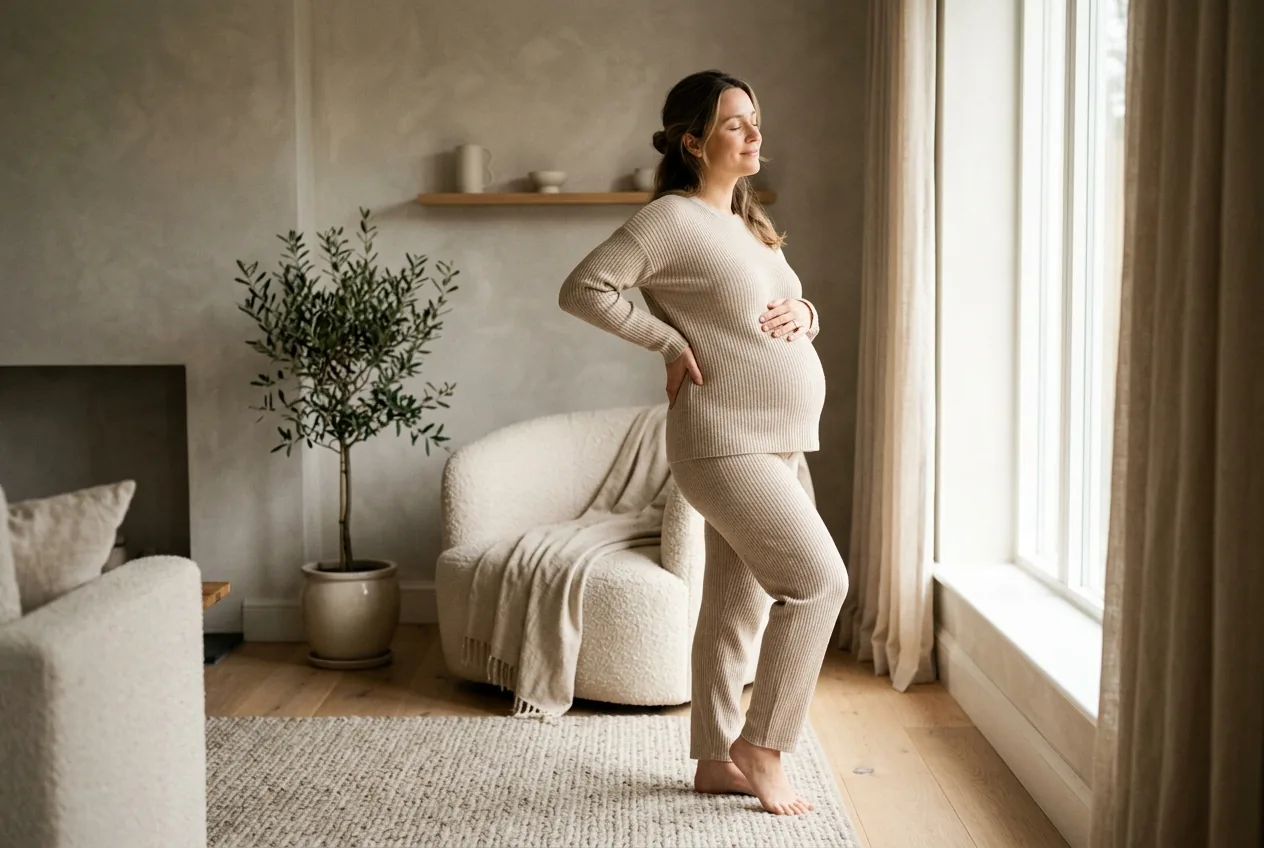
If your lower back has started aching by mid-afternoon, or you brace against the sink every time you straighten up, and the bump is the obvious new variable, you already know what this article is about. Back pain during pregnancy is one of the most common complaints there is, and it tends to creep in as the weeks add up.
Common doesn't mean you just have to live with it. A few changes to how you stand, sit, sleep, and move often take the edge off. None of this replaces your own care team, though. Anything that feels off during pregnancy is worth a quick call to your doctor, OB, or midwife.
Why your back hurts more now
Two things are happening at once, and both load the lower back.
The first is weight, and where it sits. A growing bump pulls your center of gravity forward. To stay upright, most people lean back a little to counterbalance, which deepens the curve in the lower spine and asks those muscles to work harder all day. The pelvis tips, the hip flexors at the front shorten, and the lower back ends up covering for muscles that have gone quiet.
The second is a hormone called relaxin. It loosens the ligaments around the pelvis to prepare for birth, which is exactly what your body needs later, but in the meantime joints that used to feel stable can feel looser and more easily strained. That includes the SI joints at the back of the pelvis, a common source of one-sided ache that overlaps with SI joint pain.
So pregnancy back pain isn't a sign anything is wrong with your spine. It's mostly load and looseness arriving together, and posture is one of the few levers you actually control.
Gentle posture changes that help
You don't need to hold a rigid "correct" position. Aim for small, frequent adjustments instead.
- Stand stacked, not leaned back. Catch yourself when you push the bump forward and lean the shoulders back. Try to keep ears over shoulders over hips, with the bump carried rather than thrust out. A short check in a mirror or with the steps in check your posture at home can show you the habit.
- Sit with the curve supported. Hips all the way back in the chair, a small cushion or rolled towel filling the hollow at your lower back, feet flat. The same fixes in how to sit with lower back pain apply, just gentler.
- Don't stand still for long. A fixed standing position fatigues the lower back fast in late pregnancy. Shift your weight, walk a few steps, and rest one foot on a low stool when you have to stand at a counter.
- Turn, don't twist. Move your feet to face what you're reaching for instead of rotating through a loosened pelvis.
The goal isn't a perfect posture. It's spreading the load so the lower back isn't carrying all of it.
Safe ways to ease the ache day to day
A few simple, low-risk habits help most people. Run any new movement past your care team first, especially if you've had complications.
Move gently and often. Walking and prenatal-safe stretching keep the hips and lower back from stiffening. Many find a slow cat-cow movement on hands and knees soothing, because it takes the bump's weight off the spine for a moment. Move only within a comfortable range and skip anything that pinches.
Try the all-fours position. Getting on hands and knees, with the back flat and relaxed, lets gravity pull the bump down and away from your spine. A minute or two here can quiet an aching lower back, and it's a position many midwives suggest in late pregnancy.
Warmth, not extremes. A warm (not hot) compress or a warm bath can relax tight lower-back muscles. Keep heat moderate and avoid anything that raises your core temperature a lot.
Support your sleep. Side-lying with a pillow between your knees keeps the hips level and takes strain off the lower back and SI joints. A pillow under the bump helps too. Later in pregnancy, sleeping on your left side is often recommended for circulation, so check what your provider advises.
Mind how you lift. Bend at the hips and knees, keep whatever you're lifting close, and let your legs do the work. Ask for help with anything heavy rather than rounding your back to manage it alone.
What to ease off
- Avoid lying flat on your back for long stretches in later pregnancy, which can press on a major blood vessel. Side-lying is the safer default.
- Skip deep backbends, hard twists, and any move that compresses the bump.
- Don't push through sharp or worsening pain hoping it loosens up.
- Go easy on heels, which tip the pelvis and exaggerate the lean-back habit.
When to call your doctor or midwife
Most pregnancy back pain is mechanical and eases with rest and gentle movement. Some symptoms need prompt attention, so contact your doctor, OB, or midwife right away if you have any of these:
- Severe or steadily worsening back pain
- Rhythmic or cramping pain that could be contractions, especially before your due date
- Back pain with vaginal bleeding, fluid leaking, or fever
- Numbness, tingling, or weakness spreading down a leg
- Any loss of bladder or bowel control
- Pain after a fall or accident
This list isn't exhaustive. When in doubt during pregnancy, call. It's always reasonable to check.
Why the right move depends on your pattern
Pregnancy adds load on top of whatever posture you already had. If your pelvis already tipped forward before, the bump tends to exaggerate it; if your lower back was flat, the picture looks different. That's why a stretch a friend swears by can do nothing, or even bother you. The body is compensating around a specific imbalance, and the same move helps one pattern and aggravates another.
Knowing your own pattern is more useful than collecting generic tips. A short posture assessment that reads your actual alignment can show which way your pelvis and spine sit, so gentle daily work targets the muscles that need it. Clear any new routine with your care team first during pregnancy, and keep everything gentle.
For now, support the curve when you sit, get on all fours when your back complains, and break up long stretches of standing. Small, repeated changes usually do more than any single fix.
Common questions
Is back pain during pregnancy normal?
Yes, it's very common, mostly because of the extra forward weight and looser ligaments. Common doesn't mean you should ignore it, though, so mention persistent or severe pain to your doctor or midwife.
What sleeping position is best for back pain in pregnancy?
Side-lying with a pillow between your knees keeps the hips level and eases the lower back. Many providers suggest the left side later in pregnancy, so check what yours recommends.
Can I exercise with back pain while pregnant?
Gentle movement like walking and prenatal-safe stretching usually helps, but clear any routine with your care team first, especially if you've had complications. Stop anything that causes sharp or worsening pain.
When should I worry about back pain in pregnancy?
Call your provider promptly for severe or worsening pain, rhythmic cramping that could be contractions, bleeding or fever, leg numbness or weakness, or any loss of bladder or bowel control. When unsure, it's always reasonable to check.