
A tightness sits across the front of your chest by the afternoon. Or you take a deeper breath and feel a sharp catch near the breastbone. Maybe it's an ache that flares when you twist or reach. Chest pain is the one symptom nobody wants to shrug off, and rightly so — the heart lives there. But you've had it checked before, the tests came back clear, and it still keeps happening, usually after long hours hunched at the desk.
Can bad posture cause chest pain? Often, yes. The chest is a cage of joints and muscles, and a slumped, collapsed-chest posture can make those joints and muscles ache in ways that feel alarming but are mechanical. That said, this is the one topic where the safety note comes first, not last, because posture-related chest pain and a heart problem can feel similar — and only one of them is safe to wait on. Read the red-flag section below before anything else.
When chest pain is an emergency — read this first
Call emergency services or get to urgent care immediately if chest pain comes with any of these: pressure, squeezing, or a heavy weight on the chest; pain spreading to the arm, jaw, neck, or back; shortness of breath; sweating, nausea, or lightheadedness; or a racing or irregular heartbeat. These can signal a heart attack and must not wait, regardless of your posture or age.
Also seek urgent care for sudden sharp chest pain with breathlessness, chest pain after an injury or a fall, or pain with coughing up blood or a high fever. If you are not sure whether your chest pain is mechanical, treat it as serious and get it checked. Posture is the likely cause for many people — it is never the certain one. Nothing below this point applies until a clinician has ruled out the dangerous causes.
With chest pain, the rule is simple: get it checked first, attribute it to posture second. Never the other way round.
How posture makes the chest ache
Once the serious causes are ruled out, here's the mechanical picture. Your rib cage is not a solid shell. Each rib joins your spine at the back and, for most ribs, the breastbone at the front, through small joints that are meant to move every time you breathe. The muscles between the ribs and across the chest move with them.
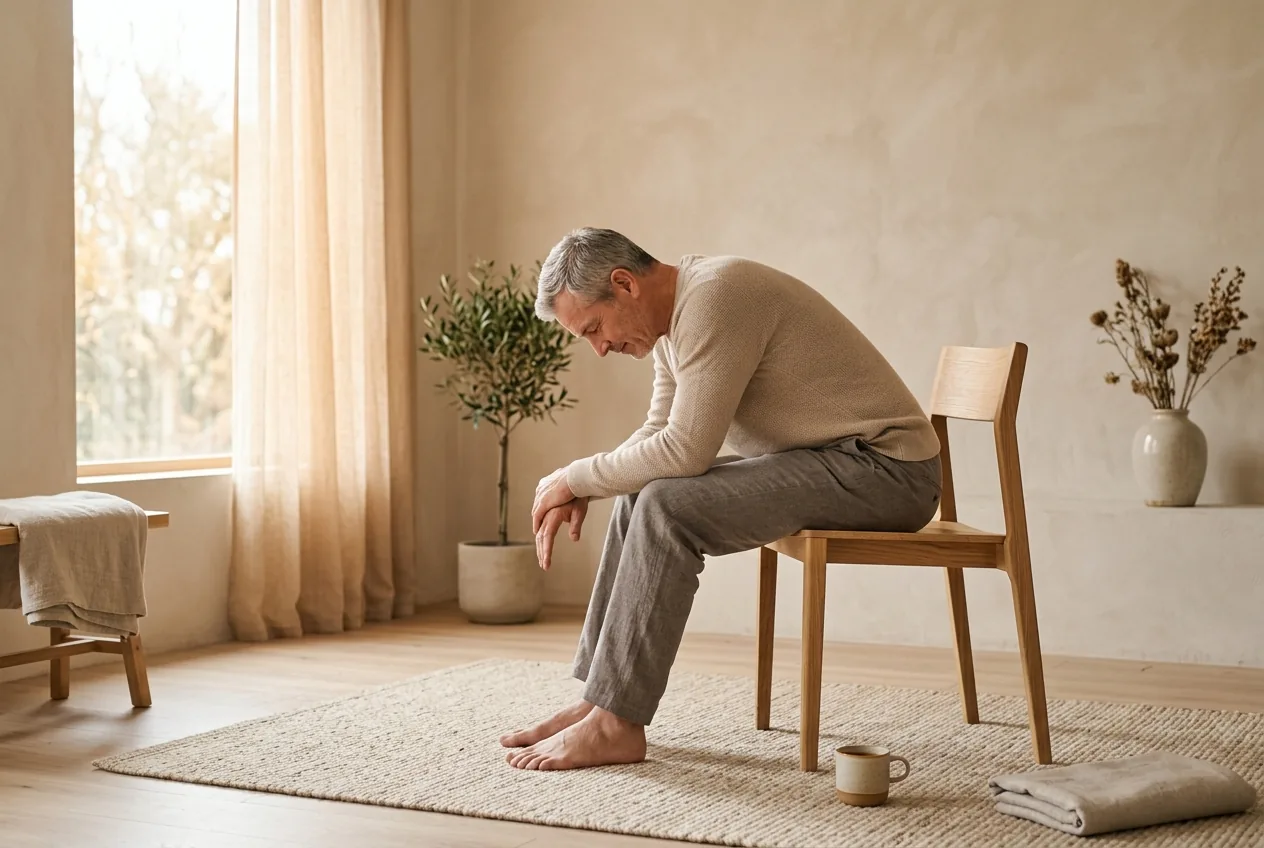
A typical desk slump — shoulders rounded, upper back hunched, chest collapsed — compresses that cage. The rib joints stop gliding, the muscles across the front of the chest shorten and tighten, and the joints where the ribs meet the breastbone get irritated. Then one deeper breath, one twist to grab a seatbelt, or one stretch asks a stiff joint to move suddenly, and it catches with a sharp, frightening jab right near the breastbone.
Shallow breathing makes it worse. When the chest is collapsed, breathing shifts high and shallow, the rib joints barely move, and they stiffen further. This is the same mechanism behind rib pain from posture — the catches just land closer to the center of the chest, which is what makes them so unsettling.
What posture-related chest pain tends to feel like
Mechanical, posture-related chest pain usually has a recognizable signature — though this is a pattern, not a diagnosis, and never a substitute for getting checked:
- Positional and reproducible. It catches with a breath, a twist, or a reach, and eases when you stop.
- Tender to the touch. Pressing on the sore spot near the breastbone or ribs often reproduces it.
- Sharp and brief rather than a heavy, crushing pressure.
- Worse after long slumped sitting, better when you stand tall and breathe fully.
Heart-related pain tends to be the opposite: a pressure or heaviness rather than a positional catch, often unrelated to movement, frequently with breathlessness, sweating, or pain spreading to the arm or jaw. If your pain looks like that, the previous section applies, not this one.
What helps the mechanical kind
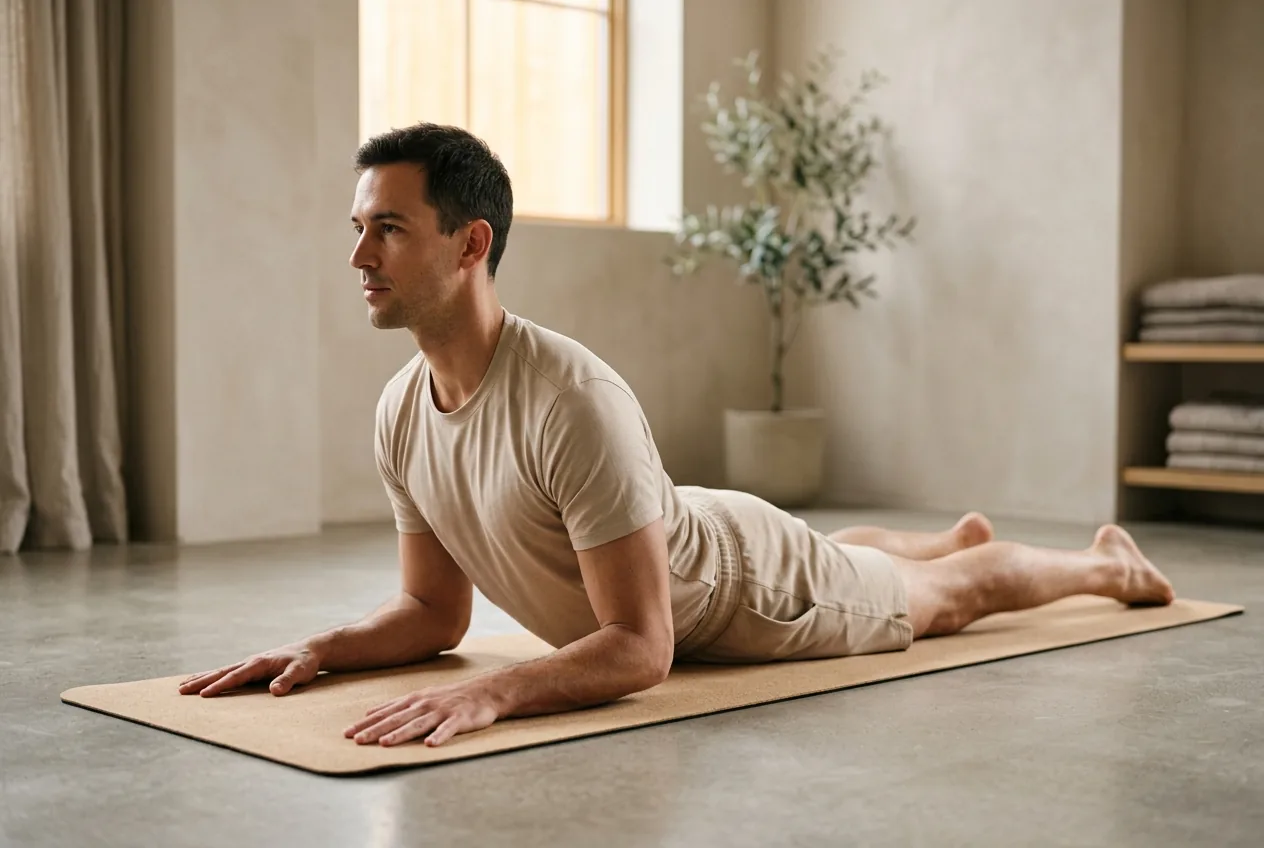
Once you've been cleared, the postural aim is to open the collapsed chest, get the rib joints gliding again, and retrain full, low breathing. Go gently; stop anything that sharpens the pain.
Open the chest
- Doorway chest stretch. Stand in a doorway, forearm on the frame, and step gently through to stretch across the front of the chest. Hold 20–30 seconds each side. This counters the collapsed posture squeezing the rib joints.
- Thoracic extension over a chair. Sit, hands behind your head, and gently arch your upper back over the backrest. A few slow reps to restore the upper-back extension the slump takes away.
Retrain the breath
- Diaphragmatic breathing. Lie on your back, one hand on your chest, one on your belly. Breathe slowly so the belly rises and the chest stays mostly still, expanding the lower ribs sideways. Two or three minutes, a few times a day. This gets the rib cage moving with every breath, which is what changes the pattern.
Change the daily input
- Sit and stand taller, chest lifted, so the cage isn't compressed for hours.
- Take a few slow, full breaths each time you reset your posture.
- Notice if you hold your breath while concentrating at a screen — many people do, and it lets the ribs stiffen.
This is the same forward-slump pattern behind forward head posture, so opening the upper back helps the chest and the neck together.
Why it keeps coming back
If the chest tightness or the catch keeps returning, it's usually because the posture compressing the cage hasn't changed. The chest stays collapsed, the breath stays shallow and high, the rib joints stay stiff — so the next deep breath finds the same catch. A stretch helps for a while, then you settle back into the slump.
Lasting relief comes from changing the posture that collapses the chest, and that depends on your own pattern — how rounded your upper back is, how far your head sits forward, what's tight and what's weak. The right work for one posture can be wrong for another. A posture assessment measures your real deviations and builds the routine around them. Once a clinician has cleared your chest pain as mechanical, see how a posture-based method addresses these patterns by starting from your actual alignment.
Open the chest, breathe low and full, and the cage goes back to moving the way it's meant to — but only after you've made sure it's the cage, and not the heart, doing the talking.
Common questions
Can bad posture really cause chest pain?
Yes, often. A slumped, collapsed-chest posture compresses the rib joints and tightens the muscles across the front of the chest, so a deeper breath or a twist can make a stiff joint catch sharply near the breastbone. This mechanical chest pain is common — but it should only be assumed after a clinician has ruled out heart and other serious causes.
How can I tell posture-related chest pain from a heart problem?
Posture-related chest pain is usually positional, sharp, reproducible with movement, and tender to the touch. Heart-related pain tends to be a pressure or heaviness, often unrelated to movement, and may come with breathlessness, sweating, or pain spreading to the arm or jaw. If you have any doubt, treat it as serious and get emergency care.
When is chest pain an emergency?
Get emergency care immediately for chest pressure or squeezing, pain spreading to the arm, jaw, neck, or back, shortness of breath, sweating, nausea, lightheadedness, or a racing heartbeat. These can signal a heart attack and must not wait, whatever your posture or age.
Why does my chest hurt when I take a deep breath?
A collapsed posture stiffens the rib joints that are meant to move when you breathe. A deeper breath suddenly asks a stiff joint to move and it catches. Once serious causes are excluded, opening the chest and retraining slow, full breathing usually settles this kind of pain.