You got the word "stenosis" on a scan or from a doctor, looked it up, and read that it means the space around your nerves is narrowing. So the obvious question lands like a weight: can spinal stenosis be reversed, or is this a one-way road that only gets tighter from here? It's the question that decides whether you feel hopeful or stuck, and the honest answer sits between the two extremes you'll read online.
The straight version: the bony narrowing itself usually can't be "un-narrowed" without surgery. But — and this matters more than it sounds — the pain and limitation that stenosis causes can very often be reduced a lot, sometimes to the point where the condition stops running your life. Reversing the anatomy and reversing the symptoms are two different questions, and most people care about the second one.
What spinal stenosis actually is
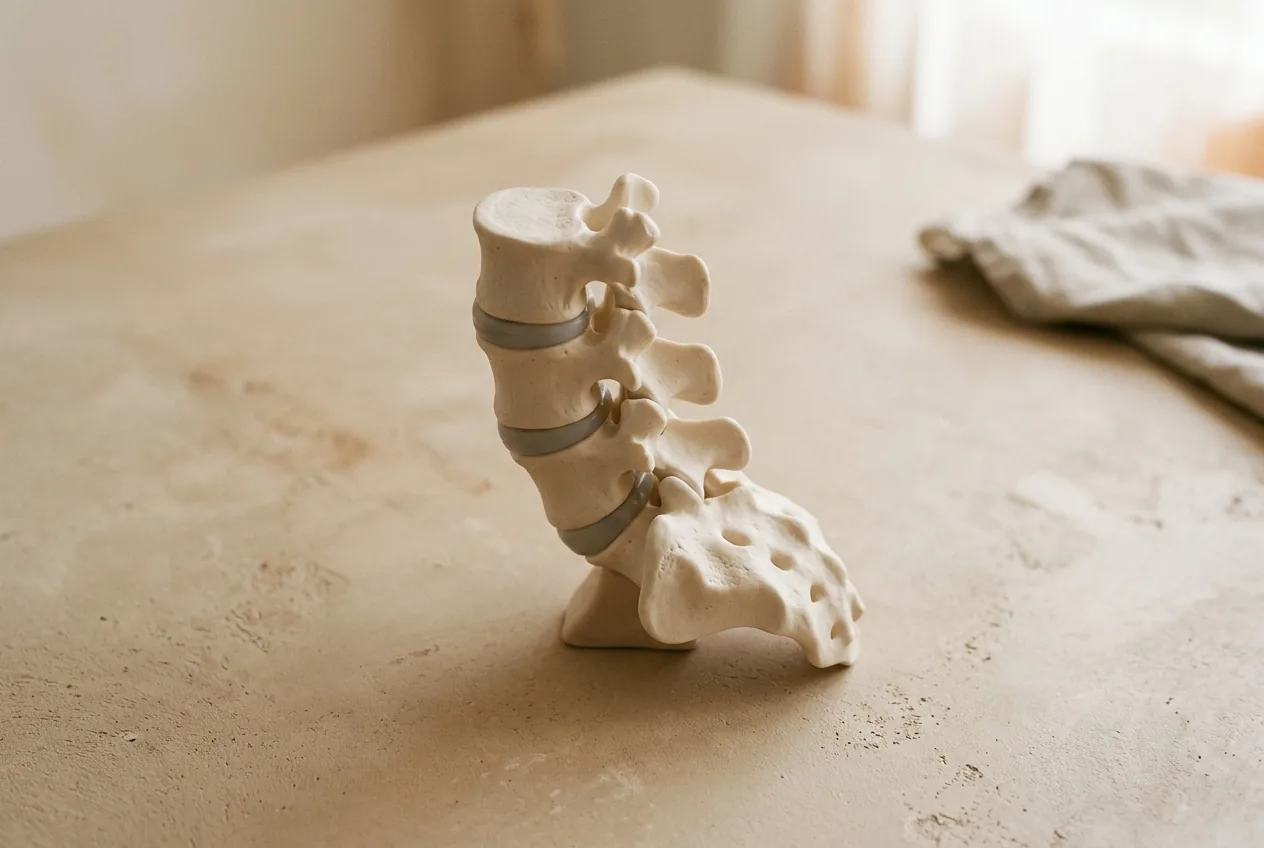
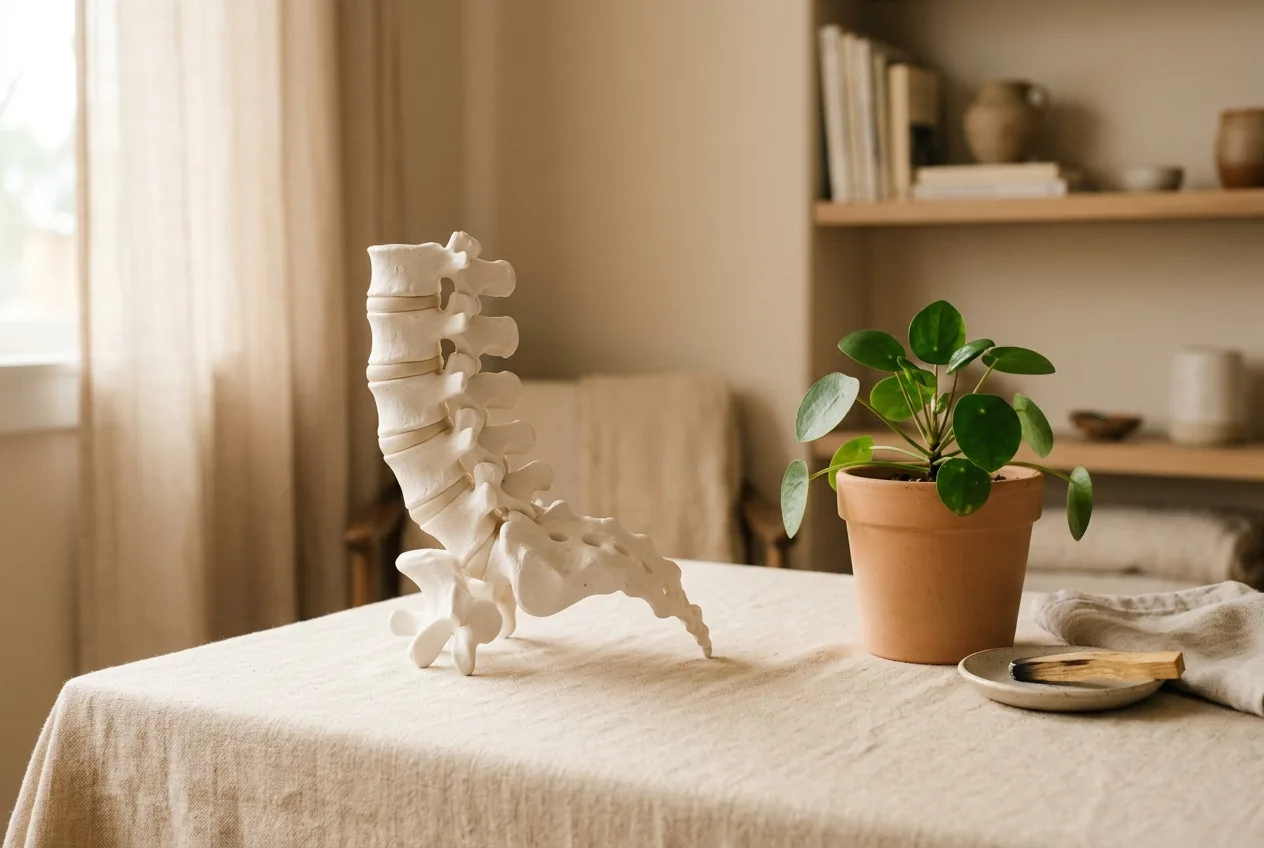
Your spinal cord and the nerves branching off it run through a bony canal in the middle of the spine, with smaller exits where individual nerves leave. Stenosis means one or more of those spaces has narrowed, leaving less room for the nerves.
The narrowing usually builds slowly with age. Discs lose height and bulge, the small joints of the spine thicken with arthritis, and ligaments stiffen and encroach on the canal. None of that is dramatic on any single day; it's the cumulative result of decades. The result is that the nerves get crowded, and when you put them in positions that crowd them further, they complain — pain, heaviness, numbness, or weakness, usually in the legs and buttocks. The full background is laid out in what spinal stenosis is if you want the longer version.
The signature symptom is telling: pain or heavy, tired legs that come on with standing and walking and ease when you sit down or lean forward. That position-dependence is the key to why symptoms can be managed even when the bone hasn't changed.
What can and can't be reversed
Here's where the honesty pays off, separated into two columns.
What usually can't be reversed without surgery: the bony and arthritic narrowing itself. Bone spurs, thickened joints, and a structurally tighter canal don't melt away with exercise or stretching. If your symptoms are severe and progressive, surgery (which physically makes more room for the nerves) is the only thing that reverses the anatomy, and it's a reasonable option in the right cases.
What very often can be improved: the symptoms. Several things crowd the nerves on top of the fixed bony narrowing — inflammation around the nerve, the position your spine sits in, and tight or weak muscles that pull you into the postures that close the canal further. Those are changeable. By spending less time in the positions that crowd the nerve and more in the ones that open the canal, by calming inflammation, and by building the support that holds a more open posture, many people reduce their pain substantially.
You may not be able to widen the tunnel, but you can change how much you crowd it — and that's most of what you feel.
Why posture is the lever
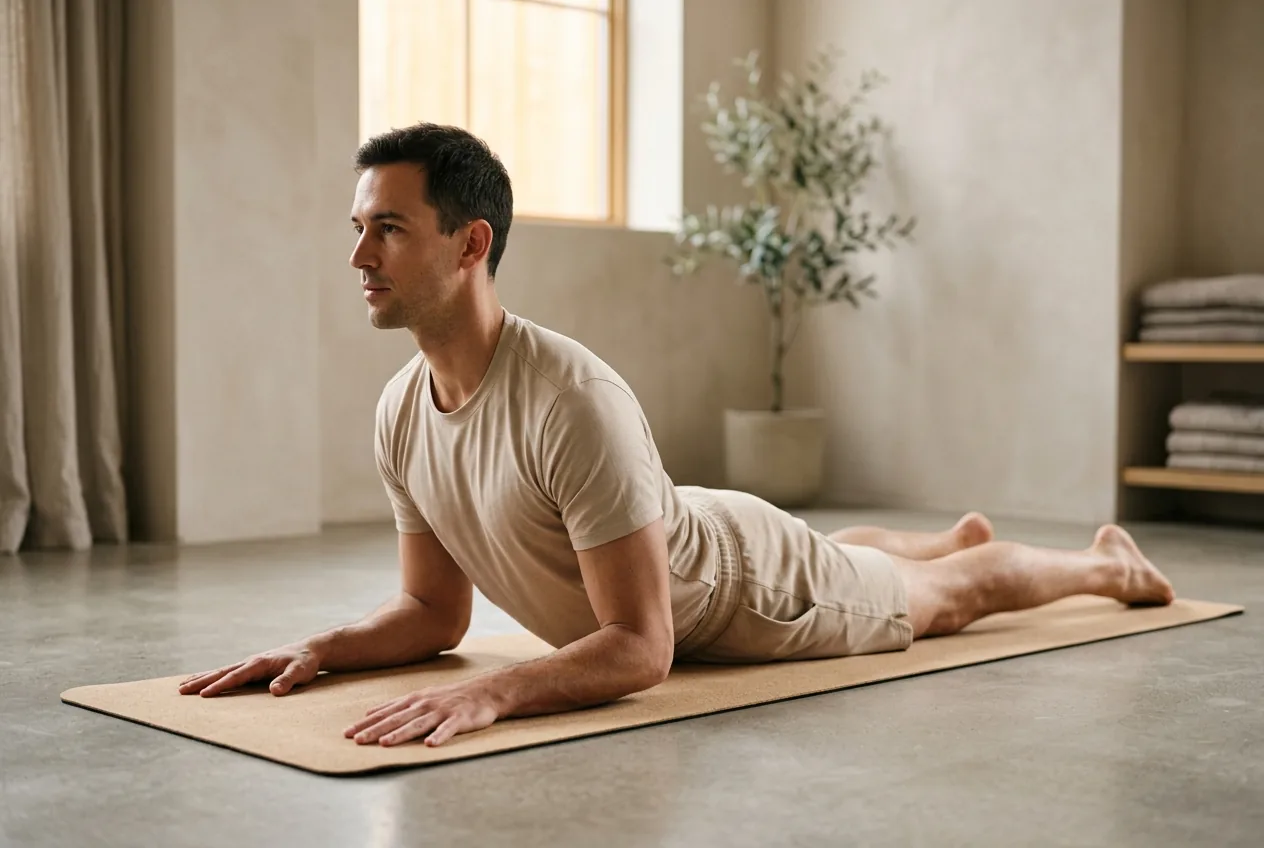
Stenosis symptoms are exquisitely position-sensitive, and that's the opening. Leaning forward and sitting open the canal and the nerve exits, which is why people with stenosis instinctively lean on a shopping cart or feel better sitting. Standing tall and arching backward closes those spaces, which is why standing and walking far can bring the legs on.
Now connect that to posture. If your pelvis and lower back are habitually pulled into an exaggerated arch — too much lumbar curve — you're living closer to the canal-closing end of the range all day, crowding nerves that already have less room. Easing that habitual posture toward neutral gives the nerves more space without touching the bone at all. This is why two people with identical scans can have completely different daily experiences: one is parked in the position that crowds the nerve, the other isn't.
What actually helps the symptoms
The active, non-surgical approach is where most people find their relief, and it's worth giving a real trial before considering anything more invasive.
Favor the positions that open the canal. Gentle forward-leaning and flexion-based movements tend to relieve stenosis, the opposite of what helps many other back problems. The targeted routine in spinal stenosis exercises is built around this, and getting the direction right is the whole point.
Build the support to hold a better posture. Strengthening the core and glutes and loosening tight hip flexors helps you carry your spine in a more neutral position rather than an exaggerated arch, taking standing pressure off the nerves.
Pace your walking. Many people can walk much further by leaning slightly forward, using a cart, or sitting for a minute when the legs get heavy and then continuing. Stationary cycling, which keeps you flexed, is often comfortable when walking isn't.
Manage the inflammation around the nerve with your clinician's guidance, since calming that can reduce symptoms even with the same bony narrowing.
Give an active program a genuine few months. Most stenosis is managed well without surgery, and the people who do best are usually the ones who change the positions and the posture, not just wait for the bone to behave.
When to see a doctor
Stenosis is usually a slow, manageable condition, but a few changes warrant prompt attention. See a clinician soon if leg weakness is clearly getting worse, if you're walking far less than you used to despite trying to manage it, or if numbness is spreading. Treat numbness in the saddle area between the legs or any loss of bladder or bowel control as a same-day emergency — that can signal serious nerve compression. And get assessed if the pain follows a fall or comes with fever or unexplained weight loss. Surgery is a reasonable conversation when symptoms are severe, progressive, or not responding to a fair trial of active treatment.
Why a matched routine beats generic advice
Here's the honest limit of any general plan: it's a starting point. Whether forward-leaning relieves you and how much your habitual posture is crowding the nerve depends on your specific alignment. A pelvis tilted too far forward, a lower back stuck in too much arch, hips that sit unevenly — each decides how close to the canal-closing end of the range you live all day, and which moves help.
Generic advice can't see your particular pattern. That's the idea behind a posture assessment: you measure your own deviations and build a daily routine around what's actually crowding the nerve, rather than guessing. If managing stenosis on general advice gets you partway but the legs still tire too soon, knowing your specific alignment is usually the missing piece — and the posture therapy approach is built to find the cause underneath the symptom. You may not reverse the narrowing, but you can change how much it costs you.
Common questions
Can spinal stenosis be reversed without surgery?
The bony narrowing itself usually can't be reversed without surgery, but the symptoms it causes very often can be reduced a lot — sometimes dramatically — by favoring positions that open the canal, easing an exaggerated lower-back arch, calming inflammation, and building supporting strength. Most people manage stenosis well without an operation.
Does spinal stenosis get worse over time?
The underlying narrowing tends to progress slowly with age, but symptoms don't always track the anatomy. Many people keep their pain stable or improve it for years through posture and activity changes, even though the scan looks the same or slightly tighter.
What makes spinal stenosis worse?
Positions that close the spinal canal — standing tall, arching backward, and walking long distances upright — tend to bring symptoms on. Living habitually in an exaggerated lower-back arch crowds the already-narrowed space all day, which is why posture matters so much.
Is surgery the only way to fix spinal stenosis?
Surgery is the only thing that physically reverses the narrowing, and it's a reasonable option for severe or progressive symptoms. But it isn't the only way to feel better — most people get meaningful relief from an active, posture-focused program and never need an operation.