You've been doing the "good for your back" exercises a friend or a video swore by, and somehow your back feels angrier, not better. That's a frustrating place to be — you're putting in the work and getting punished for it. Often the problem isn't that you're slacking. It's that a few of the exercises to avoid with lower back pain are hiding in the routine you've been trusting.
Here's the honest framing before the list: very few exercises are universally bad. The real issue is that a move which helps one back can aggravate another, depending on what your spine and pelvis are actually doing. The exercises below are the ones most likely to cause trouble for the most people — but the point is to learn why, so you can judge your own routine.
Why some exercises backfire
Most chronic, non-traumatic back pain comes from a postural imbalance — some muscles switched off, others overworking to cover. When you load the spine with a movement that pushes it further into its already-strained shape, or that forces a range it isn't ready for, you don't strengthen the back. You irritate it.
That's why generic exercise advice is hit-or-miss. The same crunch that's harmless for one person feeds the exact pattern that's hurting another. Knowing the mechanism lets you stop guessing.
Exercises to be careful with
1. Full sit-ups and crunches
Repeated spinal flexion under load — curling your trunk up against gravity, over and over — is hard on the lower back and the discs, especially if a disc is already irritated. It also reinforces the rounded-forward posture most of us already overdo at a desk.
Swap: Train the core without bending the spine. Planks, dead bugs, and bird dogs build the deep stabilizers that actually protect your back. There's a full alternative set in core exercises for lower back pain.
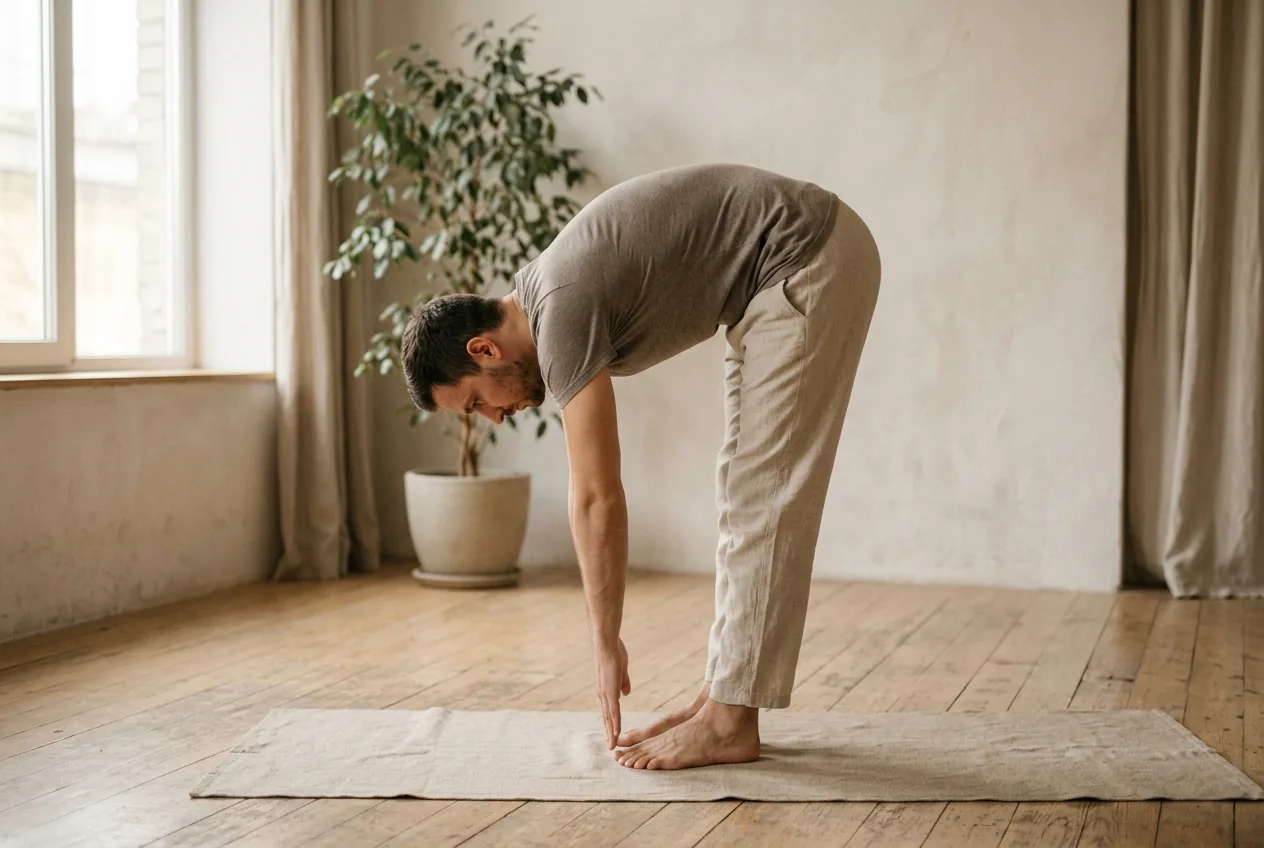
2. Toe-touches with straight legs
Standing and bobbing down to touch your toes with locked knees loads the lower back at full stretch — exactly when it's most vulnerable, and especially first thing in the morning. It pulls hard on the lower back and hamstrings together.
Swap: If you want to stretch your hamstrings, do it lying on your back with a strap around one foot, keeping the lower back supported on the floor.
3. Heavy loaded twists
Weighted rotation — twisting hard with a dumbbell, medicine ball, or barbell — combines rotation and load, which is a common way to tweak a disc or strain the lower back. Gentle, unloaded rotation is fine; loaded, forceful twisting is the risk.
Swap: Anti-rotation work, like a Pallof press or simply holding a stable position while resisting a pull, trains the same muscles without the dangerous twist.
4. Deep, heavy deadlifts with poor setup
The deadlift itself isn't the villain — done well, it strengthens the whole posterior chain. The trouble is loading it heavy with a rounded lower back or before you've got the control to keep a neutral spine. That's a fast route to a flare, as anyone who's had lower back pain after deadlifts knows.
Swap: Master the hip hinge with bodyweight and light load first. Glute bridges and hip hinges teach the pattern safely before you add weight.
5. High-impact moves during a flare
Running on hard surfaces, jumping, and burpees send repeated impact through the spine. Fine when your back is healthy; a bad idea while it's actively flared.
Swap: During a flare, walk, swim, or cycle gently. Keep moving — just take the impact out.
6. Leg-press and squats loaded before you're ready
Heavy lower-body lifts aren't inherently bad, but two things make them risky for an irritated back. On the leg press, people let their lower back round and lift off the pad at the bottom of the rep, which loads a flexed spine hard. With squats, going heavy before you can hold a neutral spine under load is a common way to flare. The machine or the bar gets blamed when the real issue is form under fatigue.
Swap: Build the pattern with bodyweight and light load, keep the range to where your spine stays neutral, and add weight only once your control holds. Glute bridges and hip hinges teach the same movement with far less risk to the lower back.
The question isn't "is this exercise bad?" It's "is this exercise bad for the way my back is currently moving?"
The same logic applies to stretches and sciatica
This isn't only about strength training. Some stretches aggravate certain backs too, which is why a sensible before-bed routine leaves out the aggressive moves. And if nerve pain is in the picture, the avoid list changes again — several common stretches make sciatica worse rather than better, so what you skip matters as much as what you do.
How to tell if a move is wrong for you
You don't need a clinic to read your own signals. A useful move challenges the muscle and leaves you feeling worked but fine afterward. A harmful one produces sharp, shooting, or radiating pain during the movement, or a flare that shows up hours later or the next morning. Soreness in the muscle is normal; pain in the joint or down a leg is a stop sign.
A simple test: drop the suspect exercise for two weeks and see if your back settles. Then, if you want, reintroduce it carefully and watch what happens. If the pain tracks the exercise, you've found a move that doesn't suit your body — regardless of how good it's supposed to be for everyone else. Keeping a rough mental log of which moves flare you is one of the most useful things you can do, because that pattern points straight at what your back can and can't tolerate.
When to see a doctor
Adjusting your routine is for ordinary mechanical back pain. Stop and see a clinician promptly if exercise brings on numbness, tingling, or weakness in a leg, any loss of bladder or bowel control, pain after a fall or accident, fever with back pain, unexplained weight loss, or pain that's severe or steadily worsening. Pain that shoots down a leg or that lingers and intensifies after exercise is worth getting assessed rather than training through.
Why "avoid these" is only half an answer
A list of exercises to avoid is useful, but it's blunt. The deeper truth is that the right and wrong moves for you depend on your specific pattern. If your pelvis tips forward and your lower back over-arches, certain extension moves will aggravate you that would help someone with a flat back — and vice versa. A generic avoid-list can't account for that, which is exactly why one person's miracle exercise is another person's flare.
That's the case for knowing your own pattern instead of working from averages. A posture-based approach to chronic back pain starts by measuring what your spine and pelvis are actually doing, then builds a routine that loads the right muscles and steers clear of the moves that feed your particular imbalance. It turns "avoid these five" into "do these, in this order, because of how your body is set up."
For now: cut the high-risk moves above, swap in the safer versions, and pay attention to which exercises consistently flare you. That pattern of what hurts is one of the most useful clues you have about what your back actually needs.
Common questions
What exercises should I avoid with lower back pain?
The usual suspects are full sit-ups and crunches, straight-leg toe-touches, heavy loaded twists, badly set-up deadlifts, high-impact moves during a flare, and heavy squats or leg presses before your control is ready. None are universally bad, but they cause trouble for the most people.
Are sit-ups bad for your back?
Repeated sit-ups bend the spine forward under load over and over, which is hard on the discs if one's irritated and reinforces the rounded desk posture. Planks, dead bugs, and bird dogs train the core without that flexion.
How do I know if an exercise is hurting my back?
A useful move leaves the muscle feeling worked but fine afterward. A harmful one brings sharp, shooting, or radiating pain during the movement, or a flare hours later or the next morning. Pain down a leg is a stop sign.
Can I still exercise with lower back pain?
Usually yes, with the right moves. Gentle core work, walking, swimming, and low-impact movement often help. Drop the high-risk exercises, watch what flares you, and see a clinician if you get numbness, leg weakness, or pain that's severe or steadily worsening.