You stand up after a long drive and there's a deep, tight ache in one cheek that wraps up into your lower back and out toward the hip. Sitting cross-legged feels impossible on that side. You keep wanting to dig a thumb into the spot but can't quite reach it. That knot in the back of the hip is often glute tightness, and learning how to stretch glutes properly tends to relieve more than just the buttock — it loosens the back and hip too.
The glutes sit at the crossroads of your back, hips, and legs. When they get tight or weak, the trouble spreads in every direction.
Why tight glutes pull on your back and hips
Your glutes are big, powerful muscles, and they're supposed to be the main engine for standing, walking, and lifting. The problem is that sitting all day does two things to them at once. It keeps them in a shortened, squashed position for hours, and it lets them get lazy because they're not doing much while you sit.
A glute that's both tight and underworking is a recipe for trouble upstream. When the glutes aren't driving your hips properly, the lower back and hip muscles step in to cover, and they overwork to do it. That's the ache you feel after sitting — not the glute itself complaining so much as everything around it picking up the slack. The link between weak glutes and back pain runs through exactly this pattern.
There's also a nerve angle. The piriformis, a small muscle deep in the buttock, sits right next to the sciatic nerve. When it tightens up, it can irritate the nerve and send symptoms down the leg, which is why buttock tightness and sciatica-type sensations often travel together. If that's your pattern, the piriformis syndrome stretches target that specific muscle.
So glute stretching does two useful things: it releases the muscle that's pulling on your back and hip, and it can take pressure off the nerve running beneath it.
How to stretch glutes the right way
Move into each stretch slowly until you feel a deep, tolerable pull in the buttock, then hold and breathe. No bouncing, no forcing. A strong stretch is fine; sharp pain or anything shooting down the leg means ease off. Hold each for 30 seconds, two or three times per side, daily.
Figure-four (lying)
Lie on your back, both knees bent. Cross one ankle over the opposite thigh, just above the knee, making a figure-four shape. Reach through and pull the bottom thigh toward your chest. You'll feel it deep in the buttock of the crossed leg. This is the most reliable buttock stretch for most people and it's gentle on the back.
Seated figure-four
Same shape, done sitting in a chair. Cross one ankle over the opposite knee, keep your back tall, and hinge forward from the hips until you feel the stretch. Good for doing at a desk without lying on the floor.
Knee-to-opposite-shoulder
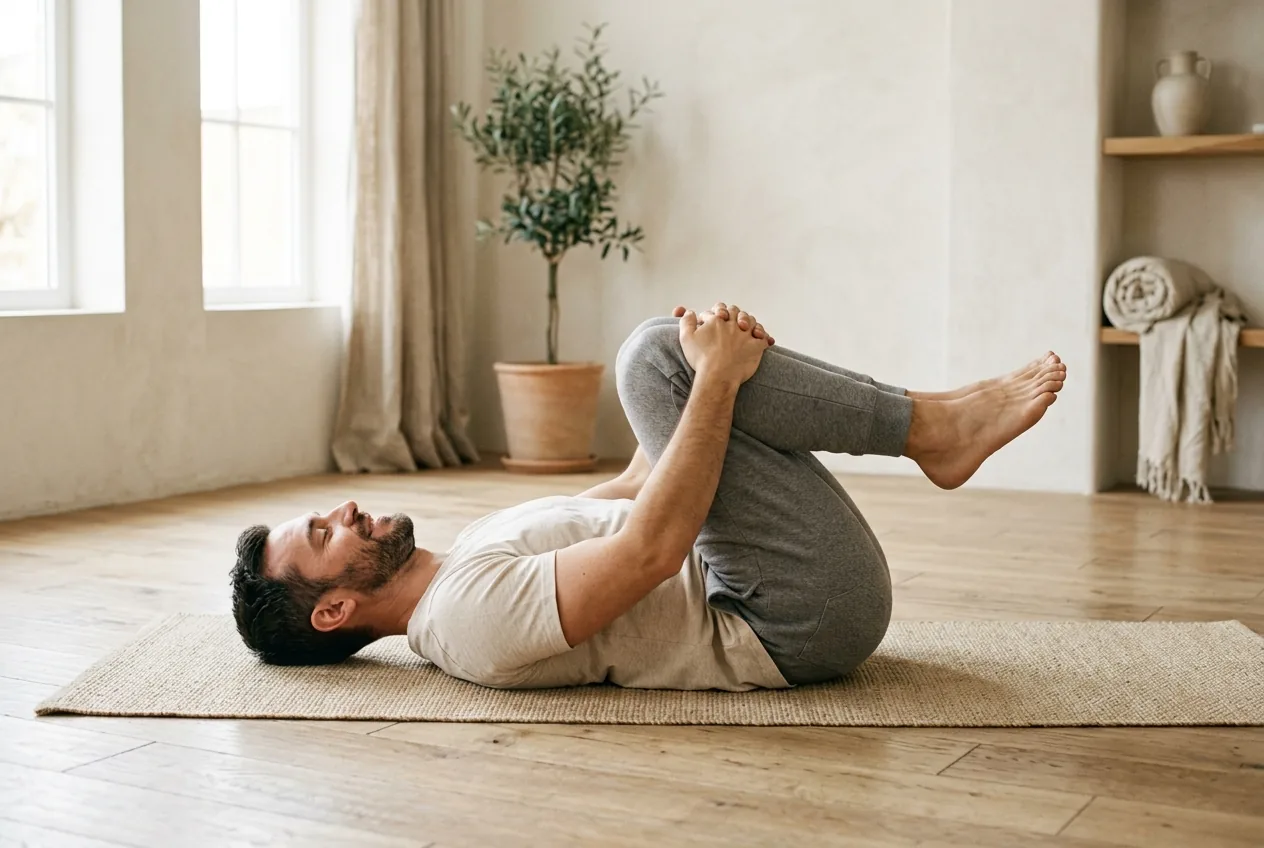
Lie on your back and draw one knee up, then guide it across your body toward the opposite shoulder with your hands. This hits a slightly different part of the glute than the figure-four and reaches the deeper rotators.
Pigeon (modified)
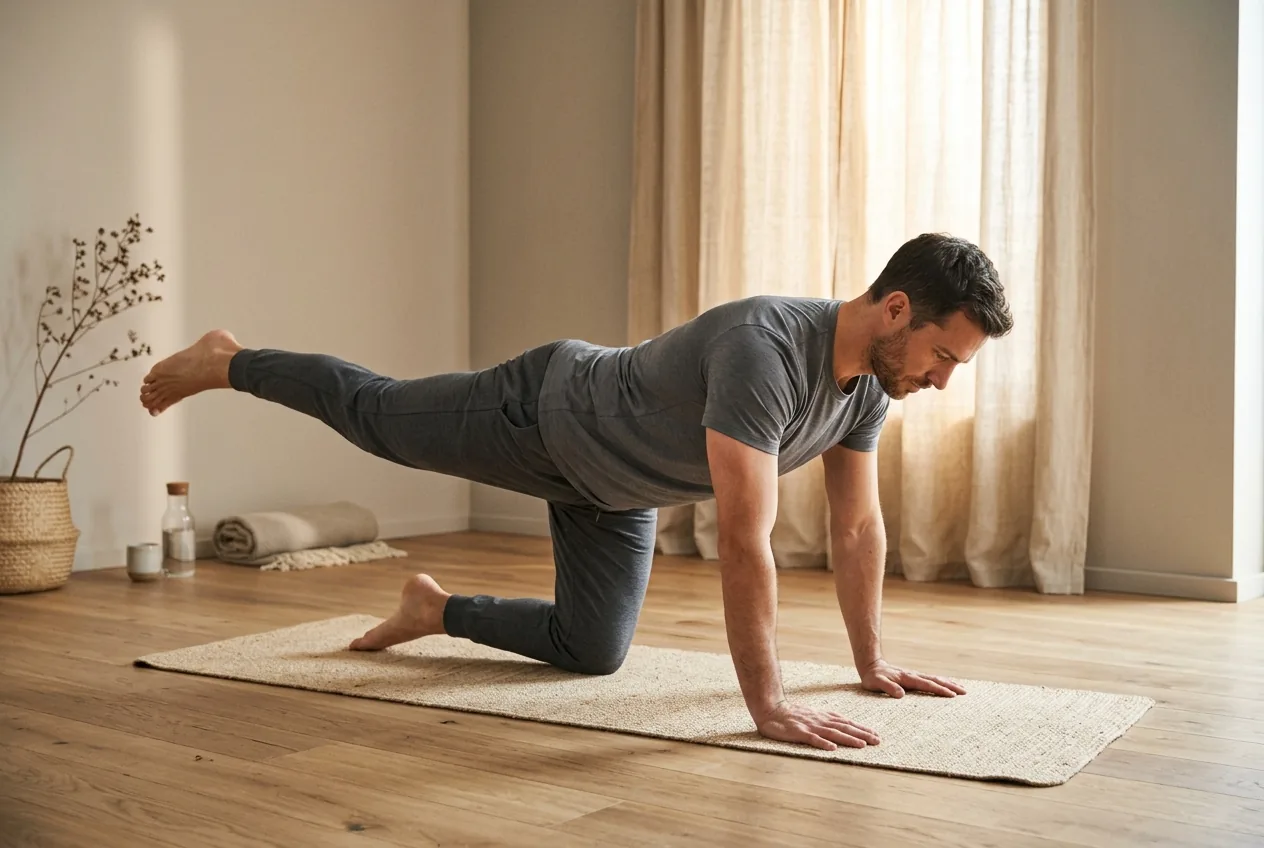
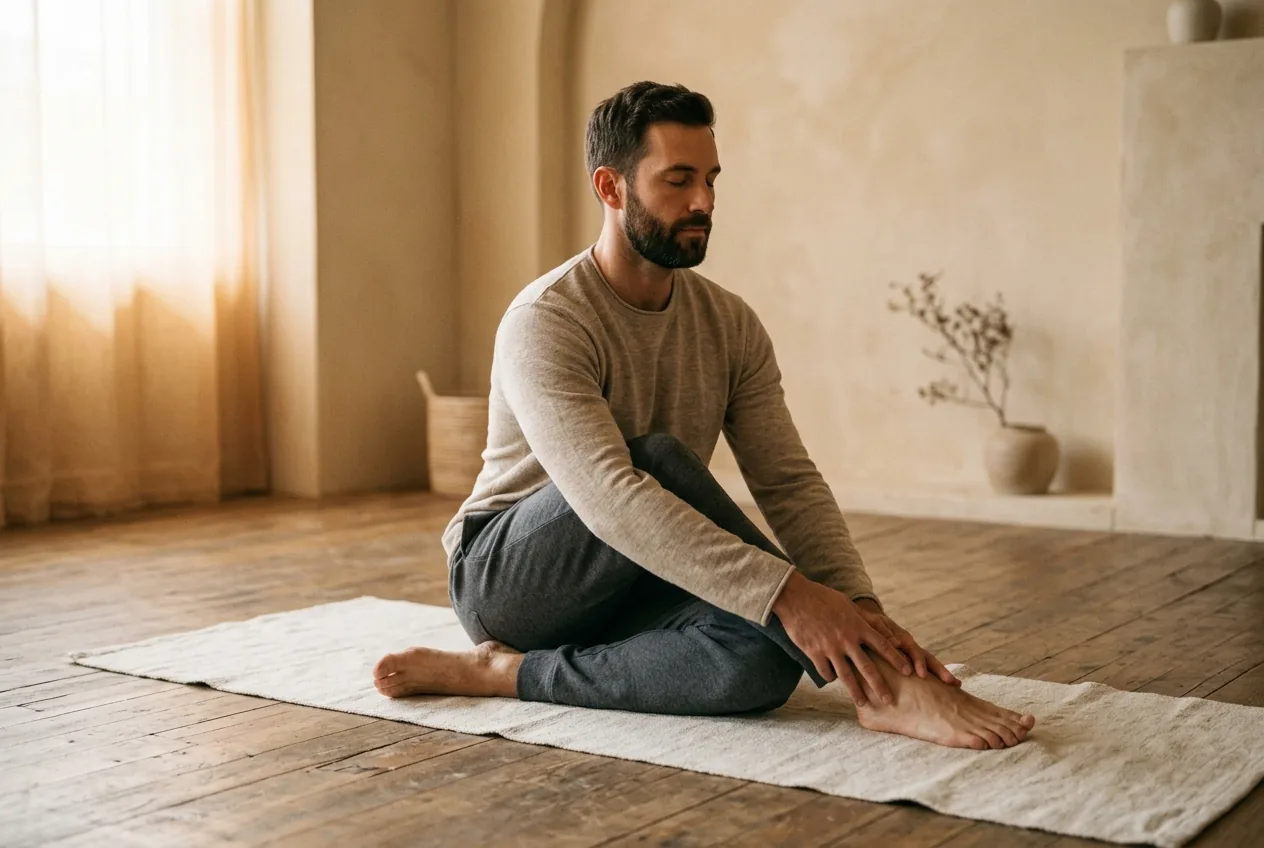
From hands and knees, bring one shin forward and across, lowering the hip toward the floor while the back leg stretches behind you. Keep your hips level and only go as deep as is comfortable. A strong stretch — back off if it pinches the front of the hip or the knee.
Standing figure-four
Standing on one leg (hold a wall or chair), cross the other ankle over the standing thigh and sit your hips back into a quarter-squat. Useful when you can't get to the floor and want a quick release after sitting.
Don't stop at stretching
Here's the part people miss. Stretching a glute that's tight because it's weak gives short-lived relief — the muscle tightens right back up because nothing changed the reason it was guarding. To keep the relief, pair the stretches with a little glute strengthening. The glute bridge for back pain is the simplest place to start: it wakes the muscle up so it actually does its job, which is what stops your back and hip from covering for it.
A practical rhythm: stretch first to release, then do a set or two of bridges to switch the muscle on. Done daily, that combination changes the pattern rather than chasing it.
When to see a doctor
Glute and hip tightness is usually muscular and safe to stretch. See a clinician promptly if you have numbness, tingling, or weakness running down the leg that's getting worse, any loss of bladder or bowel control, pain after a fall or injury, fever, or buttock pain that's severe or steadily worsening. Persistent one-sided buttock pain that doesn't respond to stretching is also worth getting checked.
Why the spot that's tight is specific to you
The reason one person gets instant relief from the figure-four and another barely feels a change is that glute tightness is downstream of a posture pattern — how your pelvis tilts, which side you load more, where your support has dropped off. The same stretch helps when it matches your pattern and does little when it doesn't. General buttock stretching is a good starting point, but the lasting fix is releasing the muscle that's overworking for *you* and strengthening what's letting it. A posture assessment that shows how your pelvis and hips are loaded is one way to aim the work rather than stretching both sides equally and hoping.
A tight glute is usually a glute that's covering for weak support — release it, then strengthen it, and the back and hip stop paying the price.
Common questions
How do you stretch your glutes for lower back pain?
The figure-four stretch, lying or seated, is the most reliable. Cross one ankle over the opposite thigh and draw the legs toward your chest until you feel a deep pull in the buttock, hold 30 seconds, and switch sides. Pair it with glute bridges so the muscle gets stronger, not just looser.
Can tight glutes cause lower back pain?
Yes, indirectly. When the glutes are tight and underactive, the lower back and hip muscles overwork to cover for them, and that overload is felt as back pain. The tight piriformis can also irritate the sciatic nerve. Releasing and strengthening the glutes usually eases the back.
How often should I stretch my glutes?
Daily is fine and often best, especially if you sit a lot. Two or three holds of 30 seconds per side, once or twice a day, keeps the muscle from tightening back up. Stretch when warm, and pair it with strengthening for results that last.
Why does only one glute feel tight?
One-sided glute tightness usually reflects an uneven posture or loading habit — you stand on one leg more, sit with a wallet under one hip, or carry a pelvic tilt that's worse on one side. Stretch both sides but expect the tight side to need more, and look at the habit feeding it.