You bend to touch your toes and stall halfway down, hamstrings screaming, lower back complaining — and you've probably been told for years that if you could just stretch those hamstrings loose, your back would feel better. If that's you, tight hamstrings and back pain do travel together, but the relationship isn't what most people assume. Stretching the hamstrings harder often does very little, and understanding why is the key to fixing both.
The usual story is that tight hamstrings *cause* the back pain — pull on the pelvis, flatten the lower curve, and strain the spine. There's a grain of truth in that. But far more often, the tight hamstrings and the sore back are both symptoms of the same upstream problem, which is why chasing the hamstrings alone leaves you stretching forever with little to show for it.
How hamstrings and the lower back are connected
Your hamstrings run down the back of your thigh and attach to the bottom of your pelvis. That gives them a direct line of influence on how your pelvis sits — and pelvic position drives the curve in your lower back. So anything that changes one tends to change the others.
Here's the part that flips the usual story. In many people, the hamstrings aren't truly short — they're tight because they're working overtime, holding the pelvis in place to compensate for something else that switched off. The classic version: your glutes go quiet from all-day sitting, so the hamstrings take over as the main hip stabiliser. Overworked muscle feels tight and resists stretching, no matter how much you pull on it, because the tightness is its *job* right now.
Tight hamstrings are often loyal, not short — holding the pelvis together while the glutes nap. Stretch them and they tighten right back.
That's why stretching can feel pointless. You loosen the hamstring for an hour, your body still needs something to do the glutes' work, and the tension comes straight back. The muscle isn't the problem; it's covering for the problem.
The two ways tight hamstrings relate to back pain
It helps to know which version you're dealing with, because the fix differs.
- Genuinely short hamstrings pulling the pelvis under. Truly tight hamstrings can tug the bottom of the pelvis downward and backward, flattening the natural curve of the lower back. A flattened lower back loses some of its shock absorption and can ache. This is closer to the textbook story and is linked to a flat-back posture.
- Overworked hamstrings compensating for weak glutes. Far more common in desk-bound people. The hamstrings feel tight because they're doing double duty. Here, stretching is almost beside the point — the fix is waking the glutes back up. This connects directly to weak glutes and back pain.
Most chronic, stubbornly tight hamstrings in office workers are the second kind.
What actually helps
Because the root is usually compensation, the work is more than stretching.
Wake up the glutes
This is the lever that matters most for the common pattern. Glute bridges are the simplest place to start — they teach your backside to take back the hip work the hamstrings have been covering. Lie on your back, knees bent, tuck your tailbone slightly, squeeze your glutes, and lift your hips until your body is straight from shoulders to knees. Done right, you feel it in your backside, not your hamstrings or back. Full how-to in the glute bridge for back pain guide.
Stretch the hamstrings gently — but don't rely on it
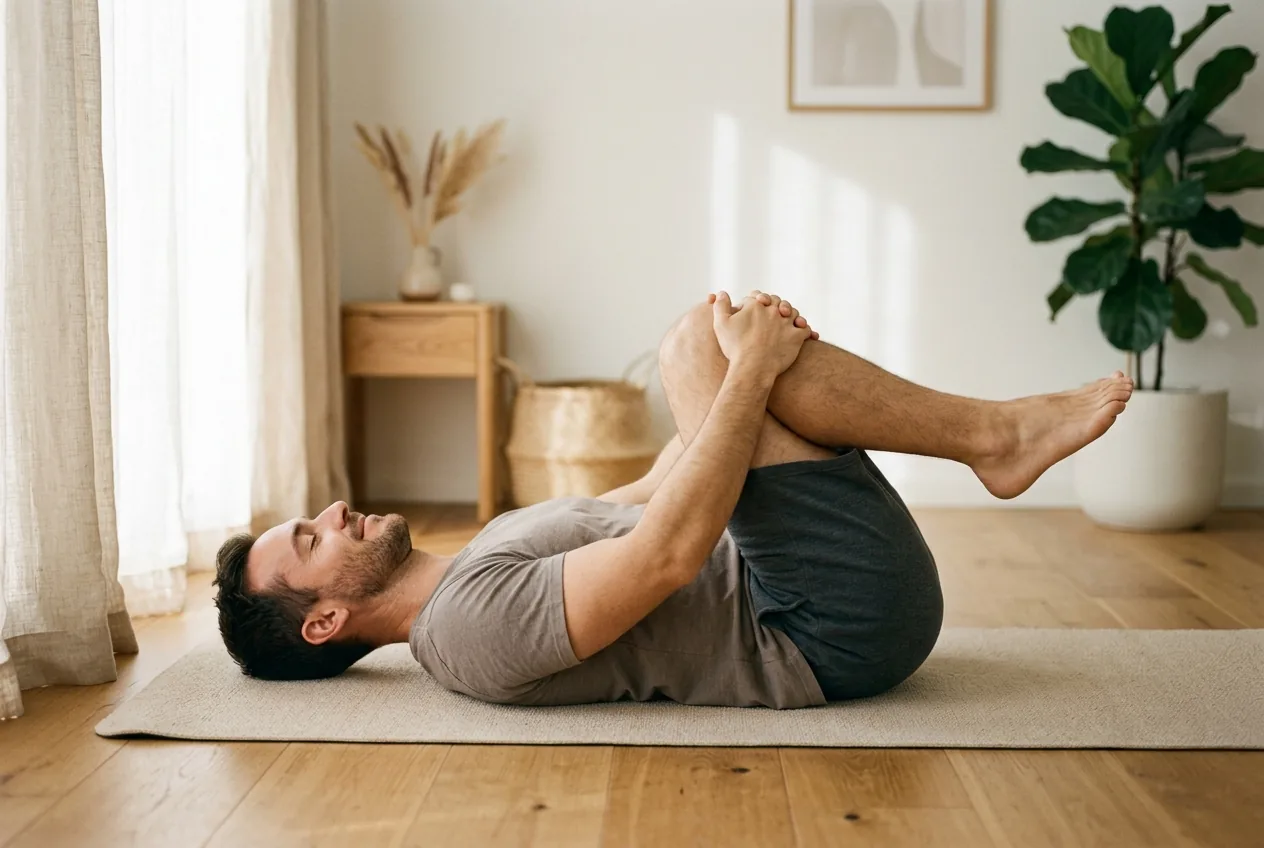
Stretching still has a place, especially for genuinely short hamstrings. Do it gently and without rounding your lower back: lie on your back and use a strap or towel around one foot to draw the straight leg up until you feel a mild stretch behind the thigh. Hold 30 seconds, two or three times per side. Keep your back flat on the floor. Don't yank toe-touches with a rounded spine — that loads the back and trains nothing useful.
Loosen the hip flexors too
The hamstrings rarely act alone. In a tipped-pelvis pattern, the hip flexors at the front are often tight as well, and loosening them helps the whole pelvis settle. A daily hip-flexor stretch pairs naturally with the glute work.
Build deep-core stability
A stable trunk means the pelvis doesn't have to be braced by the hamstrings all the time. Bird-dogs and similar moves teach the core to do that job, freeing the hamstrings up.
What to stop doing
- Stretching the hamstrings hard and expecting it to fix the back. If they tighten back within hours, stretching isn't addressing the cause.
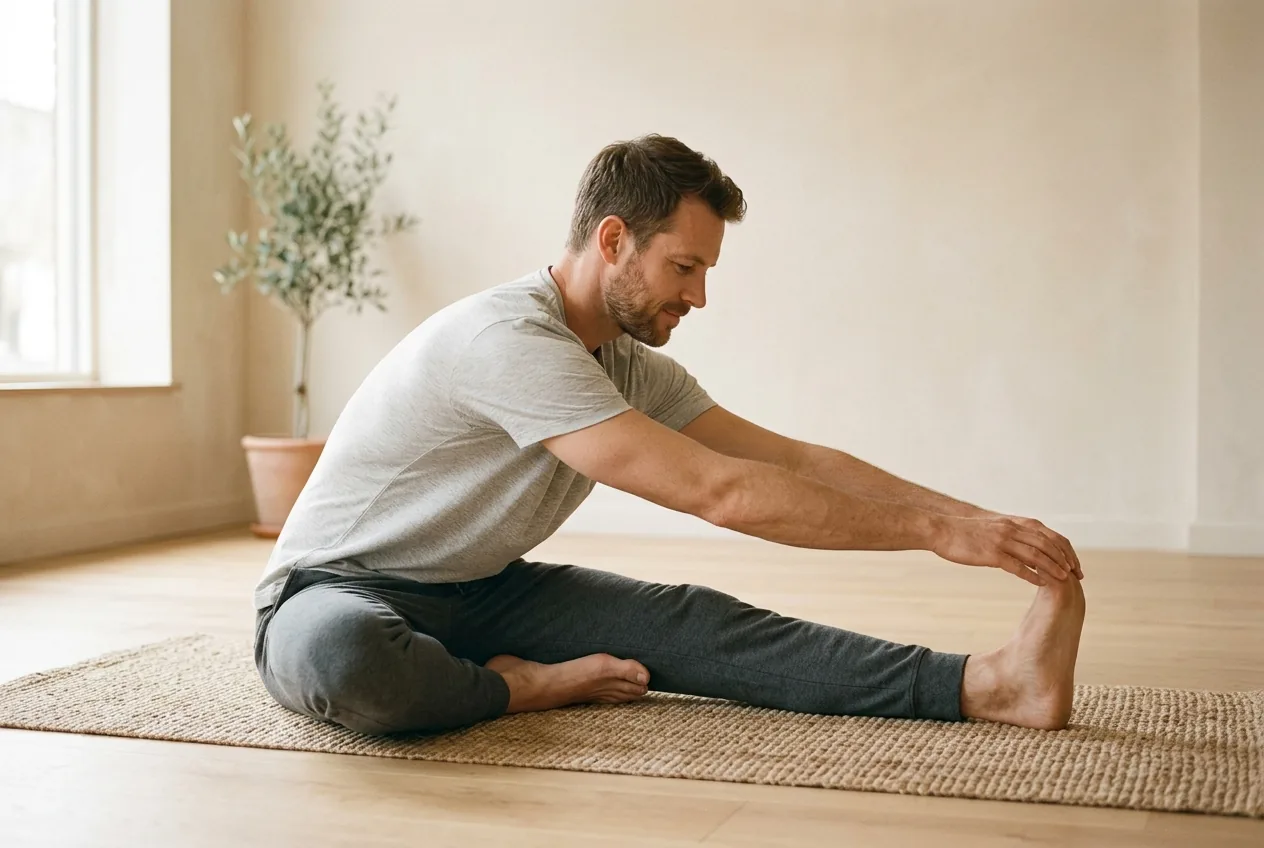
- Toe-touches with a rounded lower back. This loads the lumbar spine and can aggravate a sore back without lengthening anything useful.
- Ignoring the glutes. For most desk workers, this is the missing piece.
When to see a doctor
Tight hamstrings with back pain are usually mechanical. But see a clinician promptly if you have numbness, tingling, or weakness spreading down a leg, any loss of bladder or bowel control, pain that began after a fall or accident, fever alongside back pain, unexplained weight loss, or pain that's severe or steadily worsening. Tightness or pain down the back of the leg that comes with shooting or burning symptoms could be nerve-related rather than muscular, and is worth getting checked.
Why the right fix depends on your pattern
Here's the honest part. Whether your hamstrings are genuinely short or overworked-and-compensating changes what actually helps — and so does the position of your pelvis. A pelvis tipped forward and one tipped back both produce "tight hamstrings and a sore back," but they need nearly opposite emphasis, and a generic stretching routine can help one while doing nothing for the other.
Knowing your own pattern is what turns the work from guesswork into something that holds. A posture method that measures your specific deviations builds a daily routine around where your body actually compensates, so you're loosening and strengthening the right things in the right order. If you want a first look, you can check your posture at home.
Stop treating the hamstrings as the villain. Wake the glutes, stretch gently, and match the work to your body — and both the tightness and the ache start to ease.
Common questions
Can tight hamstrings cause lower back pain?
They can contribute. Genuinely short hamstrings pull on the bottom of the pelvis and can flatten the lower-back curve, which strains the spine. But just as often, tight hamstrings and back pain are both symptoms of the same upstream issue — usually weak, underactive glutes that the hamstrings are compensating for.
Why are my hamstrings always tight no matter how much I stretch?
Often because they're overworked rather than truly short. When your glutes switch off from long sitting, the hamstrings take over as hip stabilisers, so they stay tight as part of their job. Stretching loosens them briefly, but the tension returns until you address why they're overworking.
Will stretching my hamstrings fix my back pain?
Sometimes it helps a little, but for most desk-bound people stretching alone doesn't fix it, because the hamstrings are compensating for weak glutes. Waking up and strengthening the glutes usually does more than stretching the hamstrings ever will.
How do I loosen tight hamstrings without hurting my back?
Lie on your back and use a strap or towel around one foot to gently draw the straight leg up until you feel a mild stretch, keeping your lower back flat on the floor. Avoid standing toe-touches with a rounded spine, which load the back and don't lengthen the hamstrings effectively.