
You've iced it, rested it, maybe taken something for the inflammation, and you keep checking the calendar wondering why a small fluid-filled sac is taking this long to settle. If you're asking how long does bursitis take to heal, you've probably already had it for longer than felt reasonable, and you want a straight answer rather than "it varies."
Here's the straight answer, then the part that actually decides your timeline — because with bursitis, the clock is set less by the inflammation itself and more by whether you stop irritating the bursa.
The short answer on bursitis recovery time
A bursa is a thin sac of fluid that cushions where a muscle or tendon glides over a bone. When it's overloaded by rubbing or pressure, it inflames, swells, and turns tender. Bursitis recovery time falls into a few brackets:
- A mild, recently-started flare that you catch early and offload often calms down in one to two weeks.
- A moderate case — clearly tender, been there a while — more commonly takes two to six weeks of consistent offloading to settle.
- A stubborn or chronic case, where the bursa has been irritated for months, can take several months, and tends to relapse if the cause isn't addressed.
Those ranges assume you actually take pressure off the bursa. That's the catch. Bursitis doesn't heal on a fixed schedule like a cut. It heals when the rubbing stops long enough for the swelling to drain and the lining to calm.
Why bursitis drags on
The reason bursitis so often outlasts people's expectations is simple: the bursa keeps getting hit. Hip bursitis flares again every night you roll onto that side. Knee bursitis re-inflames every time you kneel. Shoulder bursitis gets stirred up with every overhead reach. The tissue starts to settle, you go back to normal life, and the same mechanical irritation lights it up before it ever fully quieted.
That's why the honest answer to the timeline question is partly in your hands. Two people with identical hip bursitis can have wildly different recoveries — one stops sleeping on the sore side and changes how they stand, the other keeps doing both and stays sore for months. The biology is the same; the offloading isn't.
Bursitis isn't waiting out a stopwatch. It's waiting for the rubbing to stop. Remove the irritation and the clock finally starts running.
What speeds it up
You can shorten bursitis recovery time by doing two things at once: calming the current flare and removing what's irritating it.
Calm the flare
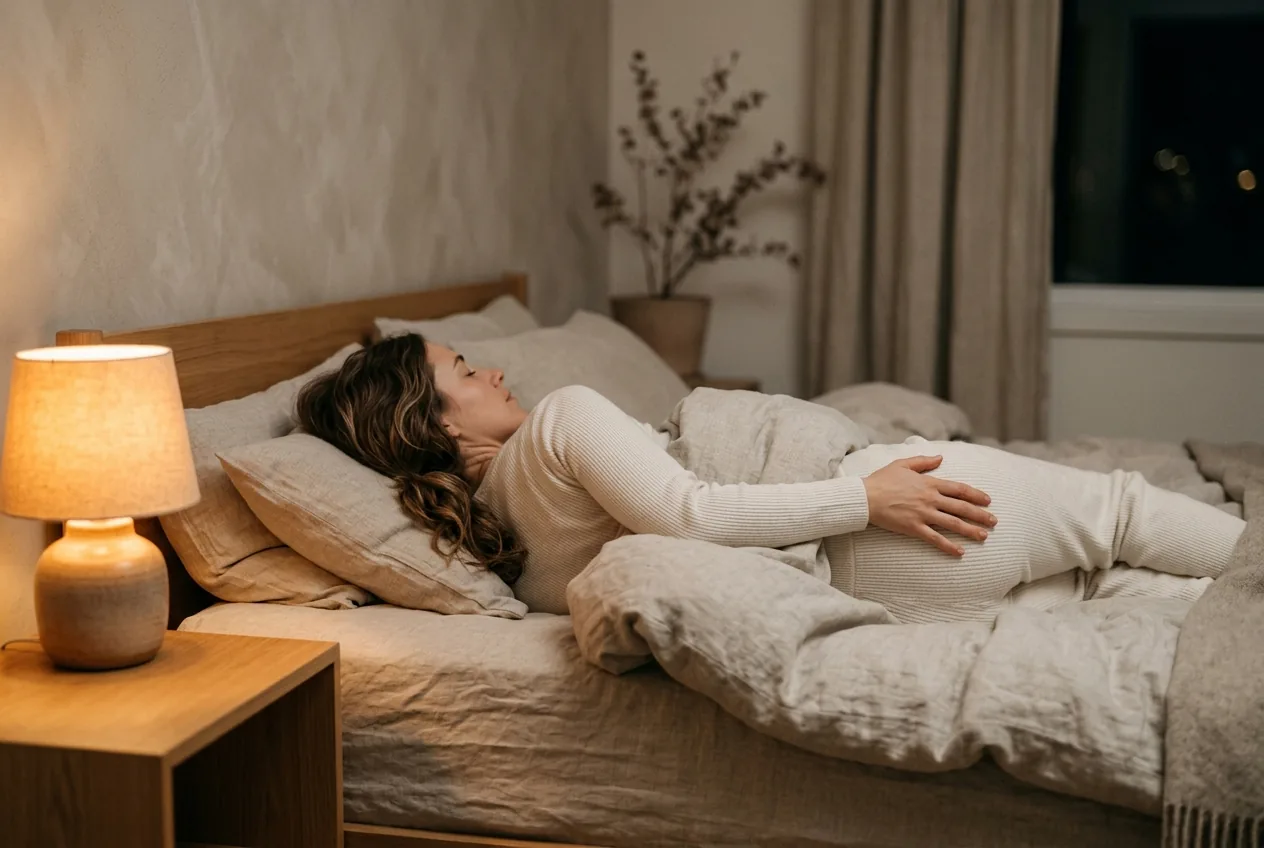
- Offload it. Stop the specific pressure — don't sleep on the sore hip, don't kneel on the sore knee, back off the overhead reaching. A pillow between the knees keeps the top leg from dragging across an irritated hip bursa at night.
- Ice the tender area for 10 to 15 minutes a few times a day while it's hot and angry.
- Ease off the aggravators for a week or two — fast stair climbing, long downhill walks, repetitive kneeling, whatever lights it up.
Don't over-stretch the sore point
This is where people accidentally extend their own recovery. Aggressively stretching the tissue right over an inflamed bursa can compress and re-irritate it. If a stretch produces sharp pain on the exact sore spot, that's a signal to stop, not to push through.
Rebuild the support
Once it's less acutely tender, gentle strengthening of the muscles around the joint takes load off the bursa for good. For the hip, that means waking up the glutes so the pelvis stops dropping with each step — the same muscles that, when weak, set hip bursitis off in the first place. The whole pattern of triggers is laid out in hip bursitis, and the day-to-day flare-stokers worth avoiding are covered in what aggravates hip bursitis.
What slows it down
A handful of habits quietly reset the clock:
- Sleeping on the sore side night after night.
- Standing slumped onto one hip all day, which keeps grinding the outer-hip bursa.
- Returning to the aggravating activity at full intensity the moment it feels a bit better.
- Treating only the swelling — ice and rest — and never changing the mechanics that caused the rubbing.
That last one is the big one, and it's why bursitis has a reputation for coming back.
When to see a doctor
This is posture education, not medical advice. Most bursitis is mechanical and settles with offloading, but see a clinician promptly if the area is red, hot, and swollen or you have a fever — that can signal an infected bursa, which needs treatment, not patience. Also seek assessment if the pain followed a fall or direct blow, if you can't bear weight, if there's numbness or weakness spreading down the limb, or if there's no improvement at all after several weeks of sensible self-care. Unexplained weight loss or steadily worsening pain should always be checked.
Why your posture sets the real timeline
If you only ask "how long," you're treating bursitis like a wound that closes on its own. It's closer to a blister: it heals when the rubbing stops, and it comes back the moment the rubbing resumes. With hip bursitis especially, the rubbing usually comes from a pelvis that won't stay level — a weak glute on one side, a tipped or rotated pelvis, a habit of standing hip-cocked.
That's the case for a posture assessment that measures your own deviations instead of riding out flare after flare. Find why your pelvis isn't staying level, train the muscles that should be holding it, and the bursa stops getting hammered — which is the only version of "healed" that lasts.
Common questions
How long does bursitis take to heal?
Mild bursitis caught early often settles in one to two weeks, a moderate case usually takes two to six weeks, and a chronic case can take several months. The timeline depends far more on whether you stop irritating the bursa than on any fixed healing schedule — remove the rubbing and it calms; keep aggravating it and it lingers.
Why is my bursitis taking so long to heal?
Almost always because the bursa keeps getting irritated — sleeping on the sore side, kneeling, standing slumped on one hip, or returning to the aggravating activity too soon. Bursitis heals when the pressure and rubbing genuinely stop, so a case that won't settle usually means the mechanical cause hasn't been removed.
Does hip bursitis go away on its own?
Often it does, if you take the pressure off it — stop sleeping on that side, use a pillow between the knees, and ease off one-sided standing. But if the underlying cause, usually a weak glute and a pelvis that drops with each step, isn't addressed, it tends to flare again even after it quiets.
Should I keep moving with bursitis or rest it?
Offload the specific irritation, but don't go fully still. Gentle, pain-free movement keeps the joint healthy, and once the sharp tenderness eases, strengthening the surrounding muscles takes load off the bursa. Avoid hard stretching of the exact sore point, which can re-inflame it.