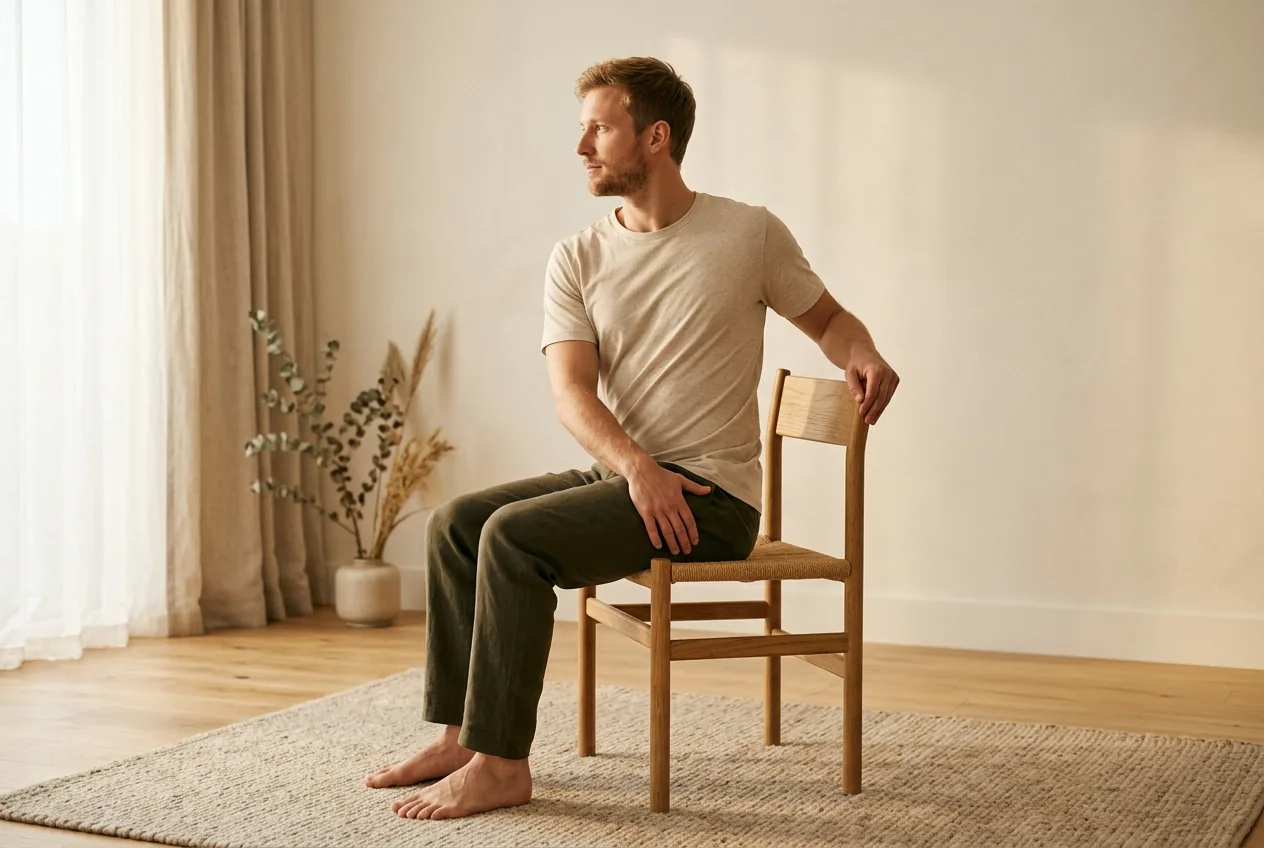

Your back seized up, every instinct says lie down and don't move, and someone older has probably told you to "rest it for a few days." It's the most natural advice in the world, and for most back pain, it's wrong. So is bed rest good for back pain? For the common, non-traumatic ache — the kind that flares from a bad lift, a long drive, or weeks of slumping at a desk — extended bed rest tends to make recovery slower, not faster.
That runs against decades of folk wisdom, so this guide explains what's actually happening when you lie still for days, why movement usually wins, and how to move sensibly when your back is screaming at you to do the opposite.
Where the rest myth came from
For a long time, lying flat was the standard prescription for a bad back. The logic seemed obvious: an injured part should be protected and kept still, the way you'd splint a sprained wrist. Rest, the thinking went, gives the back a chance to heal.
The problem is that a sore back usually isn't a fresh wound that needs immobilising. Most non-traumatic back pain is a muscular and mechanical flare — irritated tissue, guarding muscles, a spine reacting to load and posture. And that kind of system doesn't recover by shutting down. It recovers by gently getting back to normal motion. Once researchers started comparing people who rested with people who stayed gently active, the active group consistently did better. The advice changed; the folk wisdom didn't keep up.
What bed rest actually does to a sore back
Lying in bed for days doesn't put your back in neutral. It works against it in several ways at once.
- Muscles weaken fast. Deconditioning starts within days. The core and back muscles that support your spine lose tone quickly when they're not used, leaving the spine less supported when you finally get up.
- Tissues stiffen. Joints and soft tissue get stiff and sticky without movement. The back that finally rises after three days flat is often more rigid and sore to mobilise than it was on day one.
- Circulation drops. Movement pumps blood and fluid through tissue, which is part of how it calms down. Lying still slows that flushing and can prolong the irritation.
- Pain sensitivity climbs. The longer you avoid moving for fear of pain, the more the nervous system learns to treat normal movement as a threat — and the harder it gets to start again.
Put together, a few days flat can leave you weaker, stiffer, more guarded, and no closer to relief — the opposite of what rest promised.
A sore back doesn't heal by going still. It heals by relearning that gentle movement is safe.
What to do instead of lying flat
The modern approach isn't "push through agony." It's relative rest: ease off the thing that hurt you, keep moving gently within comfort, and let normal motion do its work.
- Keep moving early, in small doses. Short, gentle walks around the house are one of the best things you can do for a sore back. Walking loads the spine in a calm, rhythmic way that most backs tolerate well — here's why walking helps a sore back.
- Change position often. Don't lock into any one posture, including lying down. Alternate sitting, standing, walking, and resting so nothing stiffens.
- Use rest as relief, not treatment. If lying down for 20 to 30 minutes eases a sharp flare, fine — use it to take the edge off, then get up and move again. The goal is to avoid sustained, all-day stillness.
- Try gentle, pain-free movement. Easy moves within a comfortable range can settle a flare. For a fresh, locked-up back, see how to relieve lower back pain fast and our notes on lower-back spasm relief.
- Be cautious with stretching at first. A sore back doesn't always want aggressive stretching — here's whether you should stretch a sore back and when to hold off.
If you're nervous about doing too much, the rule of thumb is simple: gentle movement that doesn't sharply worsen your pain or send symptoms down a leg is almost always better than staying still.
When a little rest is fine
This isn't a ban on lying down. In the first day or two of a severe flare, short rest periods to manage pain are reasonable — the issue is days of continuous bed rest, not a 30-minute lie-down. The shift you're aiming for is from "rest until it's gone" to "rest briefly to cope, then keep moving as much as comfort allows." Most guidance now points to getting back to ordinary activity as soon as you reasonably can, even if you're not fully pain-free yet.
When to see a doctor
Most back pain settles with gentle movement, but some signs need prompt attention rather than rest or self-care. See a clinician promptly if you have numbness, tingling, or weakness spreading down a leg, any loss of bladder or bowel control, back pain following a fall or accident, fever alongside back pain, unexplained weight loss, or pain that's severe or steadily worsening. This article is education and posture therapy, not medical advice. If genuine bed rest feels like the only thing you can tolerate, that itself is worth a professional look — and you can read more on how long lower back pain usually lasts and when to worry about back pain.
Why the ache keeps coming back
Movement beats bed rest for the flare in front of you. But there's a deeper question worth asking once the worst passes: why did your back flare in the first place, and why does it keep happening?
For most people, recurring non-traumatic back pain isn't bad luck. It traces back to a postural pattern — a pelvis, spine, or shoulder line that's drifted out of position, leaving some muscles overworked and others switched off. The back flares when that quietly overloaded system gets pushed a little too far. Rest the flare, move through it, and the underlying pull is still there waiting for the next trigger. A posture assessment measures where your alignment actually deviates and builds a daily routine around it, so you're not just recovering from flares but reducing how often they happen.
Lie down to cope if you must. Then get up, move gently, and look at the pattern underneath.
Common questions
How long should you rest a sore back?
Keep continuous rest short — ideally no more than a day or two of taking it easy, with gentle movement woven in throughout. Lying flat for days tends to slow recovery by letting muscles weaken and tissues stiffen. Aim to return to normal, gentle activity as soon as you reasonably can.
Is it better to rest or move with lower back pain?
For most non-traumatic back pain, gentle movement wins. Walking and changing position regularly keep the back supplied with blood, maintain muscle tone, and stop the nervous system from treating motion as a threat. Use short rest only to manage sharp flares.
Can lying in bed make back pain worse?
It can. Several days of bed rest weaken the supporting muscles, stiffen joints, slow circulation, and can heighten pain sensitivity — leaving you weaker and stiffer when you get up. Brief rest to cope is fine; sustained bed rest usually backfires.
When is bed rest actually needed for back pain?
Mainly when there's a serious cause — a significant injury, a suspected fracture, or neurological red flags like spreading weakness or loss of bladder control — and then only under a clinician's direction. For ordinary muscular or mechanical back pain, staying gently active is the better path.