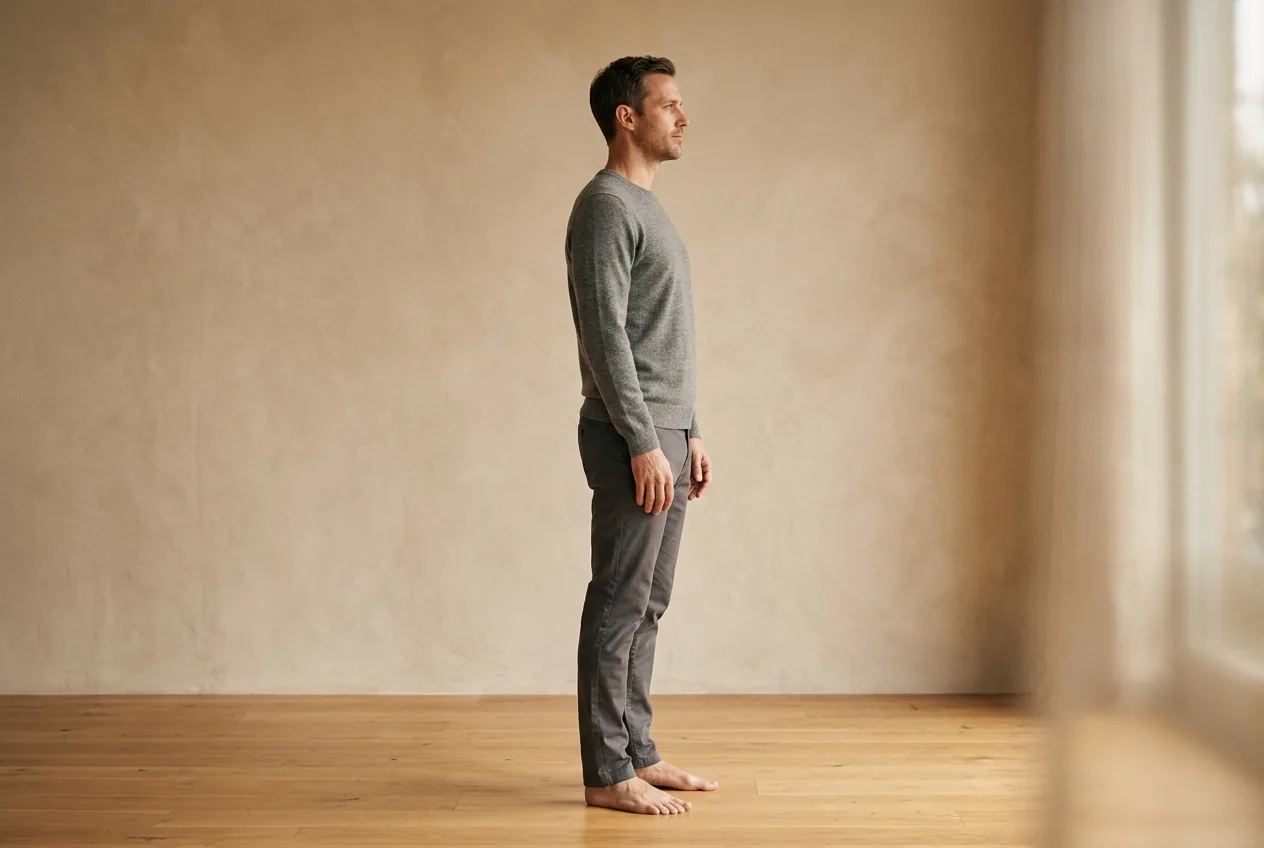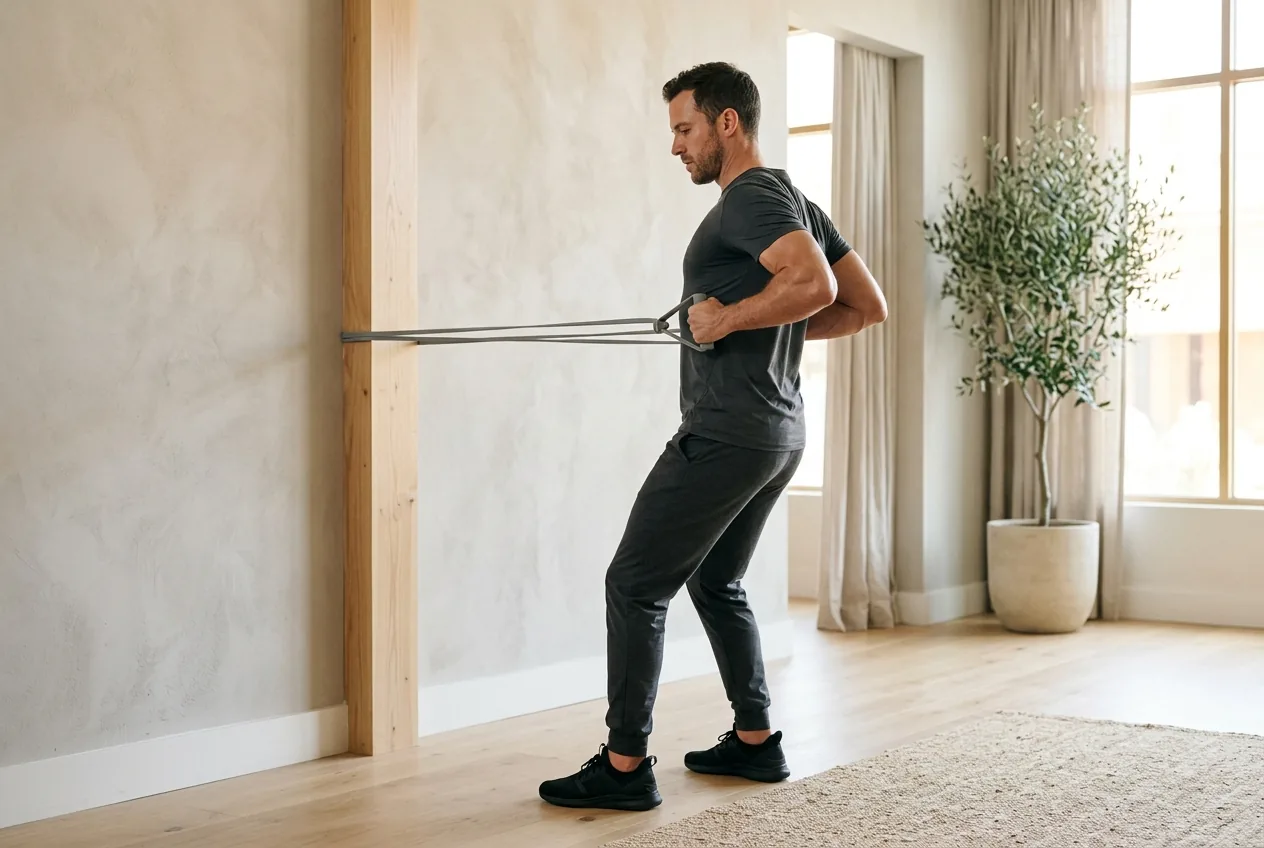
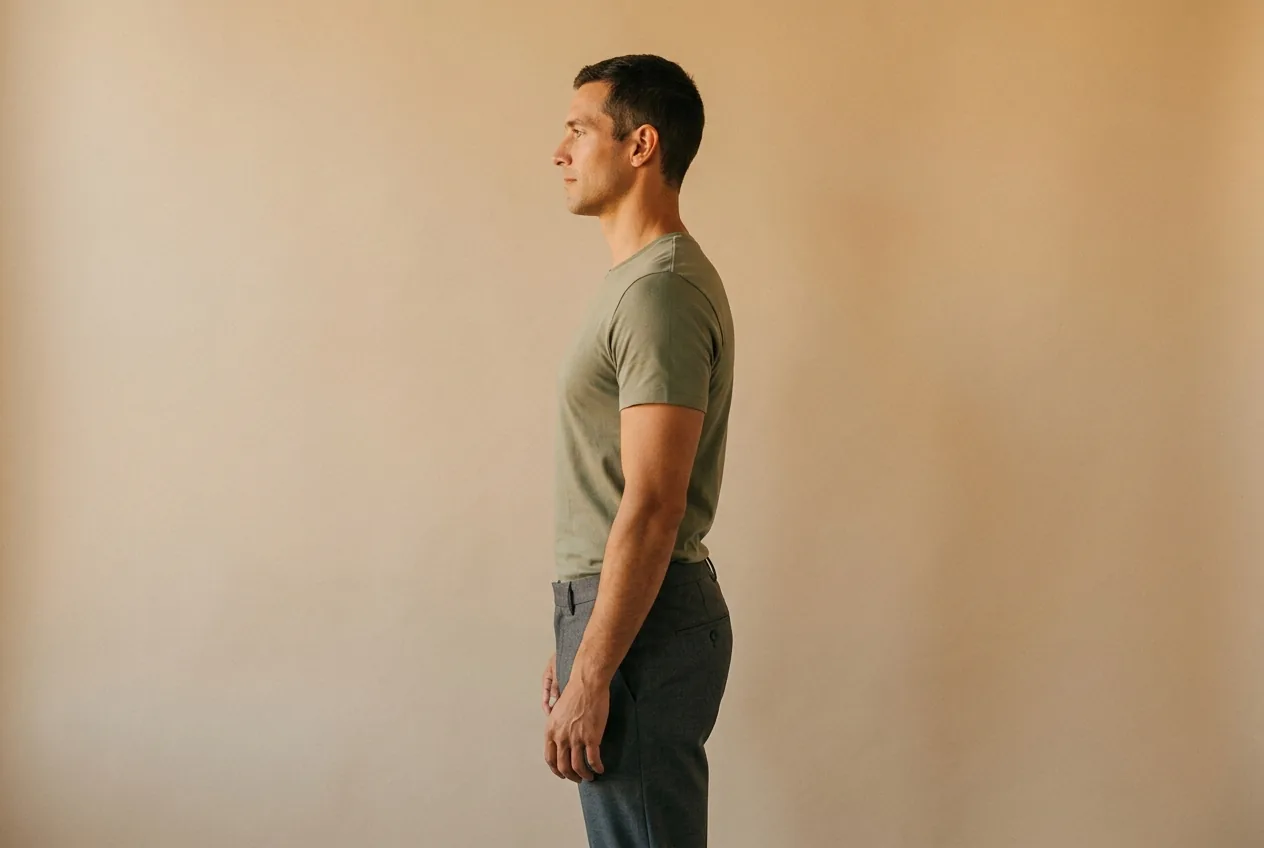
You picked up an imaging report and somewhere in the wording was a phrase that stuck: "loss of the normal lumbar lordosis," or "straightening of the lumbar curve." It sounds ominous, like something's gone missing from your spine. Before you spiral, here's the plain version: it means the natural inward curve of your lower back has flattened out, and your lumbar spine is sitting straighter than it should. It's common, it's often related to posture and muscle balance, and in many cases it responds to the right work.
This is the opposite of the problem people usually worry about. Most posture talk is about too much curve — the over-arched lower back. Loss of lumbar lordosis is too little. Knowing which one you have matters enormously, because the fixes run in opposite directions.
What the normal lumbar curve does
Your lower back is supposed to have a gentle inward curve — that's the normal lumbar lordosis. It's not a flaw; it's a feature. That curve acts like a spring, letting your spine absorb load and share it across the discs and joints instead of dumping it on one spot. When you stand and move well, the curve does this for free.
When the curve flattens, the spring is gone. Your lower spine sits straighter and stiffer, and load that should be cushioned gets transmitted more directly through the discs and joints. That's why a flattened curve often comes with a tired, stiff, achy lower back, especially after sitting — the structure has lost some of its built-in shock absorption.
The lumbar curve is a spring, not a defect. Lose it and your lower back loses some of its built-in shock absorption.
Why the curve flattens
A few things drive straightening of the lumbar lordosis, and most trace back to muscle balance.
The pelvis tucks under. This is the big one. When the pelvis rotates backward — a posterior tilt — it drags the lower spine flat behind it. The drivers are often tight muscles at the back of the hips and underworked hip flexors and lower-back muscles that should hold the curve. This is the same pattern as a posterior pelvic tilt.
You sit slumped for hours. Slouching in a chair rounds the lower back and, held for years, can train the curve flat. The body learns the slumped, tucked position as its default.
Muscle guarding. Sometimes the lower back flattens because the muscles around an irritated spine clench up and splint it straight, which can show up on imaging as a temporary loss of curve.
It's worth saying clearly: a straightened curve seen on a scan is often a posture-and-muscle finding, not damage. The phrase sounds dramatic; the cause is frequently a tucked pelvis and a slumped habit.
Why this is the opposite of the curve people usually fix
Here's the trap. Most lower-back advice — and most generic "back stretch" routines — quietly assume you have too much curve, the over-arched lordosis or swayback pattern. The fixes for that involve flattening the back: posterior tilts, knees-to-chest, flexion work. If your problem is a curve that's already too flat, doing those moves pushes you further the wrong way.
This is the clearest example of why generic posture routines can backfire. The same exercise that helps an over-arched back makes a flattened one worse, and vice versa. You have to know which you've got before you pick a single move. The two patterns can even look similar in a tired, aching lower back, but the work to fix them is mirror-image.
How to restore the curve
If your curve has flattened from a tucked pelvis, the work is to release what's pulling the pelvis under and strengthen what should hold the curve. Gently, most days.
Free the back of the hips
Tight hamstrings and glutes can tug the pelvis into its tuck. A gentle hamstring release and easy hip work help the pelvis rotate back toward neutral so the curve can return. Don't force it.
Restore a gentle arch with the right moves
Carefully reintroducing some extension can help bring the curve back. A gentle cobra stretch — lying face down and easing the chest up on your forearms, no pain — encourages the lower back to curve again. This is exactly the move you'd avoid with an over-arched back, which is the whole point about matching the work to the pattern. Go slow and stop if anything sharpens.
Strengthen what holds the curve
The deep core and the muscles that level the pelvis from the front need to wake up so the curve is held rather than collapsing flat again. A bird dog trains the trunk to stabilize in a neutral, slightly curved position, and learning to control the pelvis with a pelvic tilt exercise — moving toward a gentle arch rather than only tucking — teaches the curve back.
Fix the sitting that flattened it
If a slumped chair habit trained the curve flat, sitting with the lower back supported in its natural curve is half the battle. The setup is in proper sitting posture. A lumbar cushion that holds the curve while you work stops you spending eight hours undoing the exercises.
When to see a doctor
This is posture education, not medical advice. A "loss of lumbar lordosis" noted on imaging should be interpreted by the clinician who ordered it, in the context of your symptoms. See a doctor promptly if you have numbness, tingling, or weakness spreading into the legs, any loss of bladder or bowel control, pain following a fall or accident, fever with back pain, unexplained weight loss, or pain that's severe or steadily worsening. The exercises here are gentle and general; get clearance if you have a diagnosed spinal condition.
Why knowing your direction is everything
The single most important thing about a flattened lumbar curve is that its fix is the mirror image of the over-arched problem most routines are built for. Guess wrong — or grab a generic plan — and you can deepen exactly the deviation you're trying to correct. Too flat and too arched are opposite errors with opposite solutions.
That's the case for knowing your own pattern before you start. A posture assessment measures your actual pelvic tilt and curve and orders a daily routine in the right direction for you — restoring a curve that's flattened, or settling one that's overarched. The moves above are a safe starting point for the flattened pattern; matched to your real measurements, they're aimed the right way.
Straightened lordosis isn't damage; it's usually a tucked pelvis and a slumped habit. Restore the curve in the right direction and the spring comes back.
Common questions
What does loss of lumbar lordosis mean?
It means the natural inward curve of your lower back has flattened, so your lumbar spine sits straighter than it should. That curve normally acts as a spring that shares load across your discs and joints, so losing it can leave the lower back stiffer and achier. It's often a posture-and-muscle finding rather than damage.
Is straightening of the lumbar lordosis serious?
Often it's not, especially when it's tied to a tucked pelvis, a slumped sitting habit, or temporary muscle guarding around an irritated spine. It should still be interpreted by the clinician who ordered your imaging, in the context of your symptoms. In many cases the curve responds to releasing the back of the hips and strengthening what holds the curve.
How do you restore a flattened lumbar curve?
Release the tight hamstrings and glutes that tuck the pelvis, gently reintroduce a curve with careful extension like a slow cobra, strengthen the deep core and pelvic muscles that hold the curve, and sit with your lower back supported in its natural arch. Importantly, this is the opposite of the work for an over-arched back, so match the moves to your pattern.
Is loss of lumbar lordosis the same as too much curve?
No — it's the opposite. Loss of lordosis means too little curve, a flattened lower back, while excess lordosis or swayback means too much. The two can both ache, but their fixes run in opposite directions, which is why doing a generic back routine can push a flattened curve further the wrong way.