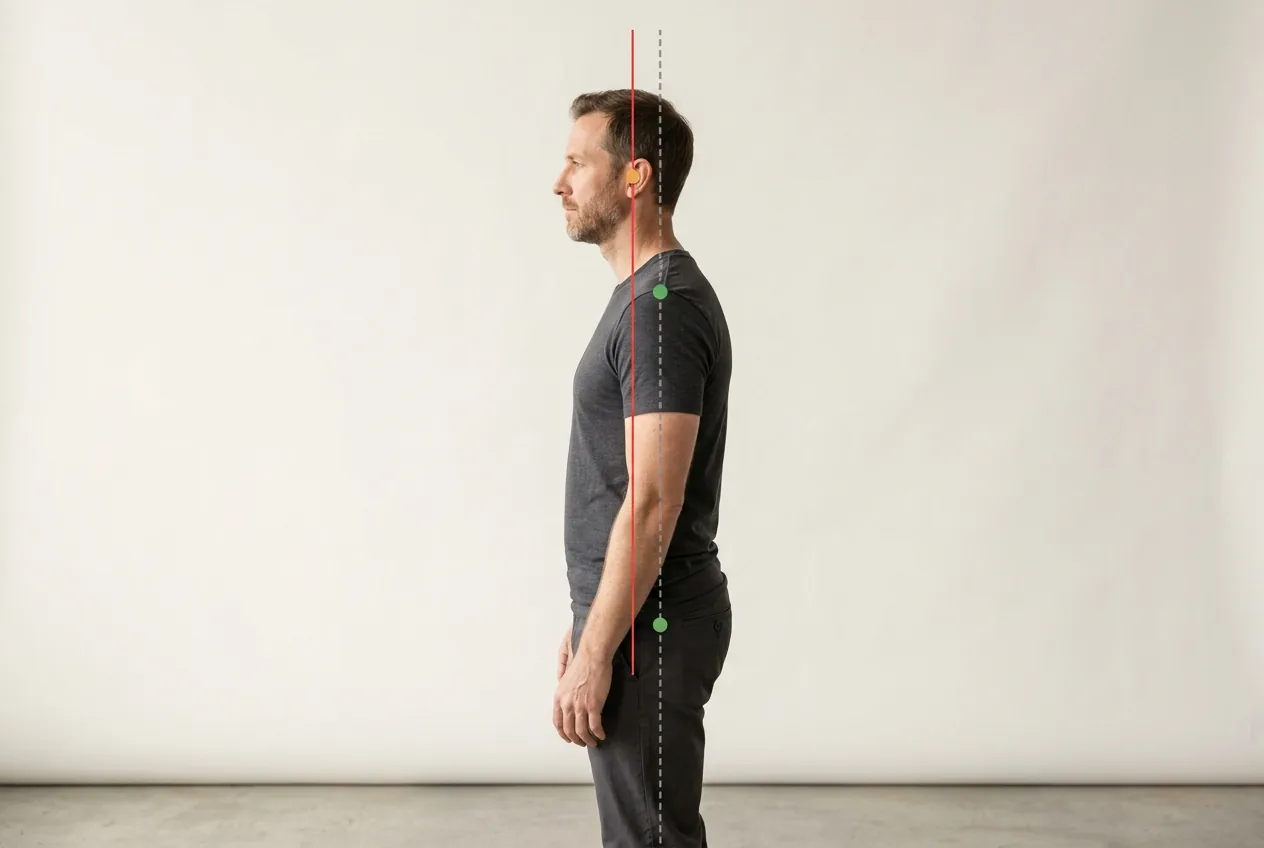

You woke up with a stiff neck, or you've been hunched over a laptop for weeks, and now there's an ache that runs from your neck into your shoulder blade — maybe pins and needles down your arm, or a couple of fingers that feel oddly numb. A pinched nerve in the neck is the likely explanation, and the good news is that most of them settle without anything dramatic. It helps to know what you're dealing with and what to do about it.
Here's the plain version.
What gets pinched, and why
The nerves that run your shoulders, arms, and hands branch off the spinal cord in your neck and exit between the cervical vertebrae. A pinched nerve in the neck means one of those roots is being crowded where it leaves the spine. Pinch it, and the symptoms appear downstream — in the territory that nerve serves, which can be the shoulder, the outer arm, the forearm, or specific fingers.
What does the crowding? Often a cervical disc bulging onto the root. Sometimes bone or joint changes narrowing the opening. And very often, the posture that loads the neck all day: the head drifting forward over the shoulders.
That forward-head position is the quiet driver behind a lot of neck nerve trouble. The head is heavy — around five kilograms — and balanced over the spine it costs your neck almost nothing. Let it drift forward, as it does over a phone or a low laptop, and the load on the neck multiplies. The muscles overwork, the joints compress, and the openings the nerves use get tighter. If that pattern sounds familiar, forward head posture is worth understanding, because it sets the stage for the pinch.
The signs it's a pinched nerve, not just a stiff neck
A nerve sends a different kind of signal than a tight muscle.
- Pain that travels out of the neck — into the shoulder blade, down the arm, sometimes to the hand.
- Tingling, pins and needles, or numbness in part of the arm or specific fingers.
- Weakness in the arm or hand — a weaker grip, trouble with fine movements.
- Symptoms that change with neck position — often worse when you tip your head back or toward the painful side, easier when you support or gently traction the head.
A plain stiff neck stays in the neck, feels like a tight band, and limits how far you can turn — but it doesn't usually send tingling down the arm. If your symptoms are reaching the arm or hand, a nerve is involved.
What eases it
The aim is to take load off the neck and give the root room.
- Set your head over your shoulders. Raise screens to eye level so you're not craning down. The single most useful move is the chin tuck: sit tall, gently draw your chin straight back (making a slight double chin) without tipping your head, hold a few seconds, release. Ten easy reps, a few times a day. It reverses the forward-head load that crowds the nerve.
- Support your neck at night. A stiff, cranky neck from sleeping wrong reloads the nerve all night — a pillow that keeps the neck neutral rather than kinked makes a real difference.
- Move gently within comfort. Slow neck turns and small range-of-motion work keep things from seizing. Don't force the directions that send symptoms down the arm.
- Avoid the provoking position. If tipping your head back or toward the sore side fires the arm symptoms, ease off that direction while it calms.
Get the head back over the shoulders and you take the multiplied load off the nerve. That's most of the battle.
Small daytime habits that add up
The neck gets pinched in the gaps between the moments you're thinking about it — so the fixes that work are the ones built into your day rather than a separate routine you'll forget.
- Lift the phone, don't drop the head. Texting with your chin on your chest is the modern version of the forward-head load, repeated hundreds of times a day. Bring the phone up toward eye level instead of folding your neck down to it.
- Mind the pillow stack. Propping up on two thick pillows to watch TV in bed jams the neck into the exact flexed position that crowds the nerve. Sit up properly if you're going to be there a while.
- Reset every hour at the desk. A few slow chin tucks and a gentle shoulder roll once an hour keeps the upper back from settling into a rounded slump that drags the head forward.
- Carry loads evenly. A heavy bag on one shoulder hikes that shoulder and tilts the neck, loading one side's nerve openings more than the other. Switch sides or use both straps.
None of these are exercises so much as course corrections. Done consistently, they take the steady load off the neck that a few stretches a day can't undo on their own.
When to see a doctor
Most pinched nerves in the neck improve over a few weeks with posture work and gentle movement. Some signs mean see a clinician promptly: arm or hand weakness that's getting worse, clumsiness or dropping things, numbness spreading, or symptoms in both arms or down into the legs. Also get checked urgently if you have problems with balance or walking, or any change in bladder or bowel control — those can point to pressure on the spinal cord itself, not just a root. And see someone if the pain followed a fall or accident, comes with fever or unexplained weight loss, or is severe and steadily worsening. The same red-flag logic applies in the lower back, covered in pinched nerve in the lower back.
Why the neck keeps getting pinched
If the arm tingling fades and then comes back weeks later, the nerve isn't the problem — the load on it is. A head that lives forward of the shoulders narrows the same openings the same way, day after day. Calm the flare without changing the position, and it returns.
Knowing your own pattern is how you break that loop. A posture assessment measures how far your head sits forward, how your upper back rounds, and how the load distributes — so a routine can unload the neck instead of just soothing the current episode. If you keep getting the same arm symptoms, that recurring forward-head load is usually why, and the posture therapy approach is built to address it at the source.
Bring your head back over your shoulders, support it at night, move gently, and watch the red flags. A crowded cervical nerve given room usually quiets within a few weeks.
Common questions
How long does a pinched nerve in the neck last?
With the load eased off, it often settles over a few weeks. Symptoms that keep returning usually trace back to a head-forward position that crowds the same opening day after day.
Can a pinched nerve in the neck cause arm symptoms?
Yes. Nerves from the neck travel into the arm, so a crowded cervical nerve can show up as tingling, numbness, or weakness down the arm rather than only at the neck.
What sleeping position is best for a pinched nerve in the neck?
Most people do best on their back or side with the head supported so the neck stays level, not propped too high or twisted. A pillow that keeps your head in line with your spine helps.
When should I see a doctor about neck nerve symptoms?
Seek care promptly if arm weakness is worsening, numbness is spreading, you have trouble with coordination or walking, or the pain follows an injury or is severe.