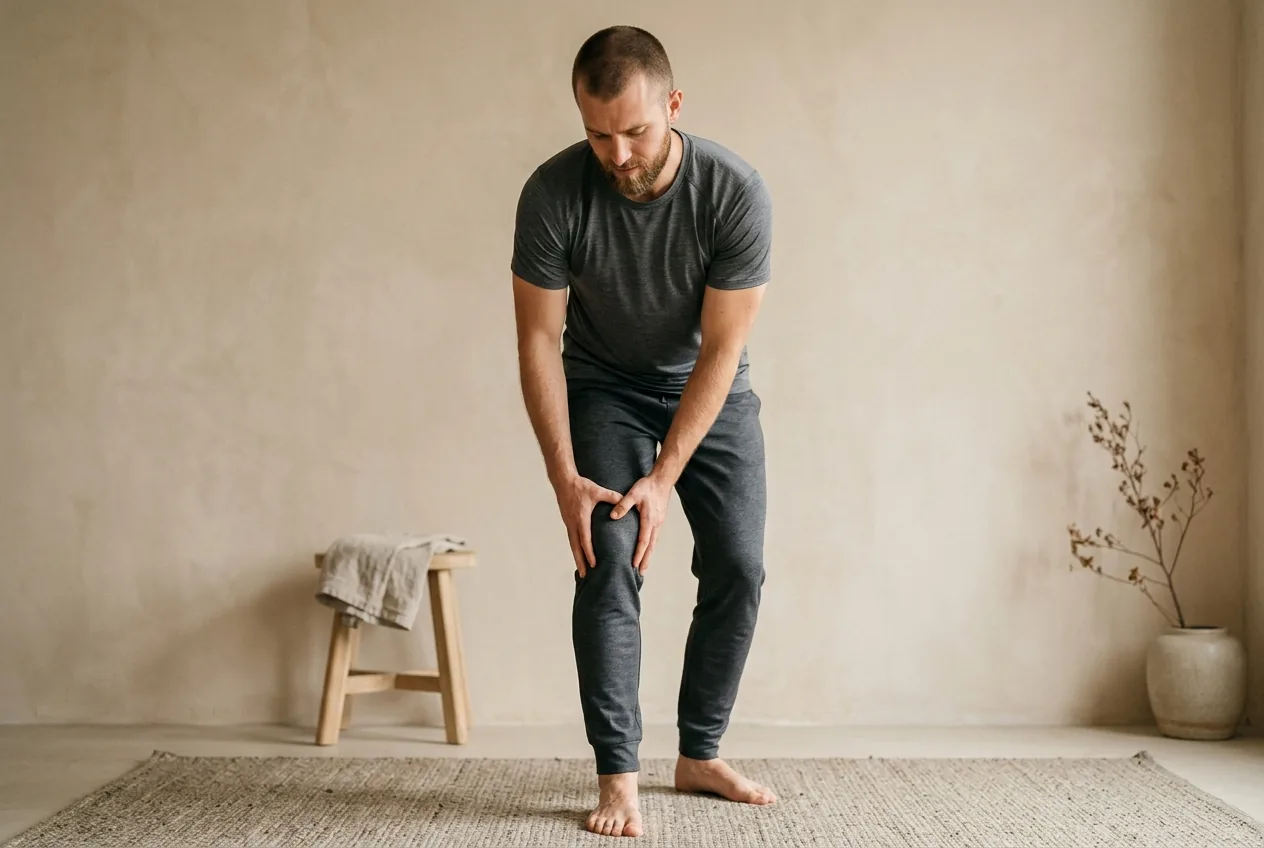
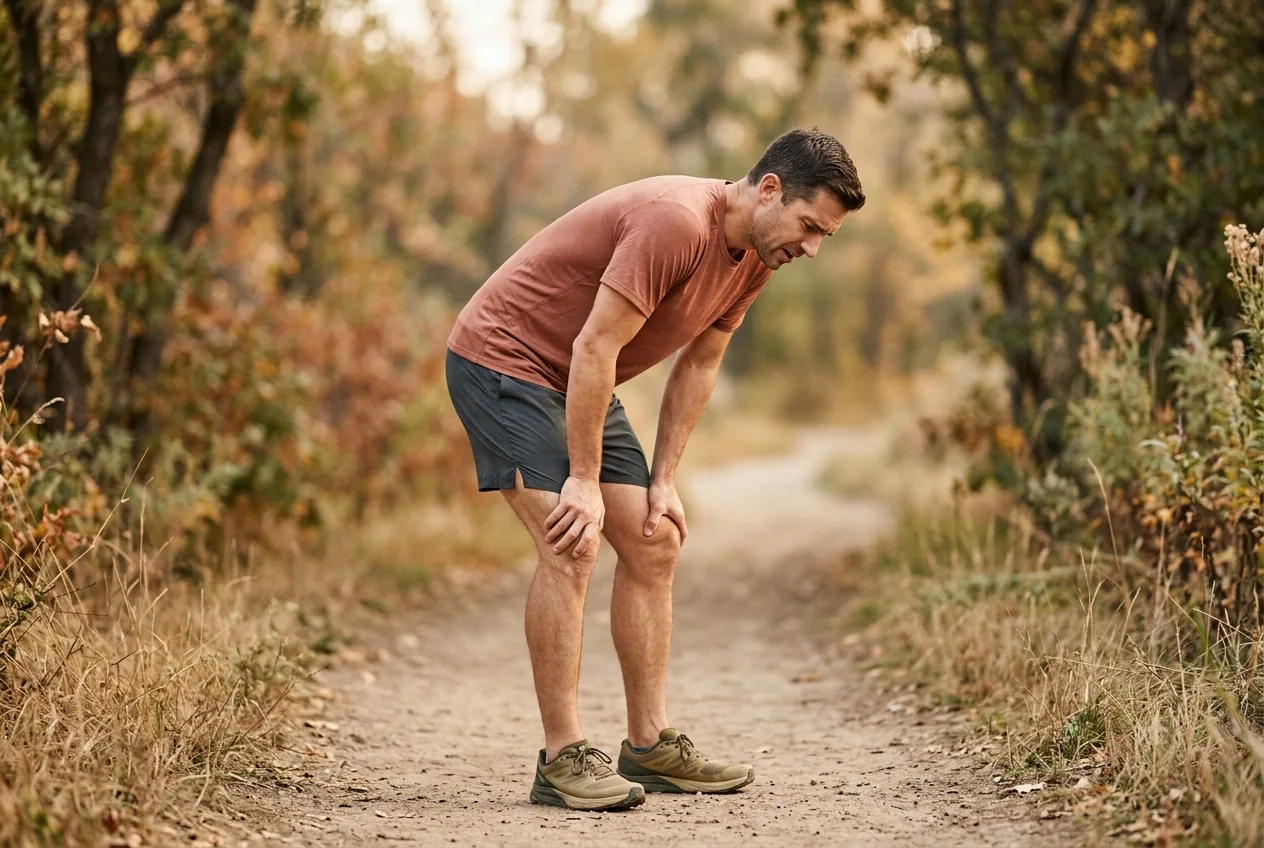
The ache sits right at the front of your knee, around or under the kneecap, and it shows up a couple of miles into a run or after you've been sitting at your desk with knees bent for a while. You've iced it, rested it, maybe bought a knee strap — and it keeps coming back the moment you build your mileage again. Here's the thing most people treating runner's knee miss: the pain lives at the knee, but the cause usually lives at the hip.
Runner's knee, or pain around the kneecap, is one of the most common running complaints. The knee itself is often an innocent bystander getting pulled out of line by what's happening above and below it. Treat only the knee and you treat the symptom. Treat the hip and you have a chance at the cause.
Why the knee takes the blame
Your kneecap is meant to glide in a groove at the end of your thigh bone as you bend and straighten. For that glide to stay smooth, the thigh bone has to point where it should. That's controlled almost entirely by the hip.
When the muscles on the outside of your hip — the glute medius especially — are weak, your thigh bone rotates inward and your knee drifts toward the midline with each stride. The kneecap stops tracking straight in its groove and starts grinding slightly off-line. Do that thousands of times per run and the tissue around the kneecap gets irritated. The knee hurts, but the knee didn't cause it — a hip that couldn't hold the leg in line did.
This is the same switched-off-glutes story behind a lot of lower-body trouble. Years of sitting park you on your glutes and they quietly stop pulling their weight, the pattern described in weak glutes and back pain. The back feels it in some people; the knees feel it in runners.
The kneecap can only track as straight as the hip lets the leg point. Weak hips, wandering knee.
How to tell the hip is involved
A few simple signs point upstream:
- Your knee drifts inward when you do a single-leg squat or step down a stair — watch in a mirror.
- One hip drops when you stand on one leg, instead of staying level.
- The pain is worse after long sitting (the "theater sign") and on downhills, where the hip works hardest to control the leg.
- You feel tight or weak on the outside of the hip.
If the leg caves inward when loaded, the hip isn't holding the line, and the knee is paying for it. Uneven hips can make this one-sided — more on that pattern in uneven hips.
The hip work that fixes the cause
The goal is to strengthen the muscles that keep your thigh pointing straight and your pelvis level, then teach the leg to hold that line while you move.
Strengthen the side of the hip
- Side-lying leg raises. Lie on your side, lift the top leg straight up keeping it slightly behind you and the toes pointing forward (not up). You should feel it on the outside of the hip, not the front. 10 to 15 slow reps each side.
- Clamshells. Lie on your side, knees bent and stacked, feet together, and open the top knee like a clam while keeping your pelvis still. Targets the same muscle.
- Glute bridges. Build the main glute that powers and stabilizes the hip — the how-to is in the glute bridge for back pain.
Train the leg to hold the line
Strength only helps if the leg uses it under load. Practice slow step-downs off a low step, watching that your knee stays stacked over your foot and doesn't cave inward. Single-leg balance work and controlled single-leg squats teach the same control. This is the bridge between "strong hip" and "knee that tracks."
Address the hips' tightness too
Tight hip flexors and a tipped pelvis change how the whole leg loads. A daily hip flexor stretch frees the pelvis so the hip muscles can work from a better position.
On the run
- Don't pile on mileage while the pattern's still there. Build slowly and let the strength catch up.
- Watch your cadence. A slightly quicker, shorter stride reduces the load on the knee compared with long, reaching strides.
- Be careful on downhills until the hip is holding the leg in line — that's where the knee gets overloaded.
What to stop doing
- Stop treating only the knee. Ice and a strap calm the symptom but leave the hip pattern that caused it untouched.
- Stop pushing through sharp, building knee pain. Mechanical irritation that worsens within a run is a signal, not something to run off.
- Stop ignoring the desk. If you sit all day on switched-off glutes, you bring that weak hip to every run.
When to see a doctor
Runner's knee from a hip pattern is mechanical and usually responds to strengthening. See a clinician promptly if the knee is swollen, locks or gives way, can't bear weight, or hurt after a specific injury or fall. Numbness or tingling, redness and heat, fever, or pain that's severe or steadily worsening also deserve a proper look. Posture and strength work is for ordinary mechanical knee pain, not for diagnosed joint injury.
Why a generic plan only goes so far
Clamshells and step-downs help a lot of runners, because the weak-hip pattern is so common. But which hip is weaker, whether your pelvis tips or drops, how your leg loads under fatigue — that's specific to you, and running is repetitive enough to expose any asymmetry. Two runners with identical knee pain can need different work.
Lasting relief comes from knowing your own setup: where your body deviates, which side gives way, which muscles switched off. A posture-based approach measures your real deviations first, then builds the routine around them — so you're strengthening what your stride actually needs, not guessing. Fix the hip, and the knee usually stops being the thing that ends your runs.
Common questions
Is runner's knee caused by the hips?
Often, yes. The kneecap only tracks straight when the thigh bone points where it should, and that's controlled by the hip. Weak hip muscles let the thigh rotate inward and the knee drift off line with each stride, irritating the tissue around the kneecap. The pain is at the knee, but the cause is frequently a hip that can't hold the leg in line.
How do I know if my knee pain is a hip problem?
Watch for the knee caving inward during a single-leg squat or step-down, one hip dropping when you stand on one leg, and pain that's worse after long sitting or on downhills. Tightness or weakness on the outside of the hip points the same way. If the leg caves when loaded, the hip is likely involved.
What exercises fix runner's knee?
Strengthen the side of the hip with side-lying leg raises and clamshells, build the main glute with bridges, then train the leg to hold its line with slow step-downs and single-leg balance work. Adding a hip flexor stretch frees the pelvis. The aim is a hip strong enough to keep the knee tracking straight under load.
Can I keep running with runner's knee?
Mild discomfort that you're actively addressing with hip work can often be managed with reduced mileage, a quicker cadence, and easing off downhills. Sharp pain that builds within a run, swelling, locking, or giving way are signals to stop and get it looked at. Don't try to run through worsening or injury-related knee pain.