You started with a stiff neck. Then it was a headache by mid-afternoon. Now your lower back aches when you stand, and lately your knee's been complaining on the stairs. Each one feels like a separate problem, so you treat each one separately — a stretch here, a painkiller there — and none of it sticks. If that's you, the connecting thread you're missing is that poor posture pain doesn't stay put. It travels.
Your body is a stacked chain. When one part drifts out of line, everything above and below shifts to keep you upright and level. Those compensations aren't free — they load joints and muscles at angles they weren't built for, and that's where the aches show up. The pain you feel often isn't where the original problem is. This is a head-to-toe map of where bad posture causes pain, and what each region is usually telling you.
Why posture pain spreads
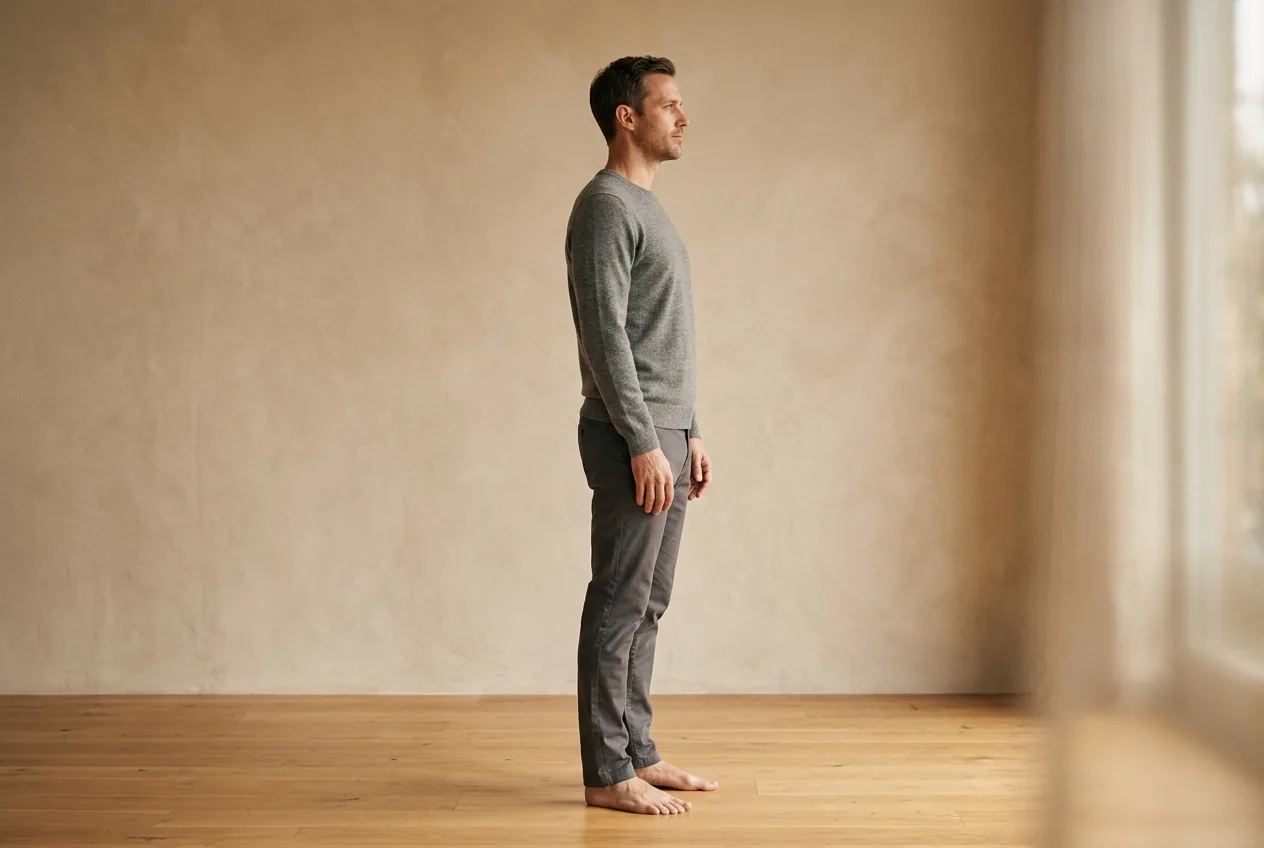
Stand a stack of blocks slightly off-center and the whole tower leans. Your spine works the same way. A head that drifts forward, a pelvis that tips, a shoulder that sits higher — each forces the regions around it to adjust. Muscles that should be resting start holding tension to stabilize. Muscles that should be working switch off and let others cover. Over months and years, the overworked tissue gets irritated and the underworked tissue gets weak, and pain settles in at the points taking the most uneven load.
This is why chasing pain location by location so often fails. The ache is a symptom of a chain that's out of line, not an isolated injury. Trace it back and the picture makes sense.
Posture pain shows up where the load piles up — which is often nowhere near where the problem started.
Head and neck: the top of the chain
Start at the top, because this is where modern posture trouble usually begins. Your head weighs around five kilograms when it sits balanced over your shoulders. Let it drift forward — over a phone, over a keyboard — and the muscles down the back of your neck have to hold that weight at a growing angle. The further forward, the harder they work.
That's the engine behind forward head posture, the most common pattern of the desk-and-phone era. You'll often hear it called text neck or nerd neck. The strain doesn't stay in the neck. The same overworked muscles at the base of the skull are a classic source of a tension headache from posture, and the jaw can get dragged into it too, which is the link behind TMJ and forward head posture. One forward drift, several different aches.
Shoulders: where rounding takes hold
Just below the neck, the next domino. When your head goes forward, your shoulders usually roll in to follow, and your upper back rounds. That's rounded shoulders, and it changes how your shoulder joint and shoulder blade move.
The muscles between your shoulder blades get stretched long and weak while the chest pulls tight, which leaves a nagging knot between the shoulder blades and a wider shoulder ache that traces back to posture. When the rounding sits more on one side, you can end up with uneven shoulders — one visibly higher than the other. None of it is a shoulder injury in the usual sense. It's the upper-back posture changing the angles the shoulder has to work through.
Mid and lower back: where the load collects
Keep moving down. The mid-back stiffens into whatever curve the rounded upper body sets, which is why a slumped posture so often brings mid-back pain between the shoulder blades. But the lower back is where poor posture cashes its biggest cheque.
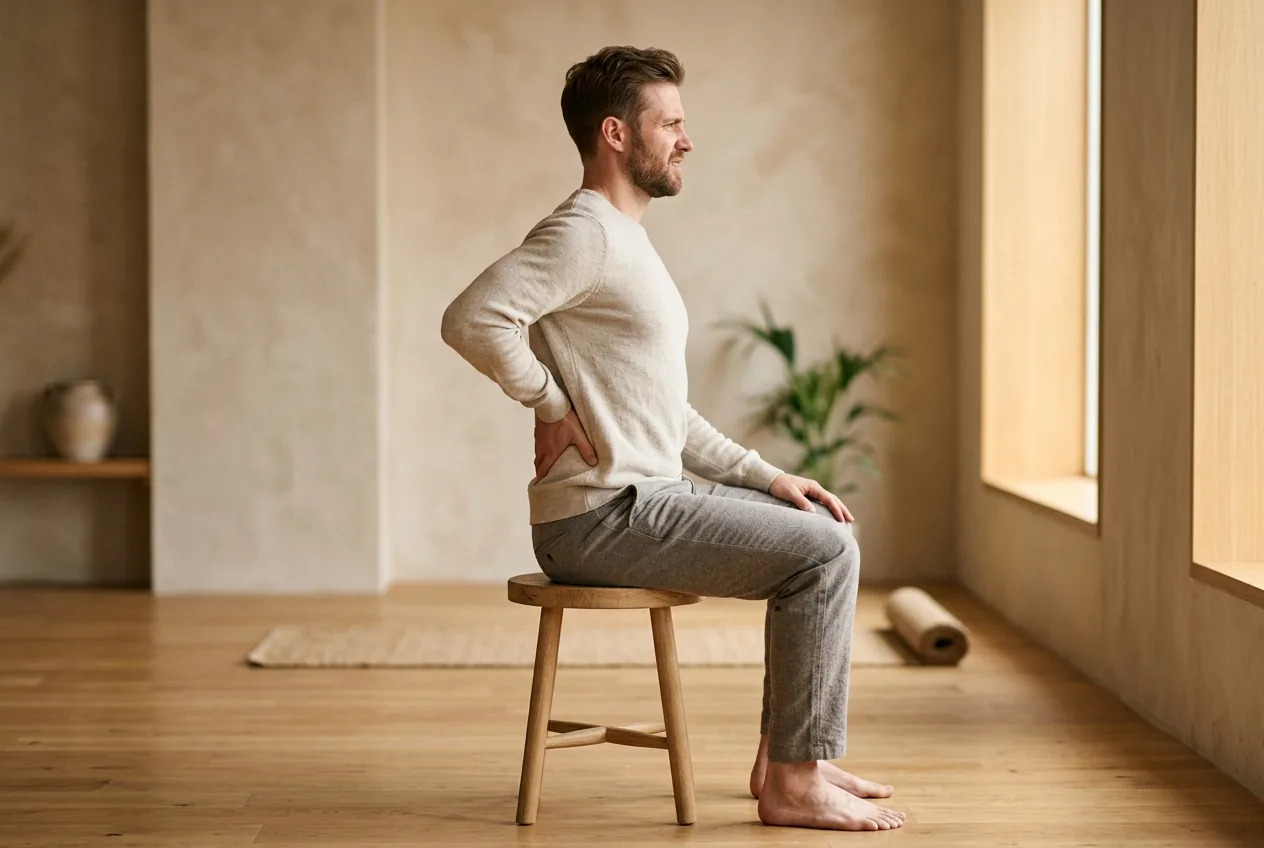
Your lumbar spine sits at the base of the chain, so it absorbs whatever the levels above and below dump on it. The pelvis is the hinge. Tip it forward and the lower back over-arches, piling load onto one segment — that's the swayback pattern in lordosis and swayback. Tuck it under and you lose the curve entirely. Either way, the back muscles end up overworking to hold a position the structure should hold for free, and the result is the dull, recurring ache that flares when you sit too long or stand still. If you only ever wondered whether bad posture can cause back pain, the lower back is exhibit A.
Hips: the hinge that gets blamed last
The hips sit right where the spine meets the legs, so a tipped pelvis hits them directly. The muscles on the outside and front of the hip end up working at bad angles — some tight and overused, some switched off — and the joint complains. This shows up as hip pain when sitting, where a tucked pelvis pinches the front of the joint, or as a deeper ache from tight hip flexors from sitting that never quite releases.
The hips are also where uneven posture announces itself. When one side sits higher — uneven hips — every step lands a little off, and the wear spreads to the lower back above and the knee below. People rarely suspect their hips, because the pain often surfaces a level away.
Knees and feet: the bottom of the chain
The chain doesn't stop at the hips. How your pelvis and hips sit changes the line your thigh bone tracks, and that lands on the knee. A pelvis that's rotated or dropped on one side rolls the thigh inward, and the kneecap stops tracking cleanly — which is a real part of why knee pain links back to posture. The knee is often the victim of a hip and pelvis problem, not the source.
Below that, your feet are the foundation everything stacks on. The way you load them feeds back up the chain, and a collapsed or tense foot can echo all the way to the lower back. The connection runs both ways in foot posture and in the link between plantar fasciitis and posture. Pain at the very bottom of the chain can trace to alignment far higher up.
The pattern behind the map
Read the map and one thing stands out: these aren't ten separate problems. They're one chain out of line, showing up in ten places. The neck ache, the headache, the shoulder knot, the lower-back flare, the hip pinch, the cranky knee — chase them one at a time and you're forever putting out spot fires while the wiring fault keeps sparking new ones.
That's also why generic, single-spot advice underwhelms so many people. A stretch aimed at your sore knee does nothing about the dropped hip driving it. A neck stretch ignores the forward head feeding the headache. To actually quiet the pain, you have to work the chain, starting from where it's genuinely out of line.
When to see a doctor
This is posture education, not medical advice. See a clinician promptly if pain follows a fall or accident, if you have numbness, tingling, or weakness spreading into the arms or legs, any loss of bladder or bowel control, fever with back pain, unexplained weight loss, chest pain or shortness of breath, a joint that's hot, red, or can't bear weight, or pain that's severe or steadily worsening. Posture work is for the everyday aches of a body out of line — not for red-flag symptoms, which need a proper look first.
Finding your own line
The map tells you where posture pain tends to land. It can't tell you which way your particular chain is bent — and that's the piece that decides what actually helps. Two people with the same sore lower back can need opposite routines, because one has a forward-tipped pelvis and the other a tucked one.
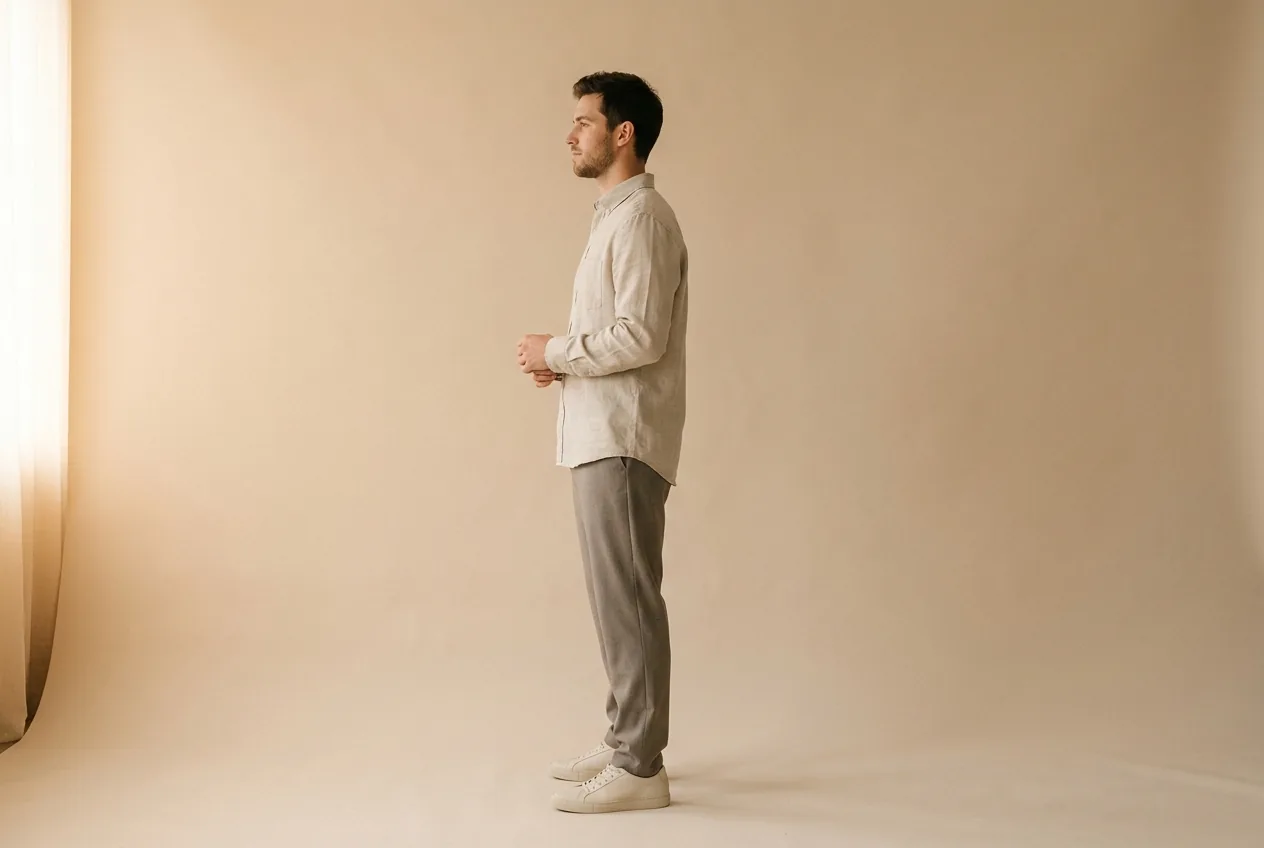
A posture assessment measures your real deviations from a couple of photos and builds a daily routine around them, working the chain from where it's genuinely off. If you'd rather start by reading your own line, the check your posture at home guide shows you how to take and interpret a side-on photo. Either way, the move is the same: stop treating ten symptoms and start fixing the one chain underneath them.
Treat the chain, not the spot. The ache moves around; the cause usually doesn't.
Common questions
Can bad posture really cause pain all over my body?
Yes, because your body is a connected chain. When one part drifts out of line — a forward head, a tipped pelvis — the regions above and below shift to keep you upright, loading muscles and joints at bad angles. The aches surface wherever that uneven load collects, which can be far from the original problem.
Why does the pain show up somewhere other than the problem?
Compensation. A dropped hip can roll the thigh inward and irritate the knee below it; a forward head can strain the muscles that trigger a headache. The body shifts load away from the misaligned area and onto whatever can absorb it, so the symptom appears a level or two away from the cause.
Where does poor posture most commonly cause pain?
The neck and lower back are the two biggest hot spots, because the neck holds the weight of a forward-drifting head and the lower back sits at the base of the chain absorbing what the pelvis dumps on it. Shoulders, hips, and knees are common secondary sites.
If I fix my posture, will the pain in different areas go away?
Often, yes — because if one out-of-line chain is driving aches in several places, correcting the alignment can quiet them together. The catch is doing it in the right direction for your specific pattern, which is why knowing your actual deviations matters more than any single stretch.