
You tilt your head, you feel the pressure building at the base of your skull, and you give it a turn until it pops. For a second or two, relief. Then an hour later the tension creeps back and you're reaching to do it again. If that loop sounds familiar, you've probably wondered: is it bad to crack your neck, or is it fine?
The honest answer has two parts. The occasional pop is, for most people, not the harmful thing the warnings make it out to be. But the constant urge to crack — the part where you need to do it again and again — is worth paying attention to, because it's usually a sign of something the pop never actually fixes.
What the pop actually is
When you crack your neck, the sound is almost always gas releasing inside a joint. The small joints of the spine sit in capsules of fluid, and when you stretch the joint quickly, the pressure drops and a tiny bubble forms and collapses. That's the click. It's the same mechanism as cracking your knuckles, and despite the old rumor, it doesn't grind your joints down or give you arthritis.
So why does it feel good? Stretching the joint briefly stimulates the nerves around it and triggers a short wave of muscle relaxation. The tight feeling eases for a moment. The problem is that nothing about the underlying tension has changed. The muscles were tight for a reason, and the pop didn't address the reason — it just reset the alarm for a few minutes.
That's the loop. You crack, you feel loose, the tightness returns, you crack again. The relief gets shorter each time, which is why heavy neck-crackers end up doing it ten times a day.
The pop isn't the danger. The need to keep chasing it is the signal.
When neck cracking is genuinely fine
If you occasionally feel a pop when you turn your head or stretch, and you're not forcing it, there's little to worry about. Joints make noise. A neck that clicks now and then during normal movement is usually just a healthy joint doing healthy joint things.
The line to watch is force. Gentle movement that happens to pop is different from grabbing your head and wrenching it hard to make it crack. Which brings us to the part that actually carries some risk.
When it's worth being careful
A few situations are worth more caution:
- Forcing it hard, repeatedly. Yanking your head to crack the same spot over and over can leave the surrounding muscles irritated and the joint overstretched, which ironically makes everything feel tighter and primes the next urge.
- Cracking to chase pain relief. If you're cracking because your neck genuinely hurts, the pop is masking a problem, not treating it. Chronic pain that you keep cracking away deserves a proper look rather than another pop.
- A neck that's already inflamed or recently injured. If you've had a recent strain, crick, or trauma, forcing movement can feed the spasm. The crick in the neck guide covers why forcing a guarded neck backfires.
Aggressive self-manipulation of the neck — the high-velocity twist — carries rare but real risks, which is why it's not something to do hard or in a hurry. Gentle is the watchword.
Why the urge keeps coming back
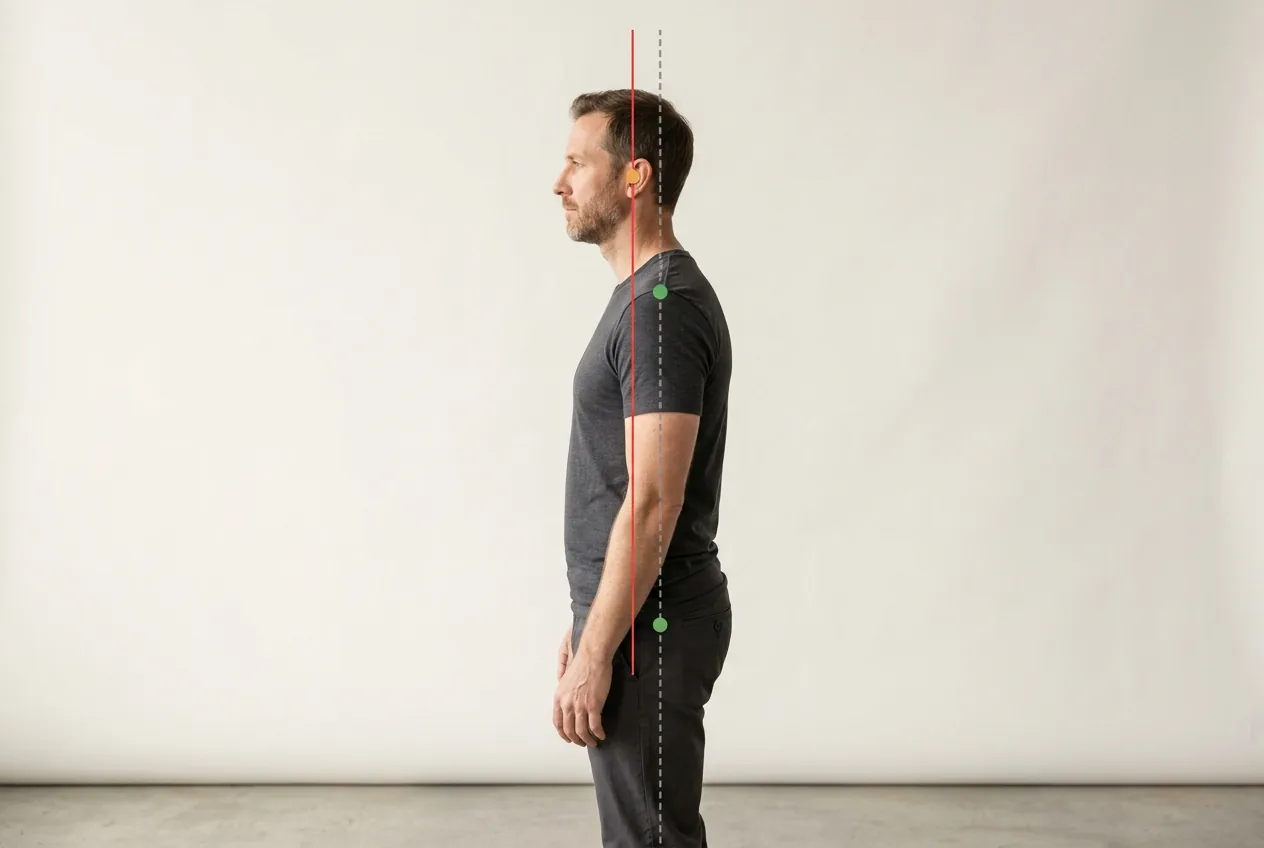
Here's the part most articles skip. The reason you need to crack your neck all day usually isn't in the joint you keep popping. It's in how your head sits the rest of the time.
When the head drifts forward of the shoulders — at a desk, over a phone, in the car — the muscles at the back of the neck have to work constantly to stop it dropping further. The head weighs roughly as much as a bowling ball, and every inch it travels forward multiplies the load those muscles carry. They stay switched on, fatigued, and tight. That steady tightness is what builds the pressure you keep trying to release with a pop.
Crack the joint and you interrupt the tension signal briefly. But the head is still forward, the muscles are still overworked, and within an hour the pressure is back. You're treating the symptom on a loop. That forward-loaded pattern is the same one behind neck pain at the base of your skull and a lot of tech-related neck tension, covered in text neck.
What to do instead of cracking
You don't have to quit cold turkey, but you can give the tension a real outlet:
- Chin tucks. Gently draw your head straight back, as if making a double chin, hold a couple of seconds, release. This eases the front-of-neck tightness and reloads the muscles the right way. The chin tucks exercise guide shows the technique.
- Slow range-of-motion turns. Instead of one hard crack, do several slow, gentle turns and tilts through a comfortable range. You get the joint moving without the force.
- Shoulder resets. Lift your shoulders to your ears, drop them as you breathe out. Tension in the upper traps feeds neck tightness, so releasing there often quiets the urge.
- Move your head back over your shoulders through the day, especially at the screen. Less forward load means less tension to chase.
When to see a doctor
Posture work is education, not medical advice. Occasional painless cracking rarely needs a doctor. But see a clinician if neck cracking comes with pain that's persistent or worsening, if you have numbness, tingling, or weakness in an arm or hand, if you feel dizzy or unsteady when you move your neck, or if the cracking started after a fall or accident. And don't force aggressive neck manipulation if you have any of those symptoms.
The fix the pop never delivers
Cracking your neck buys you a minute of relief and then sends you back to the same tightness, because it doesn't touch the reason the muscles are tight. That reason is usually how your head and neck sit all day — and that's specific to you.
A proper posture assessment measures where your head actually sits and builds a daily routine around it, so the tension stops rebuilding in the first place. Fix the load, and the urge to crack tends to fade on its own.
Common questions
Is it bad to crack your neck every day?
The pop itself is usually harmless, but needing to do it every day is a sign of steady tension that the cracking isn't resolving. The bigger concern is forcing it hard and repeatedly, which can irritate the muscles and joints. Addressing the underlying tightness is more useful than worrying about the noise.
Does cracking your neck cause arthritis?
No. The popping sound is gas releasing in the joint, and despite the old belief, it doesn't wear the joint down or cause arthritis. Forcing aggressive manipulation carries other concerns, but arthritis isn't one of them.
Why does my neck feel better for a few minutes after cracking?
Stretching the joint briefly triggers a short wave of muscle relaxation and stimulates the nerves around it. It's a temporary reset, not a fix, which is why the tight feeling returns and you end up cracking again.
How do I stop wanting to crack my neck?
Give the tension a real release instead. Chin tucks, slow range-of-motion turns, and shoulder resets ease the tightness more durably, and keeping your head back over your shoulders during the day reduces how much tension builds in the first place.